Maintaining a consistent fermentation temperature is critical for producing high quality homebrews. Unexpected temperature swings can lead to off-flavors, stalled fermentation, or even ruined batches. Setting up a dedicated temperature-controlled fermentation chamber typically costs between $150 and $800, depending on whether you use new or used components, and the level of sophistication you desire.
The total expense is a sum of several core components. These include the cooling and heating unit, a reliable temperature controller, and the fermentation vessel itself. Additional items like insulation, shelving, and various accessories also add to the final price. Understanding these individual costs helps homebrewers plan their budget effectively.
Understanding Fermentation Chamber Components and Their Costs
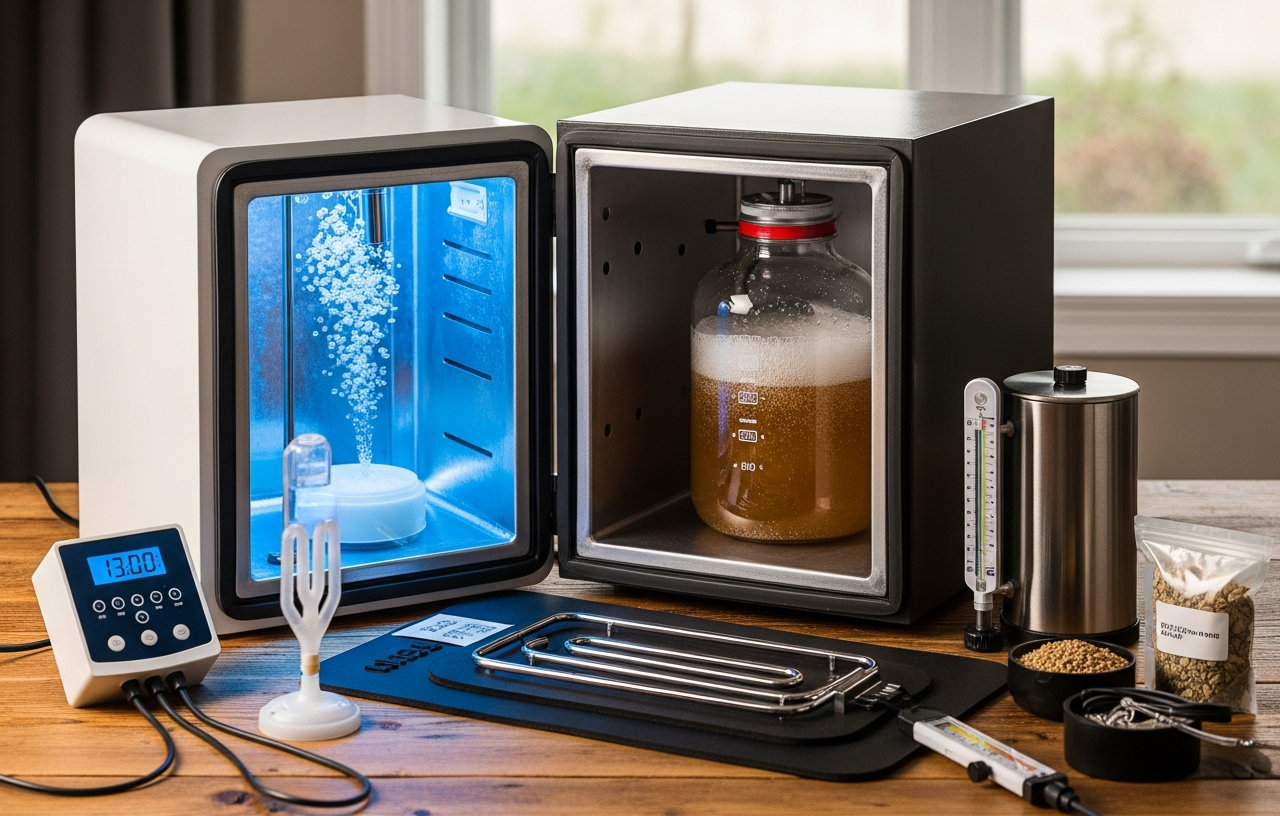
A fermentation chamber is essentially an insulated box (often a repurposed refrigerator or freezer) that maintains a specific internal temperature using a controller, a cooling source, and sometimes a heating source. This typically comes in the form of a used mini-fridge, upright freezer, or chest freezer. The choice impacts both capacity and cost.
- Used Mini-Fridge/Freezer: These are often the most budget-friendly option. Prices can range from $50 to $200 from online marketplaces like Craigslist, Facebook Marketplace, or local appliance stores selling scratch-and-dent models. A mini-fridge usually accommodates one standard 5-gallon carboy or fermenter.
- New Mini-Fridge/Freezer: A new unit offers reliability and a warranty but costs more. Expect to pay $200 to $400 for a compact model.
- Used Full-Size Refrigerator/Freezer: For brewers needing more capacity, a used full-size refrigerator or chest freezer can be ideal. These often hold multiple fermenters. Costs typically run $100 to $300, again depending on condition and source. Chest freezers are particularly popular for their ability to easily fit carboys and conical fermenters.
- New Full-Size Refrigerator/Freezer: A brand-new upright or chest freezer can cost between $350 and $600. This provides ample space for multiple batches or larger vessels.
When selecting a unit, consider the internal dimensions carefully. Make sure it can comfortably fit your chosen fermentation vessels, including any airlocks or blow-off tubes. Many brewers find that an upright freezer offers a good balance of footprint and vertical space.
Temperature Controller: The Brain of the Operation
A dedicated temperature controller is non-negotiable for precise fermentation. This device plugs into the wall, and your cooling and heating units plug into it. It monitors the internal temperature of the chamber (or the fermenter itself) and switches the cooling or heating on and off as needed.
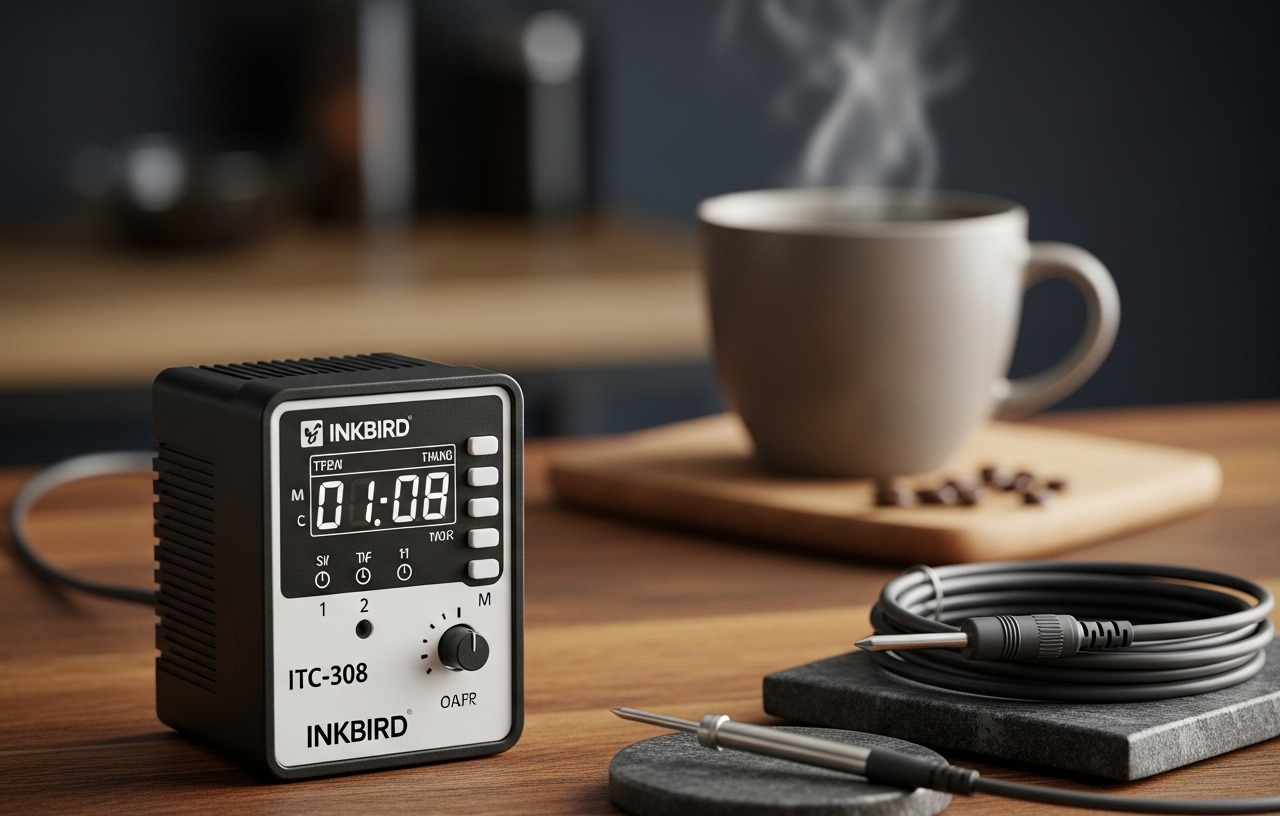
- Basic Single-Stage Controllers: These simple devices monitor and control a single temperature target. They are often the most affordable, costing $35 to $60. A popular option for many homebrewers is the Inkbird ITC-308, known for its reliability and ease of use.
- Dual-Stage Controllers: Most fermentation chambers require both cooling and heating. A dual-stage controller manages both aspects, allowing you to set separate temperature differentials for each. These typically range from $50 to $100. Many modern controllers offer additional features like alarms or data logging. For a broader view of options, you can read about the best fermentation temperature controllers available.
- Advanced Controllers (e.g., WiFi-enabled): Some controllers offer WiFi connectivity, allowing remote monitoring and control via a smartphone app. These provide greater convenience but come at a higher price, often $100 to $200.
Choosing a controller with a robust temperature probe is important. The probe should be able to sit securely inside a thermowell in your fermenter or be taped to the side of the fermenter under some insulation for accurate readings.
Heating Element: Warming Your Brew
While cooling is often the primary concern, many fermentation chambers also need a heating element, especially in colder climates or during winter months. Yeast performance can suffer significantly if temperatures drop too low.
- Seedling Heat Mat: These low-wattage mats are designed for plant propagation but work perfectly for warming fermenters. They typically cost $15 to $30.
- Small Ceramic Heater: A compact ceramic heater with a low wattage setting can also serve as a heating source. Make sure it has an automatic shut-off feature for safety. Prices range from $25 to $50.
- Brew Belt/Wrap: A specialized heating belt that wraps around the fermenter offers direct heat. These are usually $20 to $40.
The heating element plugs directly into the temperature controller, which then regulates its operation. Position the heating source so it distributes heat evenly without directly touching the fermenter at all times, unless it is a brew belt.
Fermentation Vessels: Holding Your Brew
The type of vessel you use impacts the overall cost and your brewing flexibility. While not strictly part of the chamber itself, the vessel must fit inside and is a key part of the setup.
- Plastic Buckets: Food-grade plastic buckets are the most economical choice, costing $20 to $40 for a 5-gallon size. They are lightweight and durable.
- Glass Carboys: Glass carboys offer excellent visibility and are easy to clean, but they are heavy and fragile. A 5-gallon glass carboy costs $40 to $70. You can explore options for best fermentation vessels for beer, including glass options.
- Conical Fermenters: These advanced vessels allow for yeast harvesting and easy trub removal without transferring the beer. Stainless steel conicals are expensive, ranging from $300 to $1,000+. Plastic conicals offer a more budget-friendly alternative at $100 to $300.
- Kombucha Vessels: For continuous kombucha brewing, specialized vessels with spigots are popular. These typically cost $30 to $80. Read about the best kombucha continuous brew vessels for more information.
The material and design of your fermenter affect not only cost but also sanitation practices. Always make sure to use appropriate sanitizers and cleaners. Understanding how to sanitize brewing equipment for beer is vital for preventing contamination.
Miscellaneous Items and Optional Upgrades
Beyond the core components, a few other items might be necessary or beneficial.
- Grommets and Wiring: If you are drilling holes for probes or power cords, you will need grommets to protect the wires and seal the holes. These are usually a few dollars.
- Insulation: For repurposed freezers or fridges, adding extra insulation (like rigid foam board) can improve efficiency. This costs $30 to $100, depending on the size of the chamber.
- Shelving/Racks: If your chamber will hold multiple fermenters or accessories, simple wire shelving can help organize the space. Expect to pay $20 to $70.
- Fan: A small computer fan (12V) can circulate air inside the chamber, helping to equalize temperature. This is a common DIY addition, costing $10 to $20, plus a power adapter.
- Thermometer/Hydrometer: Basic brewing tools are essential for monitoring fermentation. A good thermometer and hydrometer set costs $20 to $40.
Cost Scenarios: From Budget DIY to Advanced Setup
The total cost to set up your fermentation chamber varies widely based on your choices. Here are a few realistic scenarios:
Budget-Friendly DIY Fermentation Chamber: $150-$250
This setup prioritizes affordability and uses readily available components.
- Used Mini-Fridge: $50-$100
- Basic Dual-Stage Temperature Controller: $40-$60
- Seedling Heat Mat: $15-$25
- Plastic Fermentation Bucket (5-gallon): $20-$30
- Miscellaneous (grommets, tape): $5-$10
- Total Estimated Cost: $130-$225
This entry-level chamber is perfect for a beginner homebrewer making single 5-gallon batches. It provides good temperature control without breaking the bank. The components are easy to assemble.
Mid-Range Fermentation Chamber: $350-$600
This option offers more capacity and slightly better control, suitable for brewers making multiple batches or larger volumes.
- Used Chest or Upright Freezer: $150-$250
- Quality Dual-Stage Temperature Controller: $60-$90
- Small Ceramic Heater or Brew Belt: $30-$50
- Glass Carboy or Basic Conical Fermenter: $50-$150
- Small Internal Fan (optional): $15-$25
- Total Estimated Cost: $305-$565
A mid-range chamber provides more flexibility for different fermentation styles and batch sizes. The initial investment is higher, but the added features and capacity often justify the cost for dedicated hobbyists.
Advanced Fermentation Chamber: $700-$1,200+
For serious brewers who want maximum control, capacity, and convenience, an advanced setup is the way to go.
- New Chest Freezer (large) or Dedicated Fermentation Fridge: $400-$600
- WiFi-Enabled or Multi-Stage Temperature Controller: $120-$200
- Efficient Heating Element (e.g., specific brew heater): $40-$70
- Stainless Steel Conical Fermenter (7-10 gallon): $300-$700+
- Internal Fan and Advanced Shelving: $50-$100
- Total Estimated Cost: $910-$1,670+
An advanced fermentation chamber is a significant investment, often chosen by brewers who are moving into more complex recipes, yeast management, or larger batch sizes. It offers professional-level control and durability.
When DIY Makes Financial Sense
Building your own fermentation chamber almost always saves money compared to buying a pre-built, dedicated unit. The biggest savings come from sourcing a used refrigerator or freezer. DIY also allows for customization to fit specific brewing needs, such as accommodating unique fermenter sizes or adding extra features like internal fans or specialized shelving.
DIY is a great choice if you enjoy tinkering, have basic electrical knowledge (for wiring the controller), and are willing to spend time on the project. The process involves simple steps like drilling holes for probes and power cords, and connecting devices to the temperature controller. These tasks are generally low-risk and require only basic hand tools.
The financial advantage of DIY is clear. For example, a basic pre-built fermentation fridge can start at $500-$700 for a single 5-gallon capacity. By contrast, a DIY setup with similar functionality can be achieved for $150-$250. This represents a substantial saving that can be put towards other brewing equipment, like a homebrew starter kit or better ingredients.
When the Risk (or Effort) Is Not Worth It
While DIY is generally recommended for cost savings, there are situations where it might not be the best path. If you lack confidence in basic electrical work, even simple wiring for a controller might seem daunting. However, most modern temperature controllers are designed for plug-and-play simplicity, minimizing complex wiring. The Inkbird ITC-308, for example, only requires plugging in the cooling and heating units.
If your primary concern is convenience and saving time, purchasing a dedicated fermentation refrigerator or buying a complete kit might be preferable. These options arrive ready to use, requiring minimal setup. The trade-off is a significantly higher upfront cost. For most homebrewers, the slight effort involved in a DIY build is a worthwhile investment for the long term savings and customization benefits.
Ultimately, the cost of setting up a fermentation chamber is an investment in brewing consistency and quality. By understanding the components and their price ranges, homebrewers can create a system that fits their budget and helps them produce excellent beer, wine, or kombucha.