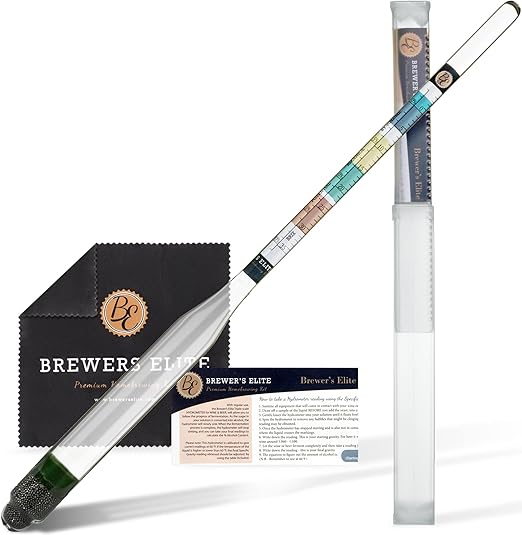
Brewer's Elite Hydrometer for Home Brew Beer, Wine, Mead and Kombucha - Deluxe Triple Scale Set with Hardcase and Cloth -
- Lab Tested Unrivalled Quality & Accuracy: All Brewer's Elite Hydrometers are rigorously tested to.
- 75+ Brewing Video Courses & Tutorials: Due to our exclusive partnership with Craft Beer & Brewing Magazine.
- Precision Made Simple: The easy-to-read color scale and specially designed font allow for clear.
- Versatile Brewing Tool: Effortlessly measure specific gravity, potential alcohol, and brix for crafting.

1 Gallon Glass Wide Mouth Kombucha Brewing Mason Jar - Home Brewing and Fermenting Kit with Cotton Cloth Filter, Rubber Band and
- Wide mouth design allows easy access for filling, stirring, and cleaning
- Includes 1-gallon glass jar, cotton cloth cover, rubber band, and airtight plastic lid
- Rubber band secures the cloth cover firmly during fermentation
- Airtight plastic lid provides secure storage for finished products
Choosing a brewing method for kombucha impacts flavor, consistency, and the amount of effort required. Batch brewing generally provides more control over flavor profiles and is simpler to manage for most home brewers. The 1 Gallon Glass Wide Mouth Kombucha Brewing Mason Jar is an excellent choice for batch brewing, offering a wide mouth for easy access and a complete kit for beginners.
Understanding Kombucha Batch Brewing
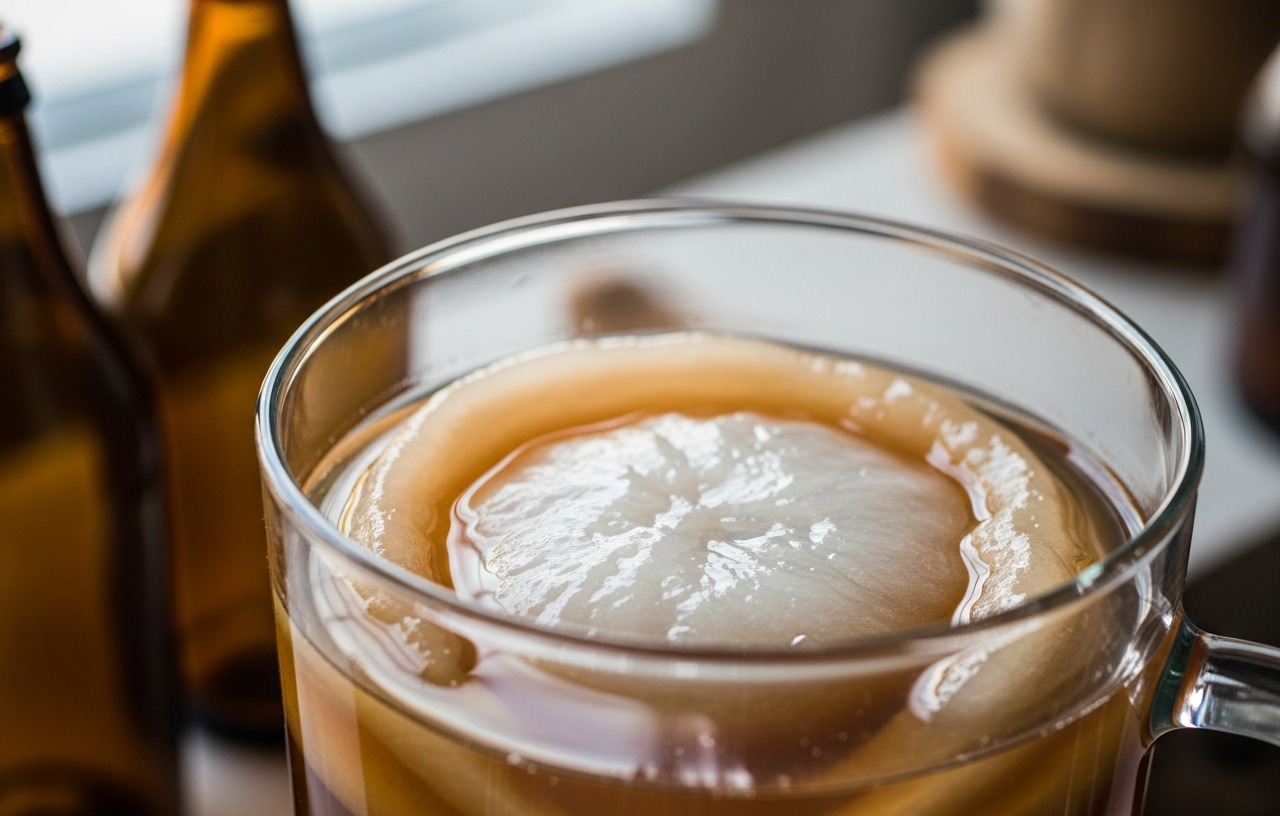
Batch brewing is the traditional method for making kombucha. It involves fermenting a sweet tea solution with a SCOBY (Symbiotic Culture of Bacteria and Yeast) in a vessel for a specific period, typically 7-14 days. Once the primary fermentation finishes, the entire batch is harvested, and a new batch starts from scratch. This method allows brewers to experiment with different tea types, sugar levels, and fermentation times for each individual brew.
Batch Brewing Strengths
- Greater Flavor Control: Each batch is a fresh start. This allows for precise adjustments to ingredients and fermentation length, yielding distinct flavor profiles. Brewers can easily experiment with different tea bases, sugars, and secondary fermentation additions.
- Reduced Contamination Risk: Starting with a sanitized vessel and fresh ingredients for each batch minimizes the chances of unwanted mold or bacteria. This method offers a clean slate every time.
- Variety and Experimentation: Batch brewing is ideal for those who enjoy variety. You can brew different flavors simultaneously or rotate through various recipes. For example, one batch might be plain, while the next uses fruit puree.
- Simpler for Beginners: The process is easy to understand and manage. Beginners can focus on one fermentation at a time without the complexities of managing ongoing cultures. Many kombucha starter kits are designed for batch brewing.
- Easier Cleaning: You clean the vessel thoroughly after each batch. This prevents buildup and maintains a hygienic brewing environment.
Batch Brewing Weaknesses
- Intermittent Supply: You must wait for each batch to finish before harvesting. This means a gap in your kombucha supply unless you stagger multiple batches.
- More Frequent Setup: Each new batch requires preparing sweet tea, cooling it, and introducing the SCOBY. This involves more active preparation time compared to continuous brewing.
- Requires More Vessels for Consistent Supply: To maintain a steady supply, brewers often need several batch brewing vessels running concurrently. This can take up more counter space.
Recommended Batch Brew Equipment
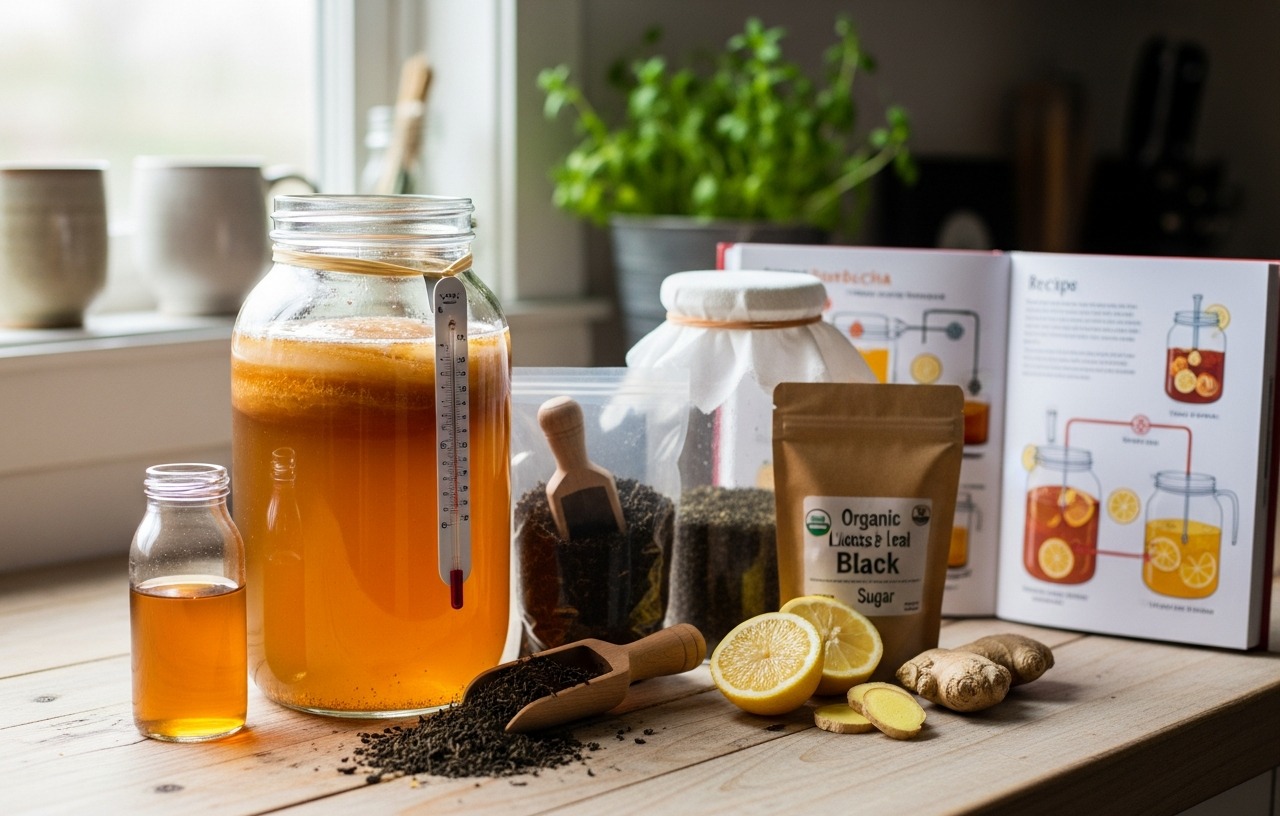
For batch brewing, a reliable fermentation vessel is essential. The 1 Gallon Glass Wide Mouth Kombucha Brewing Mason Jar stands out as our top pick. Its wide mouth design makes it easy to fill, stir, and clean, which is a significant advantage for home brewers. The kit includes a durable glass jar, a breathable cotton cloth cover secured by a rubber band for proper air exchange during fermentation, and an airtight plastic lid for storage after brewing. This complete setup simplifies the entire batch brewing process.
Measuring specific gravity is important for tracking fermentation progress and determining alcohol content, especially if you aim for a boozier brew. The Brewer's Elite Hydrometer for Home Brew Beer, Wine, Mead and Kombucha - Deluxe Triple Scale Set with Hardcase and Cloth offers lab-tested accuracy. This hydrometer features an easy-to-read color scale and specially designed font, making precision measurement simple for any home brewer. Using a hydrometer helps brewers understand their fermentation better, from start to finish. For more on glass vessels, see our guide on best fermentation vessels for beer, which also applies to kombucha.
Understanding Kombucha Continuous Brewing
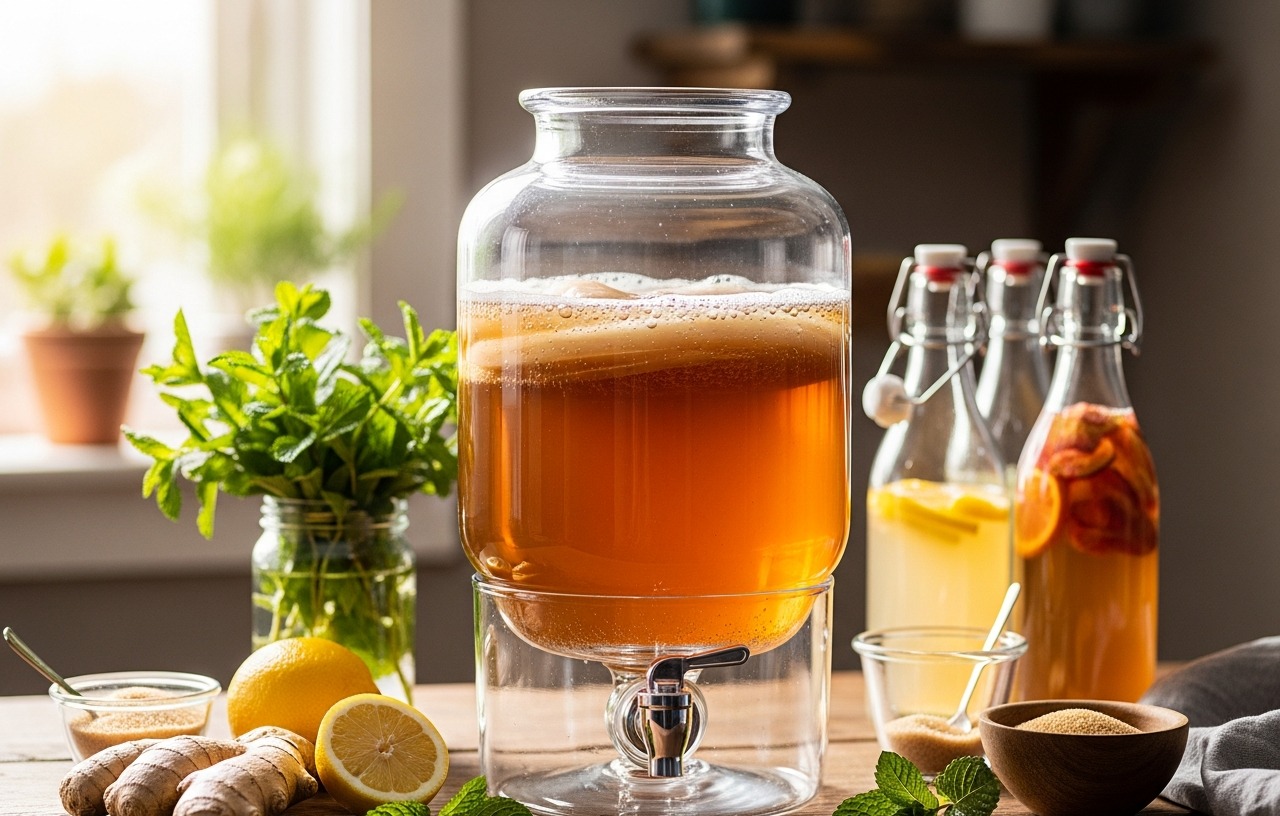
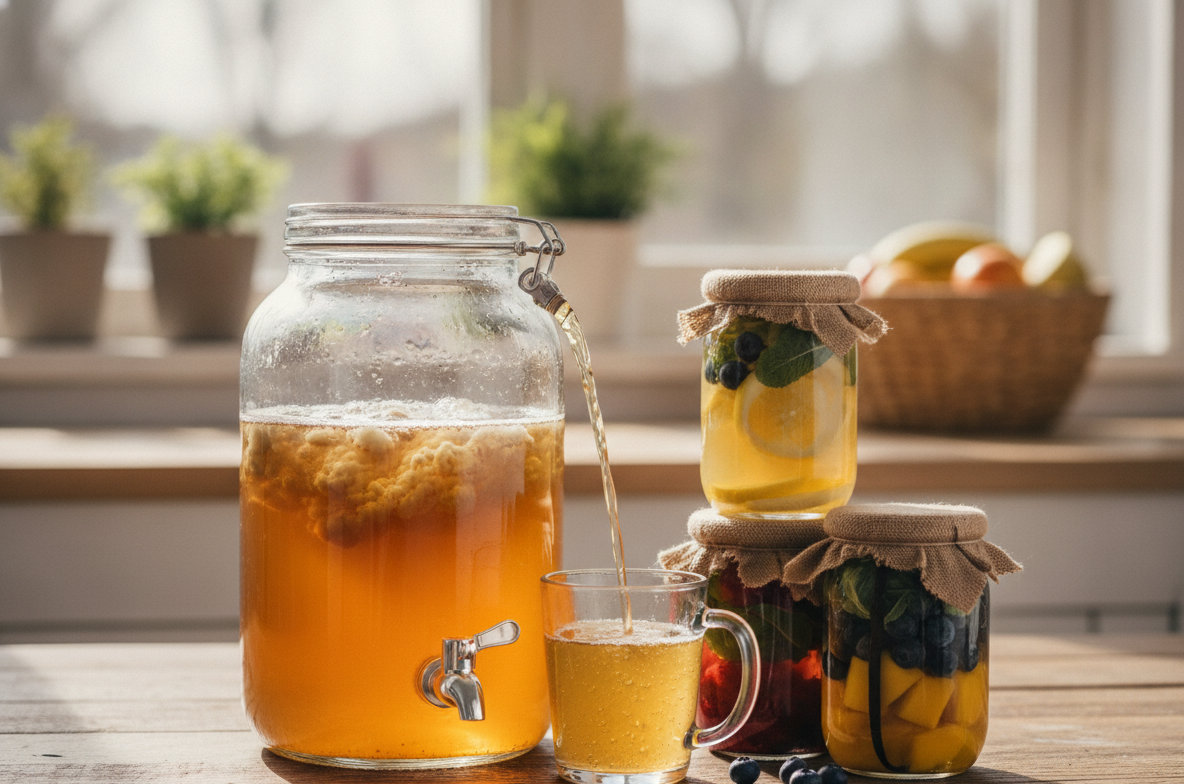
Continuous brewing involves a larger vessel from which you draw off finished kombucha periodically, usually every few days. You then replenish the vessel with fresh sweet tea, allowing the fermentation process to continue without fully emptying the container. A portion of the finished kombucha and the SCOBY always remain in the vessel. This method aims for a steady, ongoing supply of kombucha.
Continuous Brewing Strengths
- Constant Supply: Once established, a continuous brew provides a steady flow of kombucha. You can draw off a glass or two every day or every few days.
- Less Active Work: After the initial setup, the daily or weekly tasks are minimal. You just draw off some kombucha and add more sweet tea.
- Potentially Richer SCOBY: Over time, the SCOBY in a continuous brew can grow quite large and robust, leading to a more vigorous fermentation.
Continuous Brewing Weaknesses
- Less Flavor Control: It is harder to adjust flavors significantly in a continuous brew. The culture becomes very strong and can lead to a consistently tart flavor profile. Experimenting with different teas for each top-off can be challenging.
- Higher Risk of Contamination Over Time: The vessel is rarely fully emptied and cleaned. Over months, sediment can build up, and the risk of undesirable mold or bacteria developing increases. Regular, thorough cleaning is still necessary, but less frequent.
- Initial Setup Investment: Continuous brew vessels are often larger, typically 2-5 gallons, and may include spigots. This can mean a higher upfront cost. You can explore options in our best kombucha continuous brew vessels review.
- SCOBY Management: The SCOBY can grow very large, sometimes requiring trimming or removal. This can be a messy process.
- Potential for Vinegar Over-Fermentation: If not managed properly, the continuous brew can become very acidic, turning into kombucha vinegar. This requires careful monitoring and timely replenishment.
Kombucha Continuous Brew vs Batch: A Head-to-Head Comparison
| Feature | Batch Brewing | Continuous Brewing |
|---|---|---|
| Supply | Intermittent (full harvest) | Constant (draw off as needed) |
| Flavor Control | High (easy to vary) | Lower (consistent, often tarter) |
| Setup Frequency | Every 7-14 days | Initial setup, then daily/weekly top-offs |
| Cleaning Frequency | Every batch | Less frequent, but full clean still needed periodically |
| Contamination Risk | Lower (fresh start) | Higher over time (sediment buildup) |
| Equipment Size | Smaller vessels (1 gallon typical) | Larger vessels (2-5 gallons typical) |
| Experimentation | Excellent for varied recipes | Limited for varied recipes |
| Effort | More active preparation per batch | Less active daily, but initial setup is more involved |
Who Should Choose Batch Brewing?
Batch brewing is ideal for several types of home brewers. It suits beginners who want to learn the basics without overwhelming complexity. Those who enjoy experimenting with different tea blends, sugar types, and flavor infusions will appreciate the control offered by batch brewing. If you prefer to have distinct flavors for each bottle or enjoy the process of starting fresh every week or two, this method is for you. People with limited counter space also benefit from the smaller vessels typically used in batch brewing. If your SCOBY is not bubbling, batch brewing allows for easier troubleshooting and a fresh start.
Who Should Choose Continuous Brewing?
Continuous brewing is best for those who consume a large amount of kombucha regularly and want a consistent, ongoing supply. If you have mastered the basics of fermentation and prioritize convenience over flavor variation, continuous brewing offers a hands-off approach after the initial setup. Individuals who want to reduce the frequency of full brewing cycles and cleaning will find this method appealing. It works well for families or individuals with high consumption rates who prefer a reliable, steady source of their favorite fermented tea.
Final Thoughts
The choice between kombucha continuous brew vs batch brewing depends on your priorities as a home brewer. Batch brewing, with its superior flavor control and ease of experimentation, is often the better starting point for most enthusiasts. The 1 Gallon Glass Wide Mouth Kombucha Brewing Mason Jar provides an excellent foundation for this method, simplifying the process and making consistent results achievable. For those seeking a constant supply and willing to manage a larger, ongoing culture, continuous brewing offers its own set of benefits.
Brewer's Elite Hydrometer for Home Brew Beer, Wine, Mead and Kombucha - Deluxe Triple Scale Set with Hardcase and Cloth -
- Lab Tested Unrivalled Quality & Accuracy: All Brewer's Elite Hydrometers are rigorously tested to.
- 75+ Brewing Video Courses & Tutorials: Due to our exclusive partnership with Craft Beer & Brewing Magazine.
- Precision Made Simple: The easy-to-read color scale and specially designed font allow for clear.
- Versatile Brewing Tool: Effortlessly measure specific gravity, potential alcohol, and brix for crafting.
1 Gallon Glass Wide Mouth Kombucha Brewing Mason Jar - Home Brewing and Fermenting Kit with Cotton Cloth Filter, Rubber Band and
- Wide mouth design allows easy access for filling, stirring, and cleaning
- Includes 1-gallon glass jar, cotton cloth cover, rubber band, and airtight plastic lid
- Rubber band secures the cloth cover firmly during fermentation
- Airtight plastic lid provides secure storage for finished products