
Hemlock Home Brewing Kombucha Heating Wrap - Fermentation Heater Mat Pad with Temperature Control
- North American 120V only - Made specifically for kombucha - this kombucha heating mat is designed.
- 3 temperature settings - most other heating wraps set the temperature too high or too low. I've picked.
- Safe to use around liquids - this heating pad is safe to use around kombucha. No more worrying about spilling.
- Designed to work with temperature gauges - I hated having to remove my kombucha wrap to check the.

Just Fitter Alkaline Water pH Test Strips. Testing Kit for Home Drinking Water and Liquids. Universal Tester for Aquarium, Fish
- Maintain your body pH by knowing what you take in. Drinking pH-balanced water supports hydration.
- Get the best value by testing multiple kinds of liquids. Easily test liquids for ph and acidity by dipping.
- Healthy, stress-free fishes. A balanced pH in an aquarium supports fish health, reduces stress, and.
- Monitor kombucha fermentation. Kombucha needs to reach a pH between 2.5 and 3.5. Regularly testing the pH.
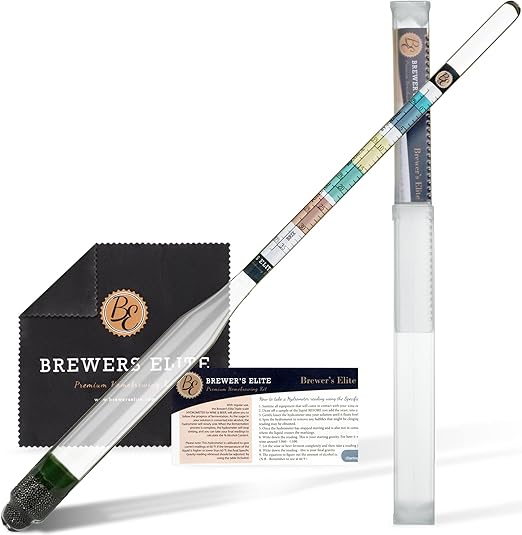
Brewer's Elite Hydrometer for Home Brew Beer, Wine, Mead and Kombucha - Deluxe Triple Scale Set with Hardcase and Cloth -
- Lab Tested Unrivalled Quality & Accuracy: All Brewer's Elite Hydrometers are rigorously tested to.
- 75+ Brewing Video Courses & Tutorials: Due to our exclusive partnership with Craft Beer & Brewing Magazine.
- Precision Made Simple: The easy-to-read color scale and specially designed font allow for clear.
- Versatile Brewing Tool: Effortlessly measure specific gravity, potential alcohol, and brix for crafting.
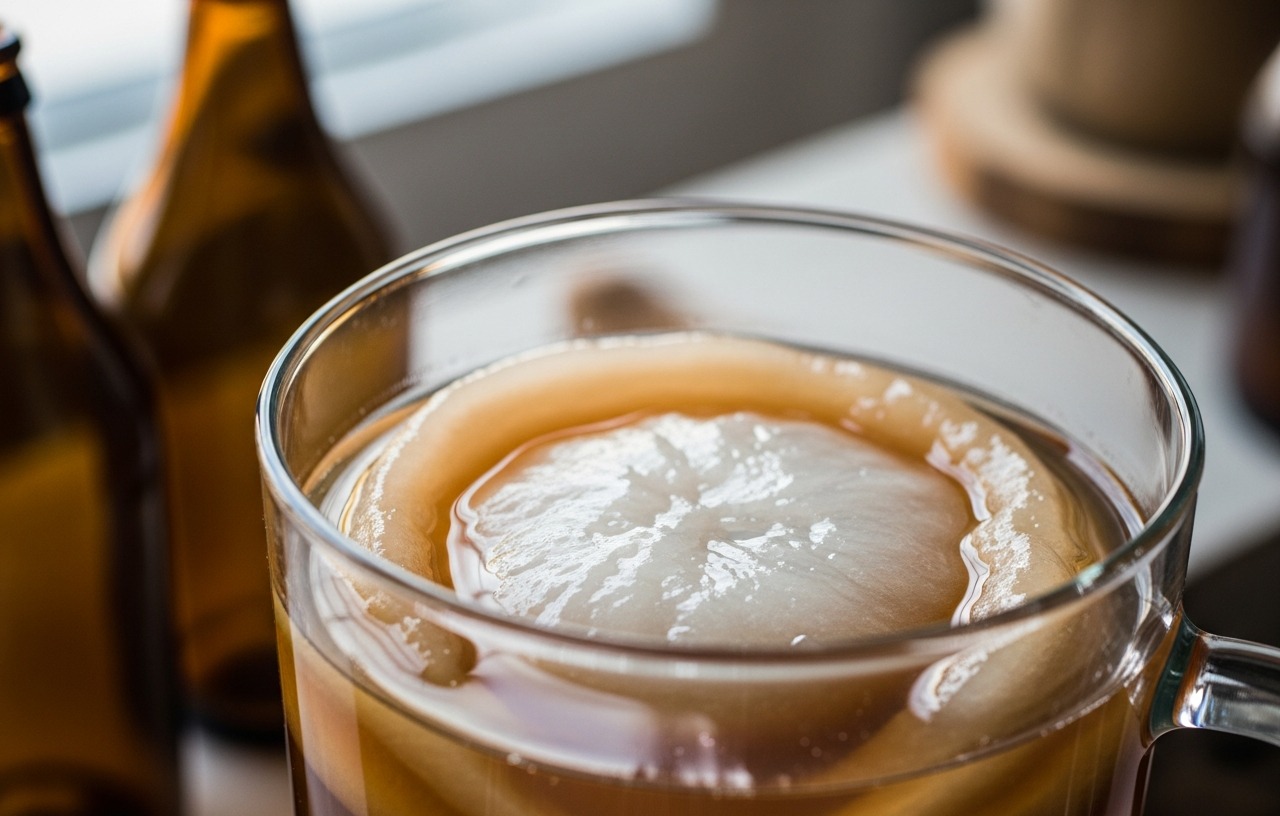
Visible mold or an unpleasant smell in your fermentation vessel means contamination has taken hold. This can spoil your entire batch of kombucha and potentially harm your SCOBY, the symbiotic culture of bacteria and yeast vital for fermentation. Preventing contamination starts with rigorous sanitization of all equipment that touches your brew. This process safeguards your SCOBY, protects the delicate balance of your fermentation, and makes sure every batch tastes exactly as it should.
Cleaning vs. Sanitizing: What's the Difference?
Many home brewers confuse cleaning with sanitizing. These are two distinct but equally important steps in preparing your kombucha equipment.
- Cleaning removes visible dirt, debris, and organic matter from surfaces. This involves scrubbing, rinsing, and using detergents to get rid of any physical grime. If you skip cleaning, sanitizers cannot work effectively because they cannot penetrate layers of dirt or residue.
- Sanitizing reduces microorganisms like bacteria, wild yeasts, and mold spores to a safe level. Sanitizers do not clean surfaces. They kill or inhibit the growth of harmful microbes that could spoil your kombucha. A surface must be visibly clean before it can be truly sanitized.
Why Sanitize Your Kombucha Brewing Equipment?
Kombucha fermentation relies on a specific balance of beneficial bacteria and yeast within the SCOBY. Introducing unwanted microorganisms can disrupt this balance, leading to several problems:
- Mold Growth: This is the most common and visible sign of contamination. Mold can appear as fuzzy, dry spots on the surface of your SCOBY or liquid. It typically indicates unsterile conditions.
- Off-Flavors: Unwanted bacteria or wild yeasts can produce undesirable flavors and aromas, making your kombucha taste sour, vinegary in a bad way, or even moldy.
- Weak Fermentation: Contaminants can outcompete your SCOBY, slowing down or even stopping the fermentation process entirely. This results in weak, uncarbonated, or bland kombucha.
- SCOBY Health: A contaminated environment stresses your SCOBY, potentially weakening it or making it susceptible to further issues. A healthy SCOBY produces healthy kombucha.
Choosing the Right Sanitizer for Kombucha
Several effective sanitizers are available for home brewing. Each has its pros and cons:
Star San
Star San is an acid-based, no-rinse sanitizer popular among home brewers. It is highly effective and safe for most brewing materials, including glass, plastic, and stainless steel. You simply mix it with water according to the manufacturer's instructions, soak your equipment for a minute or two, and then let it air dry. The slight foam it leaves behind is harmless to your brew.
Iodophor
Iodophor is another effective sanitizer, but it requires rinsing. It is iodine-based and works quickly. After soaking equipment in an iodophor solution, you must rinse everything thoroughly with clean water to prevent any iodine residue from affecting the flavor of your kombucha or harming your SCOBY. It can also stain some plastics.
Bleach (Chlorine Solution)
Household bleach is a powerful disinfectant and can sanitize brewing equipment effectively. Use a highly diluted solution (typically 1 tablespoon of bleach per gallon of water). Like iodophor, bleach requires extensive rinsing. Any residual chlorine can kill your SCOBY and impart off-flavors. Some brewers avoid bleach entirely due to the rinsing requirement and potential for residue.
Boiling Water
For heat-safe items like glass jars, metal utensils, or bottles, boiling water is a simple and effective sanitization method. Submerge items in boiling water for at least five minutes. Be careful when handling hot items and make sure your equipment can withstand high temperatures without cracking or warping.
White Vinegar
While white vinegar is an excellent cleaner, especially for removing mineral deposits and SCOBY pellicle residue, it is not a strong enough sanitizer on its own for critical brewing steps. It can be used as a final rinse after cleaning, or for cleaning items that do not directly contact the brew. Do not rely on vinegar alone for sanitization.
Tools and Materials You Will Need
- Large sink or plastic tub
- Bottle brush and general cleaning brush
- Gentle, unscented dish soap
- Chosen sanitizer (e.g., Star San, iodophor)
- Clean water
- Drying rack or clean towels
- Gloves (optional, for handling sanitizer)
- Funnel (if sanitizing bottles)
- Hydrometer (if you use one for testing gravity)
step by step Guide to Sanitizing Kombucha Brewing Equipment
Follow these steps for thorough sanitization of your kombucha gear:
Step 1: Gather All Equipment
Time estimate: 5 minutes
Before you begin, collect every piece of equipment that will come into contact with your kombucha. This includes your fermentation vessel, stirring spoon, funnel, bottles, caps, and any other tools like a continuous brew system components. Do not forget items that might seem minor, like rubber stoppers or airlocks. If it touches the brew, it needs to be clean and sanitized.
Step 2: Clean Thoroughly with Soap and Water
Time estimate: 10-20 minutes, depending on equipment quantity
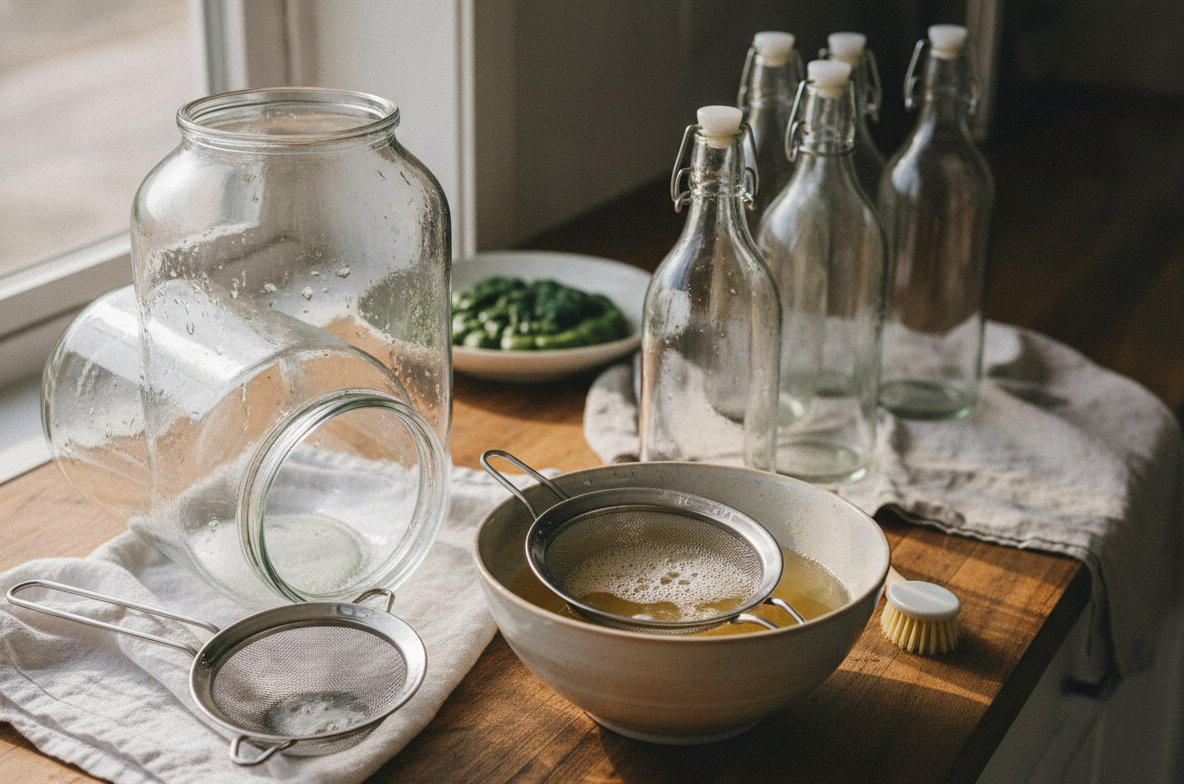
Wash all equipment with warm water and a gentle, unscented dish soap. Use brushes to scrub away any visible residue, tea stains, or SCOBY pellicle remnants. Pay special attention to corners, crevices, and bottle necks where grime can accumulate. Rinse everything thoroughly with clean water to remove all soap residue. Soap can leave a film that interferes with fermentation and sanitizer effectiveness.
Step 3: Prepare Your Sanitizer Solution
Time estimate: 2-3 minutes
Mix your chosen sanitizer according to the manufacturer's instructions. For Star San, this usually means a small amount per gallon of water. For iodophor, it is typically a few drops per gallon. If using bleach, measure carefully (1 tablespoon per gallon of water). Always use cold water for Star San and iodophor to prevent premature degradation of the solution. Wear gloves if you have sensitive skin.
Step 4: Sanitize Fermentation Vessels
Time estimate: 5-10 minutes soaking, plus drying
Pour the sanitizer solution into your primary fermentation vessel. Make sure the solution touches all internal surfaces. If your vessel has a spigot, open it briefly to allow the sanitizer to flow through and clean the internal mechanism. For smaller vessels, you might submerge them entirely in a larger tub of sanitizer. Let the vessel sit for the recommended contact time, usually 1-5 minutes, depending on the sanitizer. If using a no-rinse sanitizer, simply dump out the solution and allow the vessel to air dry. If using iodophor or bleach, rinse thoroughly with clean water.
Step 5: Sanitize Smaller Tools and Accessories
Time estimate: 5 minutes soaking, plus drying
Submerge all smaller tools like stirring spoons, funnels, hydrometers, and thermometers in your sanitizer solution. Make sure the solution covers all surfaces. For a Brewer's Elite Hydrometer for Home Brew Beer, Wine, Mead and Kombucha, make sure to sanitize both the hydrometer and its test jar. This makes sure accurate readings and prevents contamination of your sample. Let them soak for the recommended time, then remove and air dry on a clean rack or towel. Again, rinse if using a sanitizer that requires it.
Step 6: Sanitize Bottling Equipment
Time estimate: 15-30 minutes, depending on bottle quantity
Bottles are a common source of contamination. Fill each bottle with sanitizer solution, or submerge them in a tub of sanitizer. Use a bottle brush to make sure the solution reaches all internal surfaces. Sanitize bottle caps by submerging them as well. If using a bottling wand, run sanitizer through it. After the contact time, empty the bottles. If using a no-rinse sanitizer, invert them on a drying rack to air dry completely. If using iodophor or bleach, rinse thoroughly before air drying.
Step 7: Air Dry All Equipment
Time estimate: 30 minutes to several hours
This step is critical. Allow all sanitized equipment to air dry completely. Do not wipe with towels, as even clean towels can introduce new contaminants. Invert bottles and vessels on a clean drying rack. Make sure to use the equipment only when it is completely dry. This prevents dilution of your brew and further reduces the risk of contamination.
Step 8: pH Testing (Optional but Recommended)
Time estimate: 1 minute per test
Monitoring the pH of your kombucha is a good practice to track fermentation progress and identify potential issues. After sanitizing your equipment, you might want to test the pH of your starter tea or early brew to make sure it is in the optimal range (typically 2.5-4.5). Products like Just Fitter Alkaline Water pH Test Strips offer a simple way to get a quick reading. While not directly related to sanitization, a healthy pH environment discourages unwanted microbial growth.
Step 9: Temperature Control (Optional but Recommended)
Time estimate: Set up once
Proper temperature control also contributes to a healthy fermentation, making your SCOBY less susceptible to contaminants. Kombucha ferments best between 75-85°F (24-29°C). If your brewing environment is too cold, fermentation can slow, giving mold more time to take hold. A heating solution, such as the Hemlock Home Brewing Kombucha Heating Wrap, can maintain a stable temperature. This heating mat is designed specifically for kombucha, offers three temperature settings, and is safe to use around liquids. Stable temperatures support a vigorous, healthy brew.
Maintaining a Clean Brewing Environment
Sanitizing your equipment is only part of the equation. A clean brewing environment further reduces the risk of contamination. Here are some tips:
- Designate a Brewing Area: Choose a clean, quiet spot in your home away from strong odors, dust, and direct sunlight.
- Wash Your Hands: Always wash your hands thoroughly with soap and water before handling any brewing equipment or your SCOBY.
- Cover Your Brew: Use a breathable cloth cover and a rubber band to protect your kombucha from dust, fruit flies, and airborne contaminants while still allowing air circulation.
- Regular Cleaning: Clean your brewing area regularly. Wipe down surfaces with a sanitizing spray.
- Inspect Your SCOBY: Before each brew, visually inspect your SCOBY for any signs of mold or unusual textures. If you see mold, discard the SCOBY and liquid. For more troubleshooting, see our guide on Kombucha SCOBY Not Bubbling? Troubleshooting Your Fermentation.
Recognizing Signs of Contamination
Even with careful sanitization, contamination can sometimes occur. Here are key indicators:
- Fuzzy Mold: This is the most definite sign. Mold will typically appear as fuzzy, dry, circular spots on the surface of your SCOBY or liquid. It can be green, black, white, or blue. Discard the entire batch immediately if you see mold.
- Unpleasant Odors: While kombucha has a distinct sour smell, an aroma resembling rotten eggs, strong sulfur, or putrid decay indicates contamination.
- Unusual Colors: Beyond the expected tea colors, any vibrant or unnatural color changes in the liquid or SCOBY can be a warning sign.
Sanitizing your kombucha brewing equipment is not just a chore; it is an essential part of the brewing process. A little effort in sanitization goes a long way in achieving brewing success.
Hemlock Home Brewing Kombucha Heating Wrap - Fermentation Heater Mat Pad with Temperature Control
- North American 120V only - Made specifically for kombucha - this kombucha heating mat is designed.
- 3 temperature settings - most other heating wraps set the temperature too high or too low. I've picked.
- Safe to use around liquids - this heating pad is safe to use around kombucha. No more worrying about spilling.
- Designed to work with temperature gauges - I hated having to remove my kombucha wrap to check the.
Just Fitter Alkaline Water pH Test Strips. Testing Kit for Home Drinking Water and Liquids. Universal Tester for Aquarium, Fish
- Maintain your body pH by knowing what you take in. Drinking pH-balanced water supports hydration.
- Get the best value by testing multiple kinds of liquids. Easily test liquids for ph and acidity by dipping.
- Healthy, stress-free fishes. A balanced pH in an aquarium supports fish health, reduces stress, and.
- Monitor kombucha fermentation. Kombucha needs to reach a pH between 2.5 and 3.5. Regularly testing the pH.
Brewer's Elite Hydrometer for Home Brew Beer, Wine, Mead and Kombucha - Deluxe Triple Scale Set with Hardcase and Cloth -
- Lab Tested Unrivalled Quality & Accuracy: All Brewer's Elite Hydrometers are rigorously tested to.
- 75+ Brewing Video Courses & Tutorials: Due to our exclusive partnership with Craft Beer & Brewing Magazine.
- Precision Made Simple: The easy-to-read color scale and specially designed font allow for clear.
- Versatile Brewing Tool: Effortlessly measure specific gravity, potential alcohol, and brix for crafting.