
FERRODAY Wort Brewing Pump, Stainless Head Magnetic Drive Brew Food Safe Water High Temp Homebrew Beer Pump with 1/2" NPT Thread
- Safely Transfer Liquid: note: This is a magnetic drive pump, not a self-priming pump, please install the.
- Quiet and Efficient: The pump’s main shaft is separated from the impeller, which has damping and.
- Solid Magnetic Pump: Fully-sealed magnetic pump, motor with connecting the magnetic shaft and magnetic.
- Easy to Use: Prime by running liquid through the pump by connecting with water hose prior to turning it.

Wort Pump High Temp Brewing Pump Food Grade Pump Stainless Steel Head brew Pump Homebrew pump Magnetic Drive Pump Wort Transfer
- High Temperature Resistance: The wort pump is ideal for recirculating the mash liquid or transferring.
- Controllable Flow Rate and Easy to Switch Hoses: The homebrew pump set contains a mini ball valve, which.
- Durable Food Grade Brew Pump: 304 stainless steel pump head, built-in food grade impeller, solid metal.
- Quiet Operation and Sealed Fully: The food-grade pumps rely on the attraction between the drive magnet and.
Manually lifting heavy kettles filled with hot wort or mash liquid poses a burn risk and can strain your back. A quality homebrew pump significantly reduces these hazards, transforming a laborious brew day into a streamlined process. These devices move liquids quietly and efficiently, allowing brewers to focus on process control instead of heavy lifting.
Why a Homebrew Pump Improves Your Brew Day
Integrating a pump into your homebrewing setup offers several advantages. The primary benefit is safety. Transferring hot liquids, especially wort at boiling temperatures, becomes much safer when you do not need to lift or pour heavy vessels. Pumps also increase efficiency. Mash recirculation, a technique used in all-grain brewing to clarify wort and improve extraction, becomes automated and consistent. Similarly, transferring wort from a brew kettle through a wort chiller into a fermenter happens quickly and cleanly.
Using a pump helps maintain consistent temperatures during the mash, especially with all-grain brewing systems that employ RIMS (Recirculating Infusion Mash System) or HERMS (Heat Exchanger Recirculating Mash System). Recirculating allows for precise temperature control, leading to better enzyme activity and more consistent sugar conversion. This directly impacts the quality and consistency of your finished beer.
Understanding Homebrew Pump Types
Most homebrew pumps fall into one of two categories: magnetic drive or self-priming. Understanding the differences helps you choose the correct model for your needs.
Magnetic Drive Pumps
Magnetic drive pumps are the most common type used by homebrewers. They operate without a direct shaft seal between the motor and the impeller. Instead, magnets drive the impeller, creating a fully sealed wet end. This design prevents leaks, making them highly sanitary and durable for food-grade applications. These pumps are not self-priming. You must fill the pump head with liquid before starting them, or they will run dry and potentially damage internal components.
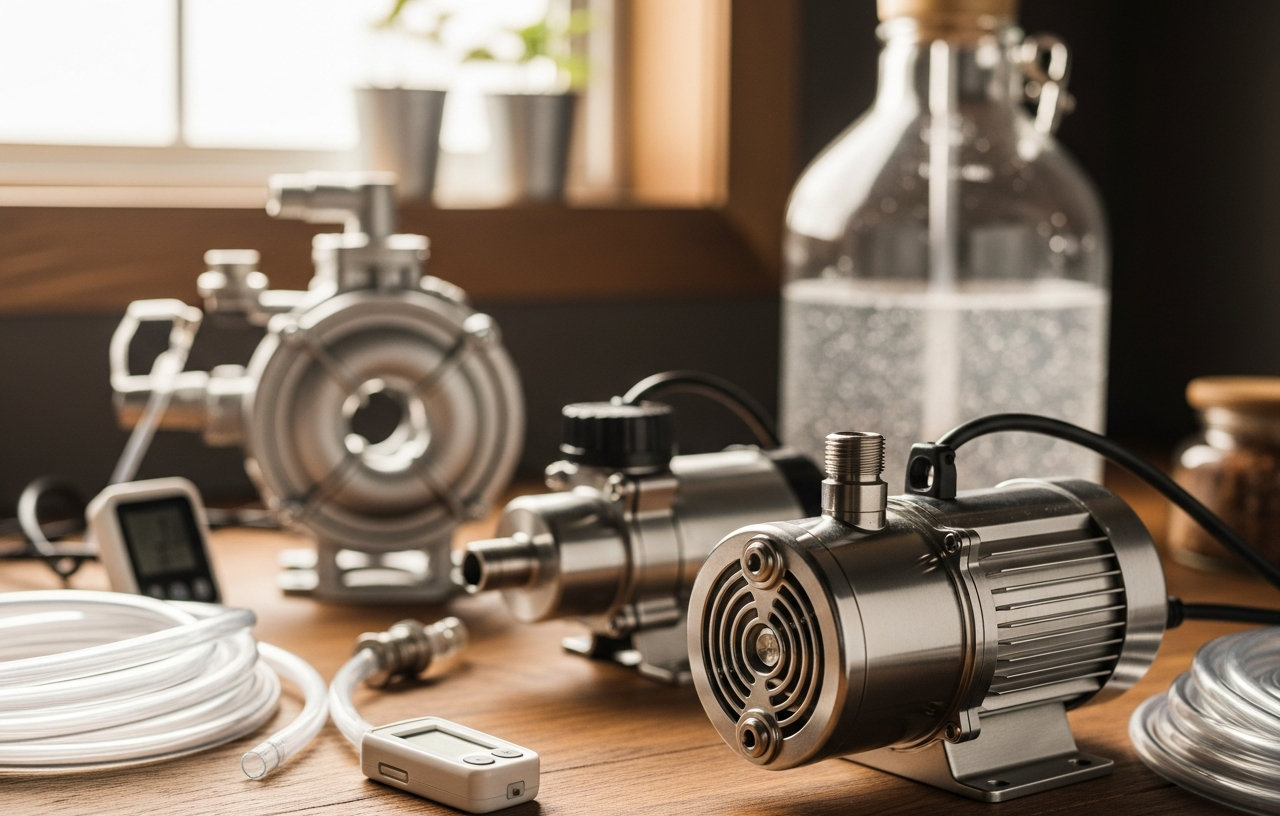
The FERRODAY Wort Brewing Pump, a top pick based on verified customer ratings, is a magnetic drive pump. It features a stainless steel head and is designed for food-safe liquid transfer. The separation of the main shaft from the impeller helps reduce noise and vibration, making for a quiet operation. Its fully sealed design is a significant advantage for maintaining sanitation.
Self-Priming Pumps
Self-priming pumps can draw liquid into the pump head without needing to be manually filled first. This convenience can be useful in certain setups where gravity feeding the pump is difficult. However, self-priming pumps typically have more internal moving parts and seals, which can make them slightly harder to clean and potentially less durable over time due to wear on those seals. They are less common in dedicated homebrew setups.
Key Specifications for Homebrew Pumps
When selecting a homebrew pump, several specifications dictate its performance and suitability for your setup. Paying close attention to these details prevents frustration on brew day.
Material Quality: Food-Grade Stainless Steel is Essential
The pump head and any internal components contacting your wort must be food-grade. 304 stainless steel is the industry standard for homebrewing equipment. It resists corrosion, withstands high temperatures, and is easy to clean and sanitize. Avoid pumps with plastic pump heads or impellers unless specifically rated for high-temperature brewing applications and made from food-grade plastics like polysulfone. The Wort Pump High Temp Brewing Pump, for example, features a 304 stainless steel pump head and a built-in food-grade impeller, ensuring durability and safety.
Flow Rate and Head Pressure
Flow Rate: This measures how much liquid the pump can move per unit of time, typically expressed in Gallons Per Hour (GPH) or Liters Per Minute (LPM). For most homebrewers, a pump capable of 3-5 GPM (11-19 LPM) is sufficient for transferring wort and recirculating mash. Higher flow rates can be beneficial for faster transfers or for use with plate chillers that require strong flow.
Head Pressure: Also known as lift capacity, this indicates the maximum vertical distance the pump can push liquid. If your fermenter is significantly higher than your brew kettle, you will need a pump with adequate head pressure. Most homebrew pumps offer enough head for typical setups, usually around 10-15 feet of vertical lift.
Temperature Rating
Wort often reaches boiling temperatures (212°F or 100°C) during the boil and is still very hot when transferring to a fermenter or through a chiller. Your pump must withstand these temperatures without degradation. Look for pumps rated for at least 212°F (100°C), preferably higher, to allow for some safety margin. Both the FERRODAY and the Wort Pump High Temp Brewing Pump are designed for high-temperature resistance, making them suitable for hot wort transfers.
Power and Connections
Power: Most homebrew pumps operate on standard household current (110-120V in North America). Check the wattage or amperage to ensure your circuit can handle the load, though most homebrew pumps draw relatively low power. A simple on/off switch is a standard feature, and some pumps offer variable speed control, which is useful for fine-tuning flow during recirculation or chilling.
Connections: Pumps typically come with 1/2" NPT (National Pipe Thread) connections or barb fittings. NPT connections are versatile, allowing you to attach quick disconnects or various fittings for hoses. Barb fittings are simpler but require hose clamps for a secure seal. Consider what kind of hosing and fittings you already use or plan to use. The FERRODAY pump uses 1/2" NPT threads, offering flexibility for your plumbing.
Noise Level
While not a performance spec, pump noise can affect your brewing experience. Magnetic drive pumps are generally quieter than self-priming models due to fewer moving parts. Look for mentions of quiet operation in product descriptions or user reviews. The FERRODAY pump is specifically noted for its quiet operation.
Red Flags to Watch For
When shopping for a homebrew pump, avoid models that exhibit these characteristics:
- Non-Food-Grade Materials: Any pump head or impeller not explicitly stated as 304 stainless steel or food-grade high-temp plastic should raise a red flag. Compromising on material quality can lead to off-flavors or health risks.
- Low Temperature Rating: If a pump is not rated for at least 212°F (100°C), it is unsuitable for most homebrewing applications involving hot wort.
- Poor Build Quality: Flimsy plastic casings, loose connections, or a generally cheap feel can indicate a pump that will fail prematurely. Rely on verified customer ratings for insights here.
- Excessive Noise (based on user reviews): While some pump noise is unavoidable, excessively loud operation can be a sign of poor design or impending mechanical issues.
Let us compare two popular magnetic drive pumps suitable for homebrewing.
FERRODAY Wort Brewing Pump (Top Pick)
This pump stands out for its robust construction and quiet performance. Its stainless steel head and magnetic drive design make it ideal for safely transferring hot wort. The separated main shaft and impeller design contributes to its low noise output and reduced vibration. Based on product specs, it handles high temperatures well and offers 1/2" NPT connections for easy integration into existing systems. Users praise its efficiency and reliability. The magnetic drive system means it is not self-priming; you must fill the pump head before starting it.
Wort Pump High Temp Brewing Pump (Option 2)
This option also features a 304 stainless steel pump head and a food-grade impeller, ensuring safety and durability for high-temperature applications. A key feature mentioned by the manufacturer is the inclusion of a mini ball valve. This valve allows for controllable flow rates, which can be very beneficial for tasks like precise mash recirculation or slowing down transfers. The ability to switch hoses easily adds to its user-friendliness. Researched from user reviews, this pump also performs well for hot wort transfers and general recirculation tasks.
Comparison Summary
Both pumps offer excellent performance for homebrewing. The FERRODAY pump's primary advantage lies in its quiet operation and solid magnetic drive system, making it a reliable workhorse. The Wort Pump High Temp Brewing Pump distinguishes itself with the included flow control valve, offering an extra layer of precision for brewers who value fine-tuning their process. For most brewers seeking a dependable, quiet, and efficient pump, the FERRODAY is a strong contender. If precise flow control out of the box is a priority, the Wort Pump High Temp Brewing Pump is a compelling alternative.
long term Cost of Ownership and Maintenance
The initial purchase price of a homebrew pump, typically ranging from $70-$150, is the main cost. long term costs are minimal with proper care.
Cleaning and Sanitation
Proper cleaning and sanitation are critical for the longevity and performance of your pump. After each use, flush the pump with warm water, then run a cleaning solution (like PBW or another alkaline cleaner) through it. Follow this with a rinse and then a sanitizing solution (like Star San). Make sure to disassemble the pump head periodically to clean any internal buildup, especially around the impeller. This prevents bacterial growth and ensures efficient operation.
Replacement Parts
Magnetic drive pumps have few wearing parts. The most common items needing replacement are O-rings or seals within the pump head, which can degrade over many years of use. Impellers are generally durable but can be replaced if damaged. These parts are inexpensive, usually costing under $10-$20. Expect to replace them only after several years of regular brewing.
Power Consumption
Homebrew pumps are low-power devices. Their electrical consumption is negligible compared to other brewing equipment like heating elements. The running cost in terms of electricity is minimal, adding perhaps a few dollars per year to your utility bill with regular use.
Recommendation
For most homebrewers looking for a reliable, quiet, and efficient pump for transferring hot wort and recirculating mash, the FERRODAY Wort Brewing Pump is the best choice. Its robust stainless steel construction, magnetic drive design, and proven performance based on verified customer ratings make it an excellent investment. The quiet operation is a significant benefit for longer brew days. While not self-priming, the benefits of its sealed design and durability outweigh this minor operational consideration for the average homebrewer.
FAQ
Do I need a self-priming pump for homebrewing?
Most homebrewers do not need a self-priming pump. Magnetic drive pumps are more common and offer superior sanitation and durability. You can easily prime a magnetic drive pump by ensuring the pump head is full of liquid before turning it on, often by placing it below the liquid source.
How do I clean my homebrew pump properly?
After each use, flush your pump with hot water, then run a dedicated brewing cleaner (like PBW) through it for 10-15 minutes. Follow with a thorough rinse, and then circulate a no-rinse sanitizer (like Star San) for a few minutes. Periodically disassemble the pump head to clean any hidden residue.
Can I use a homebrew pump for cold liquids?
You can use them for transferring cooled wort, water, or even cleaning solutions. The high-temperature rating ensures versatility across your entire brewing process.
FERRODAY Wort Brewing Pump, Stainless Head Magnetic Drive Brew Food Safe Water High Temp Homebrew Beer Pump with 1/2" NPT Thread
- Safely Transfer Liquid: note: This is a magnetic drive pump, not a self-priming pump, please install the.
- Quiet and Efficient: The pump’s main shaft is separated from the impeller, which has damping and.
- Solid Magnetic Pump: Fully-sealed magnetic pump, motor with connecting the magnetic shaft and magnetic.
- Easy to Use: Prime by running liquid through the pump by connecting with water hose prior to turning it.
Wort Pump High Temp Brewing Pump Food Grade Pump Stainless Steel Head brew Pump Homebrew pump Magnetic Drive Pump Wort Transfer
- High Temperature Resistance: The wort pump is ideal for recirculating the mash liquid or transferring.
- Controllable Flow Rate and Easy to Switch Hoses: The homebrew pump set contains a mini ball valve, which.
- Durable Food Grade Brew Pump: 304 stainless steel pump head, built-in food grade impeller, solid metal.
- Quiet Operation and Sealed Fully: The food-grade pumps rely on the attraction between the drive magnet and.