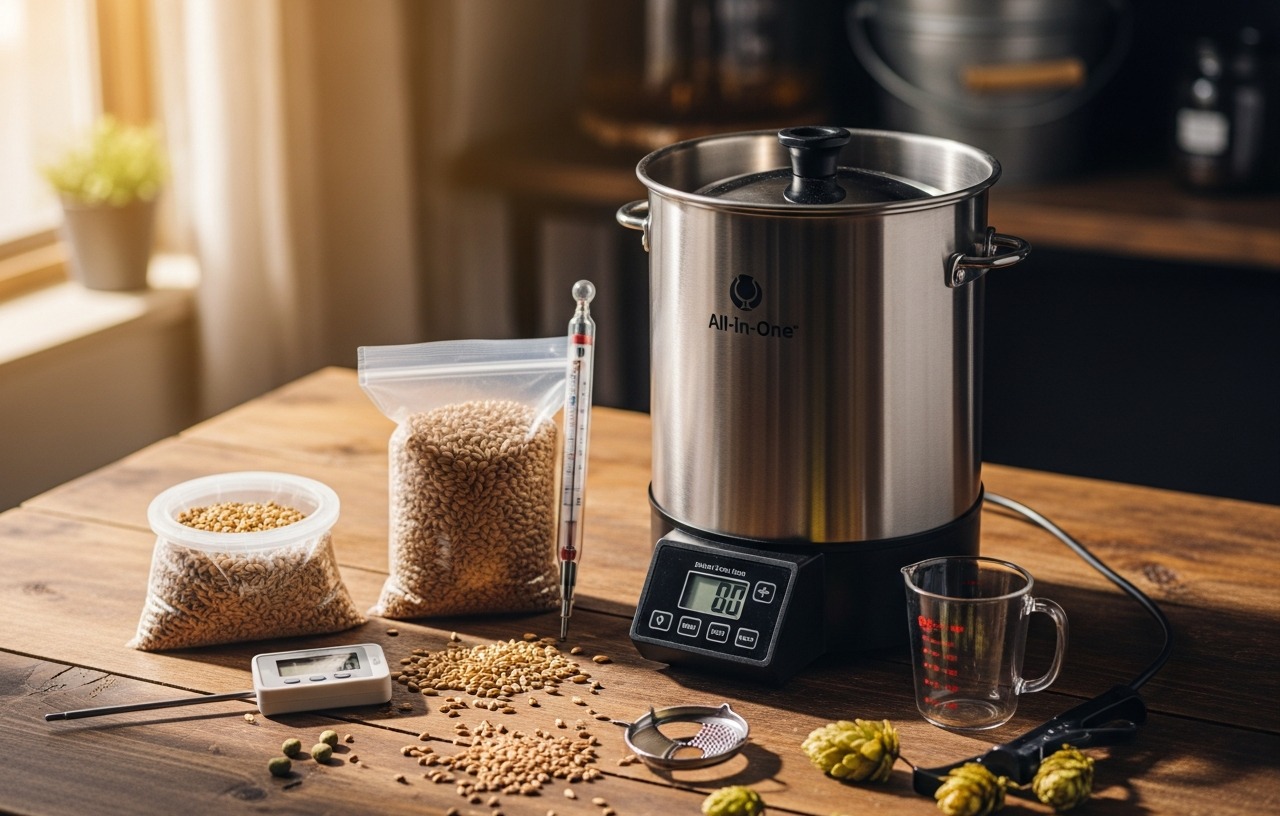
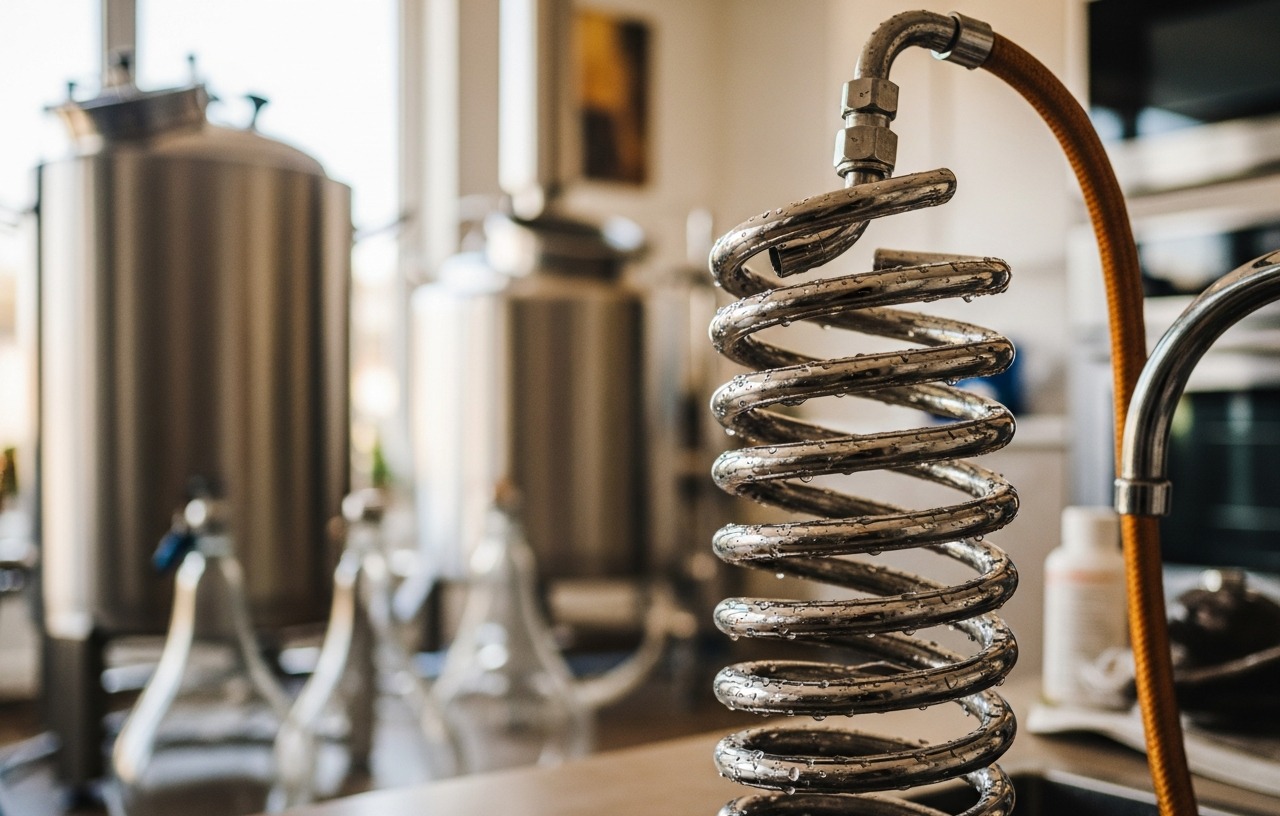
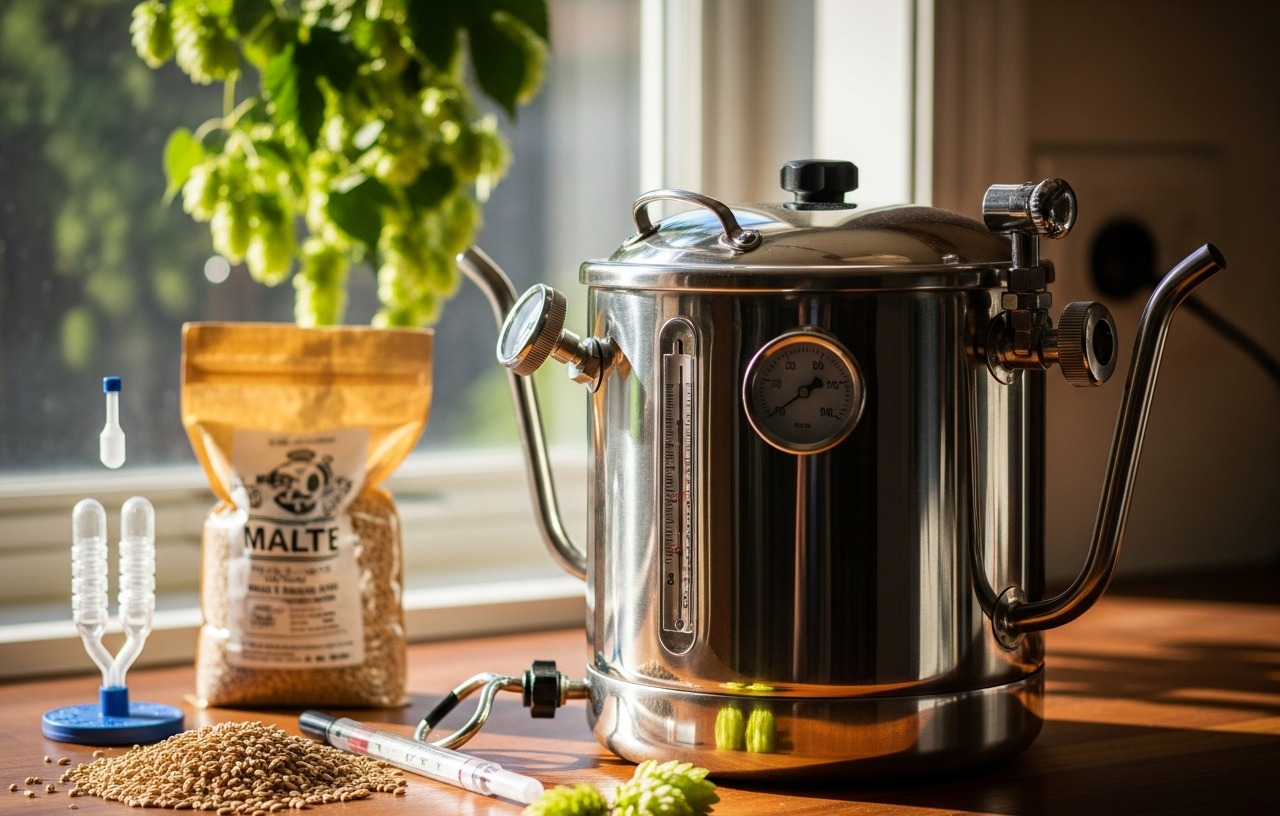
A mash tun is a temperature-controlled vessel used in all-grain brewing to steep malted grains in hot water. This process, known as mashing, converts starches in the grain into fermentable sugars that yeast will later consume to produce alcohol. Without a properly functioning mash tun, the conversion of starches to sugars is inefficient, directly impacting the final beer's alcohol content and flavor profile. For homebrewers transitioning from extract brewing to all-grain, the mash tun represents a significant equipment purchase and a step toward greater control over the brewing process. Many beginner all-grain brewers start with systems that integrate the mash tun, brew kettle, and sometimes a hot liquor tank into one unit, such as those found in all-grain brewing systems for beginners.
What Does a Mash Tun Do? The Mashing Process
The primary function of a mash tun is to hold the mash , a mixture of crushed malted grains and hot water , at a specific temperature for a set duration, typically 60 to 90 minutes. During this time, enzymes naturally present in the malt become active. These enzymes break down complex starches within the grain into simpler sugars. The two main enzymes involved are:
- Alpha-amylase: This enzyme works at higher temperatures (around 150-160°F or 65-71°C) and breaks down starch molecules into smaller, shorter-chain sugars, primarily dextrins. Dextrins contribute to the body and mouthfeel of the beer.
- Beta-amylase: This enzyme is most active at slightly lower temperatures (around 140-150°F or 60-65°C) and cleaves maltose sugars from the ends of starch chains. Maltose is highly fermentable by yeast and directly influences the final alcohol content of the beer.
The specific temperature chosen for the mash dictates the balance of fermentable versus unfermentable sugars. A lower mash temperature (favoring beta-amylase) will produce a more fermentable wort, resulting in a drier, higher-alcohol beer. A higher mash temperature (favoring alpha-amylase) will yield a wort with more unfermentable sugars, leading to a sweeter, fuller-bodied beer.
After the mashing period, the liquid that drains from the mash tun is called wort. This wort is rich in the sugars created during mashing. The mash tun also facilitates the separation of this wort from the spent grain. The choice often depends on the brewer's budget, batch size, and desired level of automation or temperature control. Common types include:
Cooler Mash Tuns
These are perhaps the most common and cost effective mash tun for homebrewers, especially those starting with all-grain brewing. They are typically insulated coolers, often made of plastic, that have been modified to include a false bottom or a manifold for grain separation and a drain valve. The insulation helps maintain a stable mash temperature for extended periods with minimal heat loss. Some brewers use a fermentation temperature controller to manage heating elements in more advanced cooler setups, although this is less common for the mash tun itself compared to fermentation. The cost for a modified cooler mash tun can range from $100 to $300, depending on the cooler size and the quality of the false bottom or manifold installed.
Brew Kettle Mash Tuns (All-in-One Systems)
Many beginner all-grain brewing systems are designed as single vessels that can perform multiple functions, including mashing, lautering (wort separation), and boiling. These systems, often referred to as all-in-one (AIO) brewers, typically feature a brew kettle with a built-in grain basket and a recirculation system. While convenient, maintaining a precise mash temperature can be more challenging than with an insulated cooler mash tun, especially for longer mashes. Heating elements within these kettles allow for precise temperature control, but energy consumption can be higher. These systems can range from $400 to $1500 or more, depending on features and capacity.
Stainless Steel Mash Tuns
These are dedicated mash tun vessels, usually made from insulated stainless steel. They offer excellent durability and temperature stability. Some high end models include integrated heating elements and advanced control systems for precise temperature management throughout the mash. Stainless steel mash tuns are more expensive than cooler-style tuns, often costing $300 to $800 or more for a 5 to 10-gallon capacity.
Mash Lauter Tuns (MLTs)
This term is often used interchangeably with mash tun, but it specifically refers to a vessel designed for both mashing and lautering. Lautering is the process of separating the wort from the grain bed. MLTs typically feature a false bottom or a screen and often include a rake system to help sparge (rinse) the grains efficiently, maximizing sugar extraction. Insulated coolers and stainless steel vessels excel here. Even with a non-insulated kettle, brewers can use techniques like the "no-sparge" mash or "step mashing" to manage temperature, though it requires more attention.
The Mash Tun's Role in All-Grain Brewing
The mash tun is where the foundational sugars for fermentation are created. What happens in the mash tun directly influences the wort's sugar composition, which in turn dictates the beer's final alcohol by volume (ABV), body, and flavor. Brewers choose mash tun temperatures to target specific sugar profiles. For instance, a mash temperature of 148°F (64°C) will favor maltose production, yielding a more fermentable wort and a higher potential ABV. A mash temperature of 158°F (70°C) will favor dextrin production, resulting in a fuller-bodied beer with lower attenuation (less sugar fermented).
After the mash, the wort needs to be separated from the grain. This is achieved through lautering and sparging. In a mash tun with a false bottom, the grain bed itself acts as a natural filter. The wort drains through this grain bed, and then through the false bottom. Sparge water, which is heated to around 170°F (77°C), is then gently poured over the grain bed to rinse out any remaining sugars. This rinse water also drains through the false bottom into the brew kettle.
The efficiency of this separation process is critical. A well designed mash tun and proper lautering technique can extract a higher percentage of sugars from the malt, leading to a more efficient brew day and a higher gravity wort. Poor separation can lead to "stuck mashes" (where wort stops draining) or "thin" wort with low sugar content. Advanced brewers might use a recirculating system, where wort is drawn from the bottom valve, sprayed back over the top of the grain bed, to clarify the wort and create a more uniform filter bed.
Beyond Beer: Mash Tuns in Other Fermentations
While most commonly associated with beer brewing, the principles of mashing can be applied to other fermented beverages. For instance, in making mead, honey is dissolved in water, but for some variations, a process similar to mashing might be used with grains to add complexity or body. Similarly, some advanced kombucha or cider recipes might explore mashing fruits or grains to extract different flavor compounds or sugars. However, the term "mash tun" is overwhelmingly specific to the brewing of beer from malted grains.
For brewers interested in exploring various fermentation projects, understanding the role of different vessels is key. While a mash tun is specific to all-grain beer, other equipment like fermentation vessels, whether glass carboys or plastic fermenters, are central to the later stages of brewing any fermented beverage.
Maintenance and Cleaning
Proper cleaning and maintenance of your mash tun are essential for consistent brewing results and equipment longevity. After each use:
- Rinse Thoroughly: Remove all spent grain immediately. Rinse the vessel, false bottom, and any valves or hoses with hot water.
- Scrub (If Necessary): For stubborn residue, use a soft brush or sponge. Avoid abrasive materials that could scratch the plastic or stainless steel.
- Sanitize: Before and after brewing, and especially if storing for extended periods, sanitize all parts that come into contact with wort. Use a no-rinse sanitizer like Star San. Proper sanitization is critical to prevent spoilage organisms from contaminating your beer; this is covered in detail in guides on how to sanitize brewing equipment.
- Inspect: Check the false bottom for clogs or damage. Ensure the drain valve operates smoothly.
Regular maintenance prevents flavor contamination from old grain residue and ensures your mash tun functions correctly on brew day. A dirty mash tun can lead to off-flavors in your beer and may even contribute to stuck mashes.
Conclusion
The mash tun is more than just a container; it is the reactor where the transformation of malted grain into fermentable wort occurs. Its design, insulation, and filtration capabilities directly influence the efficiency of sugar extraction and the final character of the beer. Whether a simple insulated cooler or a sophisticated all-in-one system, understanding what a mash tun does and how it works is fundamental for any homebrewer committed to the art of all-grain brewing. Mastering the mash tun allows brewers to control the fundamental building blocks of their beer, leading to greater consistency and creativity in their brews.