
FERRODAY Stainless Steel Quick Disconnect Set 1/2 NPT Female Disconnect 1/2" Barb Brewing Quick Disconnect For Wort Pumps for
- 304 Stainless Steel: The FPT quick disconnect is made of top quality 304SS that will last a lifetime. The.
- Quickly Switch Lines Between Equipment: 1/2 NPT thread quick disconnect can attach to any 1/2 male thread.
- No Leake: The barbed quick disconnect has a red silicone gasket inside. It will create a tight seal for.
- Connection Easily: This quick disconnect set allows one hand operation of take on/ take off. All parts fit.

Quickun Pure Silicone Tubing, 3mm ID x 5mm OD High Temp Food Grade Tube Pure Silicone Hose Tube for Home Brewing, Beer Line,
- 3mm ID x 5mm OD pre-cut flexible silicone tubing. High quality, flexible silicone compound in compliance.
- Flexible tubing for air, water, food, and beverage - durometer: 50A
- Lightweight, flexible, and crystal-clear, tubing provides excellent resistance to chemicals, solvents.
- This extremely flexible, food grade silicone is suited for general low pressure industrial applications.
Your homebrew pump spins, but no wort moves. This frustrating scenario often means the pump is failing to prime, a common hurdle for brewers using recirculation or transfer pumps. Priming is the process where the pump head fills with liquid, creating the necessary pressure difference to move fluid. Without it, the impeller just churns air.
Most priming issues stem from a few core problems. These include air leaks in the system, blockages within the lines or pump, and issues with the pump head itself. Addressing these systematically can get your wort flowing again.
Air Leaks Prevent Proper Priming
The most frequent culprit behind a pump that won't prime is air entering the system. Even a small leak can break the vacuum needed for the pump to pull liquid. Air leaks can occur at any connection point in your brewing setup. Check every hose clamp, quick disconnect, and threaded fitting.
Inspect all silicone tubing for cuts, cracks, or loose connections. Tubing that is old or improperly sized can lead to leaks under pressure. If your tubing feels stiff or brittle, consider replacing it. Properly sanitizing your brewing equipment is always important, but loose connections can introduce bacteria even if surfaces are clean.
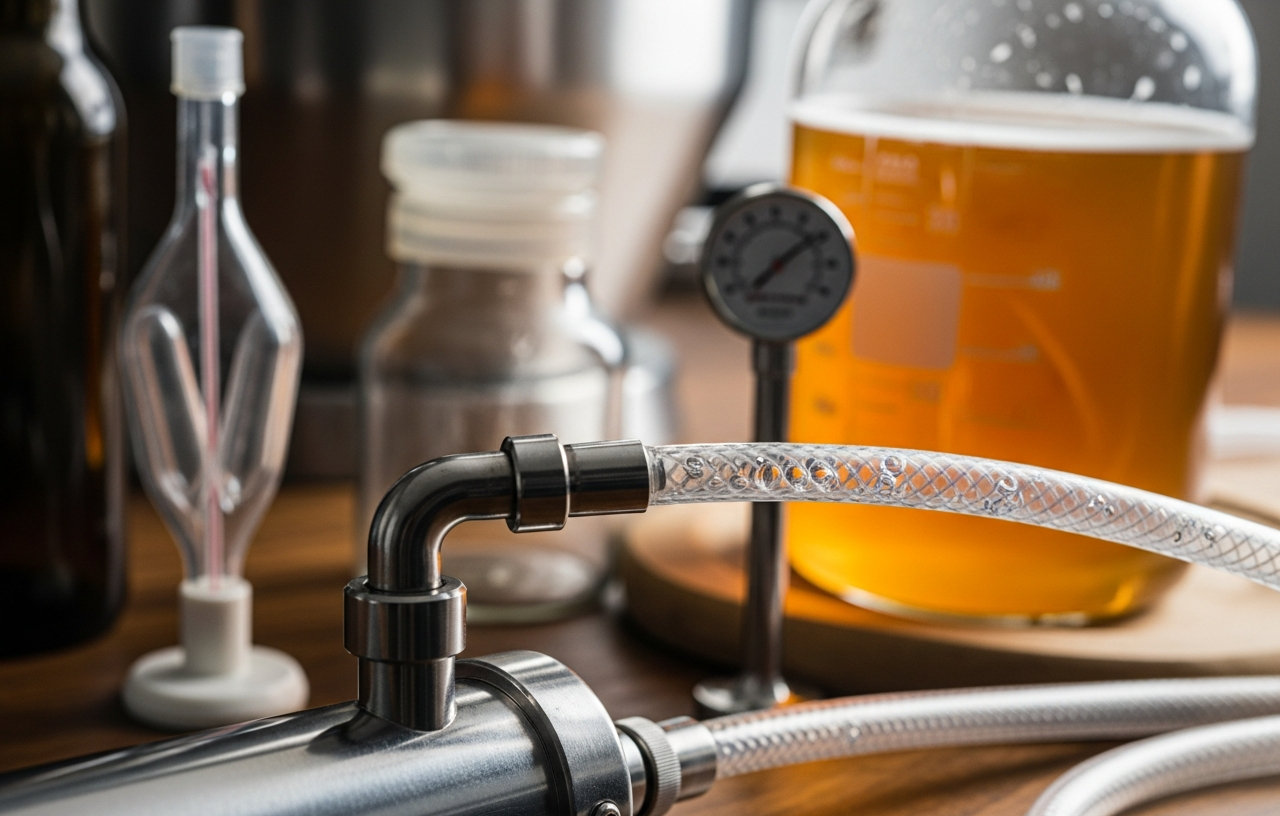
Quick disconnects are a common point of failure for air leaks. While convenient, cheap or worn disconnects can allow air ingress. high quality stainless steel quick disconnects provide a more secure seal. The FERRODAY Stainless Steel Quick Disconnect Set is an excellent choice for brewers. Their red silicone gasket helps maintain a secure, leak-free connection, which is essential for efficient wort transfer.
Tighten all hose clamps, and if using threaded fittings, ensure they have sufficient PTFE tape or thread sealant. A small amount of liquid weeping from a connection usually indicates an air leak as well.
Blocked Lines and Debris Clog Your System
Another common reason a pump fails to prime is a physical blockage in the lines or within the pump itself. This is especially true when transferring hopped wort or trub-heavy liquids. Hops, grain particles, or even a piece of silicone from a worn hose can obstruct flow.
Start by inspecting the input line. If you are using a wort chiller, check its connections and internal passages. Plate chillers, in particular, can become easily clogged. Remove and clean any inline filters. If you are drawing from a kettle, check the dip tube or ball valve for blockages. Sometimes, a grain bag or hop spider can shift and block the outflow port.
Disassemble your pump head and inspect the impeller. Hop material or trub can wrap around the impeller or get stuck in the volute, preventing it from spinning freely or creating suction. Use a small brush to clear any debris. Always make sure the pump is unplugged before disassembling it.
To avoid future blockages, consider using a hop filter or hop spider during the boil. Also, let your wort settle for a short period after chilling to allow trub to compact before transferring. Using high quality, flexible tubing like the Quickun Pure Silicone Tubing can help. Its smooth interior surface reduces the chances of particulate buildup, and its flexibility allows for easy routing without kinks that could create flow restrictions.
Issues with the Pump Head and Impeller
Beyond external blockages, problems within the pump head itself can prevent priming. Magnetic drive pumps, common in homebrewing, rely on a magnetic coupling to spin the impeller. If the pump has run dry for too long, or if there's excessive friction, the magnets can decouple, and the impeller stops spinning even though the motor hums.
If the pump motor runs but the impeller isn't turning, or if it's turning very slowly, the magnetic coupling might be failing. Some pumps have a small vent or prime port on the pump head. Opening this briefly while the pump is running can help release trapped air, allowing liquid to fill the head. Make sure to close it once liquid starts to flow.
Check for wear on the impeller or its housing. Over time, parts can degrade, reducing the pump's efficiency. A cracked impeller or a worn O-ring in the pump head can compromise the seal and prevent proper suction. Replacement pump heads or impellers are often available from manufacturers. Inspect the red silicone gasket inside the quick disconnects for any damage. A torn gasket will allow air to enter the system.
Insufficient Liquid or Improper Priming Technique
A pump needs to be 'fed' liquid to prime effectively. If your liquid source is below the pump, or if there isn't enough liquid to fill the pump head and inlet line, it won't prime. Most homebrew pumps are not self-priming, meaning they cannot draw air out of a dry line.
Always position your liquid source (e.g., kettle) above the pump if possible. Gravity will help push liquid into the pump head, making it easier to prime. If gravity feeding isn't an option, you can manually prime the pump. Fill the input line with wort or sanitized water before connecting it to the pump. Alternatively, fill the pump head itself with liquid before starting the pump. A simple method involves disconnecting the output line, tilting the pump, and pouring liquid directly into the output port until the pump head is full. Reconnect the output line quickly and start the pump.
Make sure there is a continuous column of liquid from your source to the pump's inlet. Any air pockets in this line will need to be purged. Slowly opening the outlet valve on the pump or slightly loosening a connection on the output side can help release trapped air, allowing liquid to flow through and fill the pump head. This technique is often called 'burping' the line.
Wrong Pump Type or Flow Rate
While less common for an existing setup, using the wrong type of pump for your application can cause priming difficulties. Most homebrewers use magnetic drive pumps, which are excellent for transferring hot wort because they have no direct contact between the motor and the liquid, reducing contamination risks and tolerating high temperatures. They are not designed for thick slurries or for pulling a strong vacuum from a dry line.
Diaphragm pumps, while less common for hot wort, are self-priming and can handle thicker liquids and air more effectively. If you are consistently struggling with priming and your setup involves significant vertical lifts or highly viscous liquids, consider if your pump is truly suited for the task. Most wort transfer issues on brew day can be solved with a standard magnetic drive pump and proper technique, but it's worth considering the pump's specifications.
Motor or Electrical Failure
If your pump doesn't even hum or spin, the problem is likely electrical or mechanical. Check that the pump is securely plugged into a working outlet. Test the outlet with another appliance to rule out a tripped breaker. Many homebrew pumps have a power switch with an indicator light; make sure it illuminates. Some pumps also have an internal fuse that can blow. Consult your pump's manual for fuse location and replacement instructions.
If the motor hums but the impeller doesn't turn at all, it might be seized. This can happen if the pump has been stored wet with sugary residue, causing internal components to stick. Try manually turning the impeller if accessible (with the pump unplugged). If it's completely stuck, the motor may be burned out.
Electrical issues can be complex and dangerous. If you suspect a motor or wiring problem and are not comfortable with electrical repairs, it's best to consult a professional or consider replacing the pump.
When to Call a Professional
For most homebrew pump priming issues, a DIY solution is within reach. Air leaks and blockages are typically easy to diagnose and fix with a bit of patience and inspection. However, there are times when professional help or a replacement might be the better option.
If you have checked all connections, cleared all lines, confirmed adequate liquid, and the pump still refuses to prime or the motor is dead, it may be time for a professional. An electrician can diagnose motor issues or internal wiring faults. This cost typically covers the diagnosis, with additional charges for parts and labor. For many homebrew pumps, the cost of professional repair can approach or exceed the cost of a new pump, especially for entry-level models. Weigh the repair cost against the price of a new unit. If your pump is older or has significant wear, replacement might be the more economical long term choice.
For those looking to upgrade their entire brewing system, consider exploring Best All-Grain Brewing Systems for Beginners, which often come with integrated pumps designed for efficient wort transfer.
FERRODAY Stainless Steel Quick Disconnect Set 1/2 NPT Female Disconnect 1/2" Barb Brewing Quick Disconnect For Wort Pumps for
- 304 Stainless Steel: The FPT quick disconnect is made of top quality 304SS that will last a lifetime. The.
- Quickly Switch Lines Between Equipment: 1/2 NPT thread quick disconnect can attach to any 1/2 male thread.
- No Leake: The barbed quick disconnect has a red silicone gasket inside. It will create a tight seal for.
- Connection Easily: This quick disconnect set allows one hand operation of take on/ take off. All parts fit.
Quickun Pure Silicone Tubing, 3mm ID x 5mm OD High Temp Food Grade Tube Pure Silicone Hose Tube for Home Brewing, Beer Line,
- 3mm ID x 5mm OD pre-cut flexible silicone tubing. High quality, flexible silicone compound in compliance.
- Flexible tubing for air, water, food, and beverage - durometer: 50A
- Lightweight, flexible, and crystal-clear, tubing provides excellent resistance to chemicals, solvents.
- This extremely flexible, food grade silicone is suited for general low pressure industrial applications.