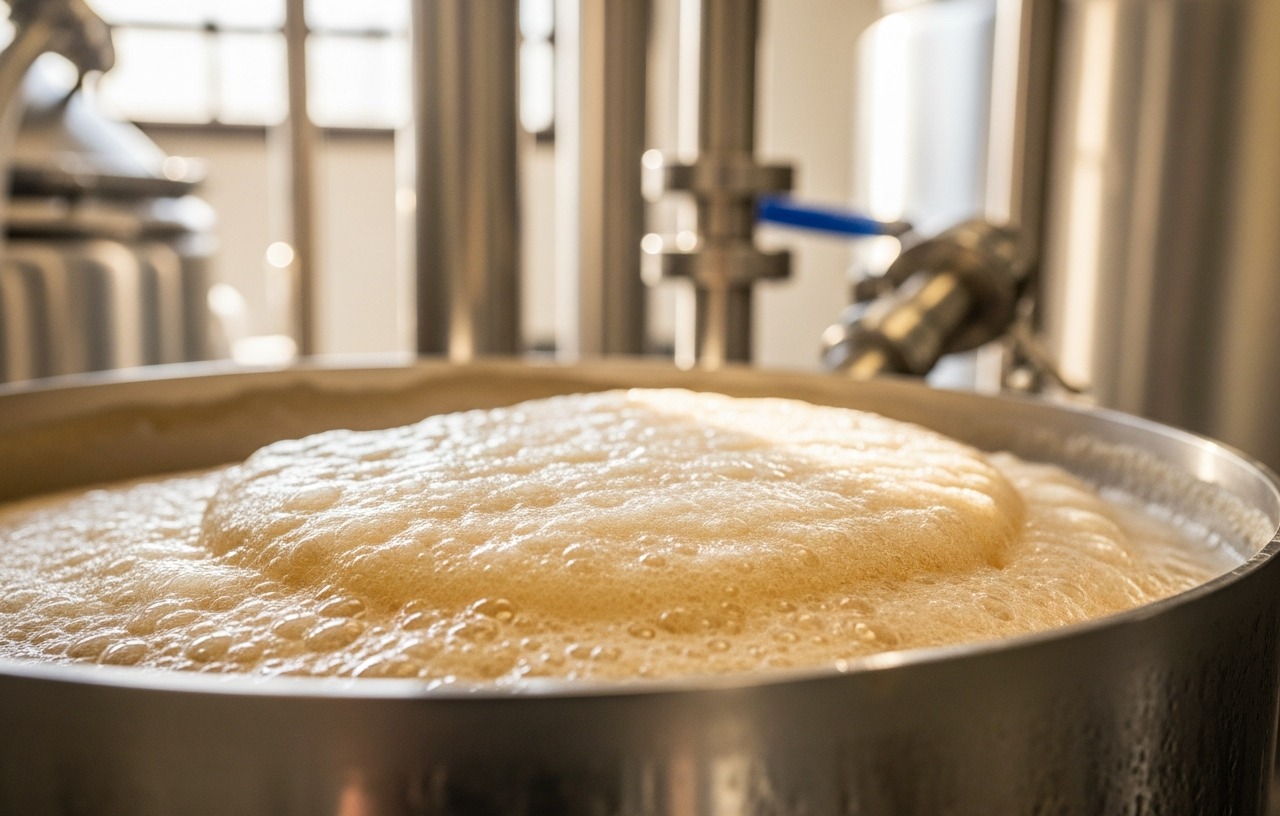
Krausen is the dense, yeasty foam that develops on the surface of fermenting wort, indicating robust yeast activity and a healthy fermentation process. This foam, composed primarily of yeast cells, proteins, hop resins, and spent wort material, serves as a visual cue for brewers tracking their batch's progress. Its presence confirms that the yeast has begun converting sugars into alcohol and carbon dioxide, a fundamental step in making beer.
The Composition and Appearance of Krausen
The term "krausen" (pronounced KROW-zen) originates from German, meaning "ruff" or "fringe," aptly describing its appearance. It forms as yeast cells multiply rapidly and ferment sugars, releasing carbon dioxide gas. These CO2 bubbles rise through the wort, carrying yeast cells, hop particles, and proteins to the surface where they become trapped. This creates a distinct, often rocky or creamy layer.
What to Expect in a Healthy Krausen
- Color: Typically white or off-white, sometimes taking on a yellowish or brownish hue depending on the wort's color and hop content. Darker malts may yield a slightly darker krausen.
- Texture: Ranges from a delicate, lacy foam in the initial stages to a thick, rocky, or creamy head during peak fermentation. Some yeast strains, like those used for Hefeweizens, produce particularly voluminous and persistent krausen.
- Height: The krausen layer can be anywhere from half an inch to several inches thick. Its height depends on the yeast strain, fermentation temperature, and the amount of fermentable sugars present.
- Duration: Krausen typically appears within 12-24 hours after pitching yeast and can last for several days, gradually subsiding as fermentation slows.
Why Krausen Matters for Your Beer
Krausen is more than just a visual indicator. It performs several critical functions during fermentation.
Yeast Activity and CO2 Production
The most obvious function of krausen is to signal active fermentation. The visible foam confirms that your yeast is alive, healthy, and consuming sugars. The vigorous CO2 production that creates the krausen also flushes oxygen out of the fermenter headspace, creating an anaerobic environment essential for healthy yeast metabolism and preventing oxidation of the beer. This gas release helps to scrub undesirable volatile compounds, carrying them away through the airlock.
Protective Barrier
Krausen forms a natural barrier on the surface of the wort. This dense layer helps protect the fermenting beer from airborne contaminants, creating a physical shield against unwanted bacteria or wild yeasts. A strong, healthy krausen is often a sign of a clean fermentation.
Indicator of Fermentation Progress
Brewers can estimate the stage of fermentation by observing the krausen. A rising, vigorous krausen indicates primary fermentation is underway. A krausen that begins to flatten, fall back into the beer, or develop dark, sticky rings around the fermenter indicates that the bulk of fermentation is complete or slowing significantly. This visual cue helps brewers decide when to take gravity readings or consider transferring the beer to a secondary fermenter, if desired.
Stages of Krausen Development
Krausen undergoes a predictable cycle during a typical ale fermentation, which often takes 5-7 days for primary fermentation.
-
Lag Phase (0-12 hours): After pitching, yeast cells are busy adjusting to their new environment and reproducing. Little to no krausen is visible during this phase. Some small bubbles might appear, but a full foam is rare.
-
Growth Phase / Early Fermentation (12-36 hours): Yeast population explodes, and fermentation begins in earnest. Small, lacy bubbles appear on the surface, gradually building into a thin, white krausen layer.
-
High Krausen / Peak Fermentation (36 hours - 4 days): This is when krausen is at its thickest and most active. The foam can be several inches high, often rocky or creamy. This period sees the most vigorous CO2 production and sugar conversion. Specific gravity drops significantly during this phase. If you are using a fermentation temperature controller, maintaining a stable temperature between 65-70°F (18-21°C) for ales during this phase is important for a healthy krausen and clean flavor.
-
Falling Krausen / Late Fermentation (4-7 days): As fermentable sugars are depleted, yeast activity slows. The krausen begins to collapse and fall back into the beer. It often leaves a sticky, brownish ring on the fermenter walls above the liquid level. This ring is sometimes called the "krausen ring" and is a good sign that fermentation is nearing completion.
-
Conditioning / Maturation (7+ days): Most of the yeast has flocculated (settled to the bottom), and any remaining krausen has fallen. The beer begins to clear, and flavors mature. A final gravity reading will confirm fermentation is complete.
When Krausen is Absent or Abnormal
While a healthy krausen is a positive sign, its absence or unusual appearance can signal problems.
No Krausen After 24-48 Hours
If no krausen appears within 24-48 hours of pitching, it could indicate a problem:
- Dead or Dormant Yeast: The yeast might be old, improperly stored, or killed by excessively hot wort.
- Insufficient Pitch Rate: Not enough yeast was added for the volume of wort.
- Temperature Issues: The wort might be too cold for the yeast to activate, or too hot, stressing or killing the yeast.
- Sanitation Failure: Contamination can sometimes outcompete the pitched yeast, leading to a stalled or abnormal fermentation without a proper krausen. Proper sanitation of all brewing equipment, including your fermentation vessel, is always critical.
A specific gravity reading can confirm if fermentation has started. If the gravity has not dropped, re-pitching with fresh, healthy yeast is often the best solution. A packet of dry yeast costs around $4-$6, while liquid yeast can range from $8-$15.
Unusual Krausen Appearance
- Thin, Wispy Krausen: This might suggest weak fermentation, possibly due to low yeast count, low fermentable sugars, or suboptimal temperature.
- Mold-like Patches: Fuzzy, colored spots (green, black, white, blue) on the krausen or liquid surface are a strong indicator of contamination. Unfortunately, mold usually means the batch needs to be discarded. This is one of the more common reasons a homebrewer might lose a batch, representing a loss of $30-$50 in ingredients for a 5-gallon batch.
- Sour or Off-Smells: While krausen itself has a yeasty aroma, any distinctly sour, vinegary, or rotten egg smells (beyond typical sulfur notes from some lagers) can indicate bacterial infection.
Managing High Krausen and Blow-Off Tubes
Some fermentations, particularly those with high gravity worts, certain yeast strains (like Belgian or Hefeweizen yeasts), or warmer fermentation temperatures, can produce a very vigorous krausen. This can cause the krausen to rise into the airlock, potentially clogging it and creating a messy overflow.
Preventing Blow-Offs
-
Leave Headspace: Always leave adequate headspace in your fermenter. For a 5-gallon batch, a 6.5-gallon carboy or bucket provides enough room. Using a 5-gallon carboy for a 5-gallon batch is almost guaranteed to cause a blow-off during active fermentation.
-
Use a Blow-Off Tube: This is a simple and effective solution. Replace your standard airlock with a length of food-grade tubing (typically 1-inch outer diameter) inserted into the stopper. The other end of the tube is submerged in a sanitizer solution or clean water in a separate container. This allows CO2 and krausen to exit freely without clogging. A typical blow-off tube setup, including tubing and a stopper, costs about $5-$15 at a homebrew supply store. Many homebrew starter kits, like those reviewed in Best Homebrew Starter Kits: Top Picks for First-Time Brewers, often include a basic airlock but may require an upgrade to a blow-off tube for more vigorous fermentations.
-
Control Fermentation Temperature: Fermenting at the lower end of the yeast's recommended temperature range can slow down fermentation slightly, reducing krausen vigor. For example, fermenting an ale yeast at 65°F (18°C) instead of 70°F (21°C) can make a noticeable difference.
Krausen in Other Fermented Beverages
While most commonly discussed in beer brewing, similar foam layers can appear in other fermented beverages:
- Wine: Wine musts can develop a foamy head, though it's typically less robust and shorter-lived than beer krausen due to different yeast strains and lower protein content.
- Mead: Mead, being honey-based, also produces a foamy layer during fermentation, similar to wine. The protein content from honey is lower than malt, so the foam is usually thinner. Cleaning this promptly is important. Dried krausen can be difficult to remove and harbors potential contaminants. A good soak with a brewing specific cleaner, like PBW (Powdered Brewery Wash) or OxiClean Free, followed by a thorough scrubbing, usually removes it. A 2lb tub of PBW costs around $15-$20 and lasts for many cleaning cycles. Rinse thoroughly, and then sanitize before the next use.
Conclusion
Krausen is a vital indicator and component of a healthy beer fermentation. Its formation, appearance, and eventual collapse provide a visual timeline of yeast activity, sugar conversion, and CO2 production. By understanding what krausen is and how it behaves, homebrewers gain valuable insight into their brew's progress, allowing for timely intervention if issues arise and helping to ensure a successful batch of beer. Observe your krausen; it tells a story about your brew.