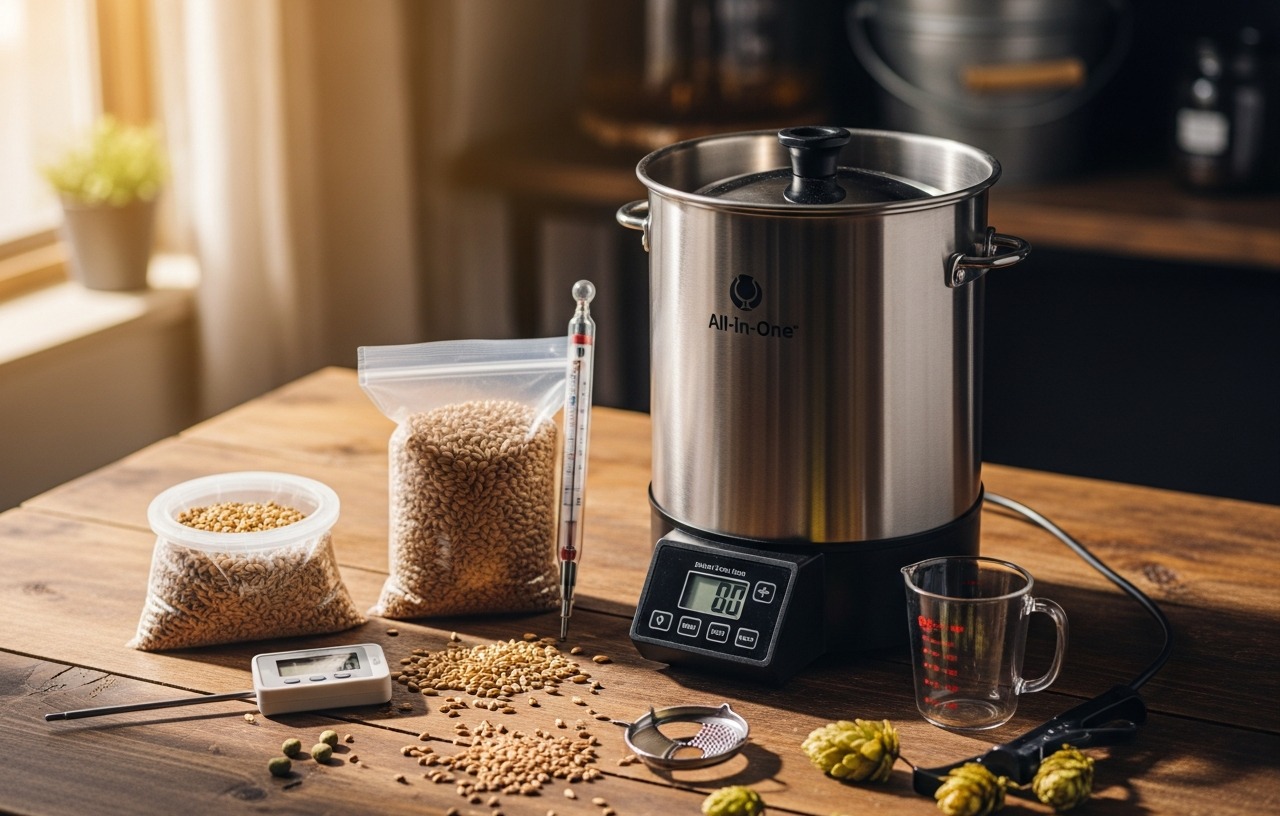
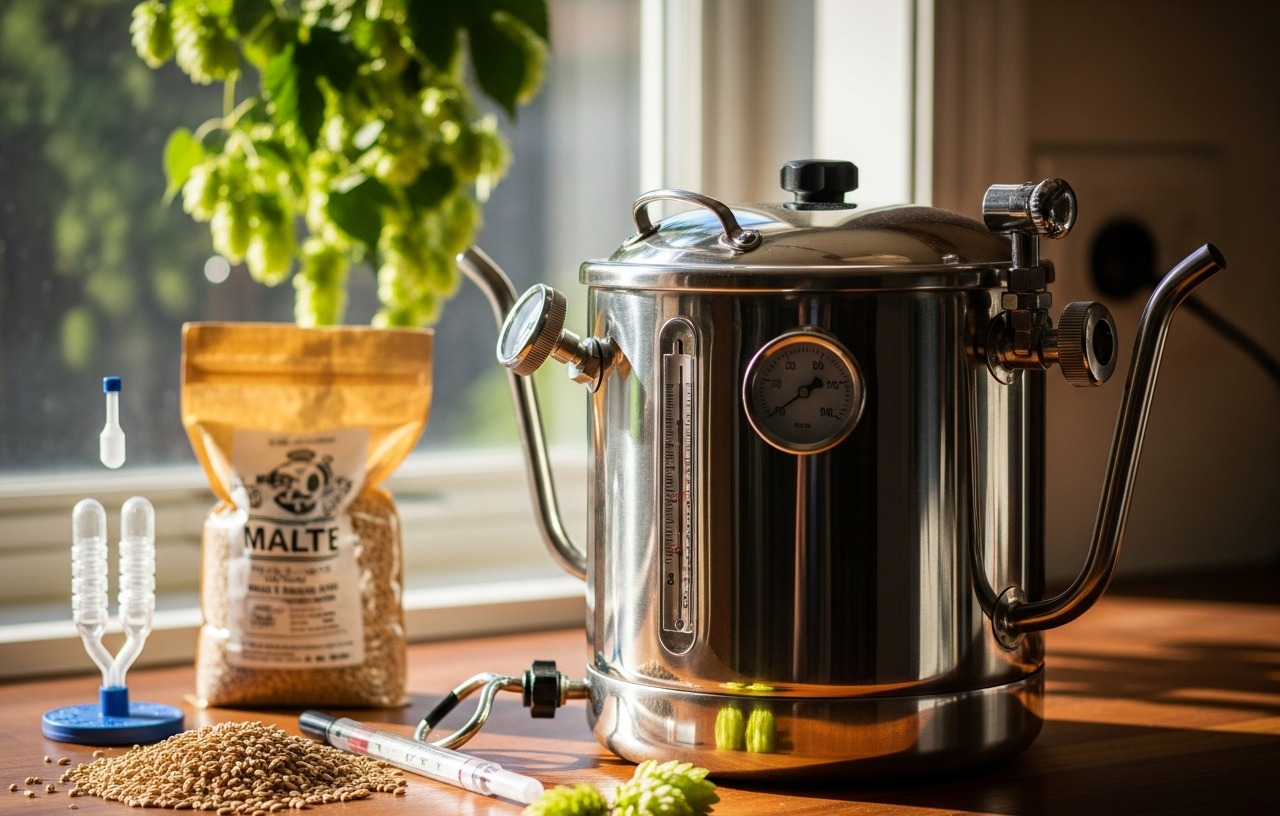
The initial investment for a homebrewing setup can range from about $150 for a basic extract kit to over $1,000 for an advanced all-grain system. Ongoing costs, primarily ingredients, typically run between $0.50 and $2.00 per gallon of beer, making the cost of brewing your own beer at home significantly less than buying comparable craft beer. Understanding these figures helps you gauge the long term financial benefits and when DIY brewing makes the most sense.
Understanding the Upfront Investment: Getting Started
The cost to brew your own beer is heavily influenced by the brewing method you choose. Extract brewing, the simplest method, requires the least initial outlay. All-grain brewing, which involves processing whole grains, demands more equipment and a larger upfront expense.
Extract Brewing Starter Costs
A good starter kit for extract brewing typically includes the essentials for making your first few batches. These kits often contain a fermenter, an airlock, sanitizer, a bottling wand, a hydrometer, and basic brewing instructions. You can find these kits for around $100 to $200. These are great options for beginners looking to dip their toes into the hobby. Some of the best homebrew starter kits are designed for this very purpose.
- Fermenter: Usually a 5-6 gallon bucket or a glass carboy. Cost: $20 - $50.
- Airlock and Stopper: Allows CO2 to escape without letting air in. Cost: $5 - $10.
- Sanitizer: Essential for preventing contamination. Cost: $10 - $20 for a good supply.
- Bottling Equipment: Includes a siphon, tubing, bottling wand, and bottle caps. Cost: $30 - $60.
- Hydrometer and Test Jar: Measures sugar content to determine alcohol by volume. Cost: $15 - $30.
- Large Pot (Brew Kettle): At least 5 gallons. If you don't already have one, expect to spend $30 - $70.
- Thermometer: For monitoring mash and wort temperatures. Cost: $10 - $25.
A complete extract starter kit might bundle these items for $100 to $200, offering a slight discount over purchasing them individually. For those considering kombucha, similar starter kits are available, with prices ranging from $50 to $150, depending on the included components like SCOBY and starter liquid. See the best kombucha starter kits for more details.
All-Grain Brewing System Costs
Moving to all-grain brewing introduces more complex equipment and a higher initial cost. This method offers greater control over the brewing process and can result in higher quality beer, but it requires a significant investment. The cost of brewing your own beer at this level can quickly escalate.
- Larger Brew Kettle: 10-15 gallons minimum for a 5-gallon batch. Cost: $70 - $150.
- Mash Tun: A cooler or vessel used to steep grains at specific temperatures. Cost: $80 - $200.
- Lauter Tun (optional but recommended): For efficient grain separation. Can be integrated into the mash tun.
- Heat Source: A powerful burner suitable for large pots. Cost: $100 - $300.
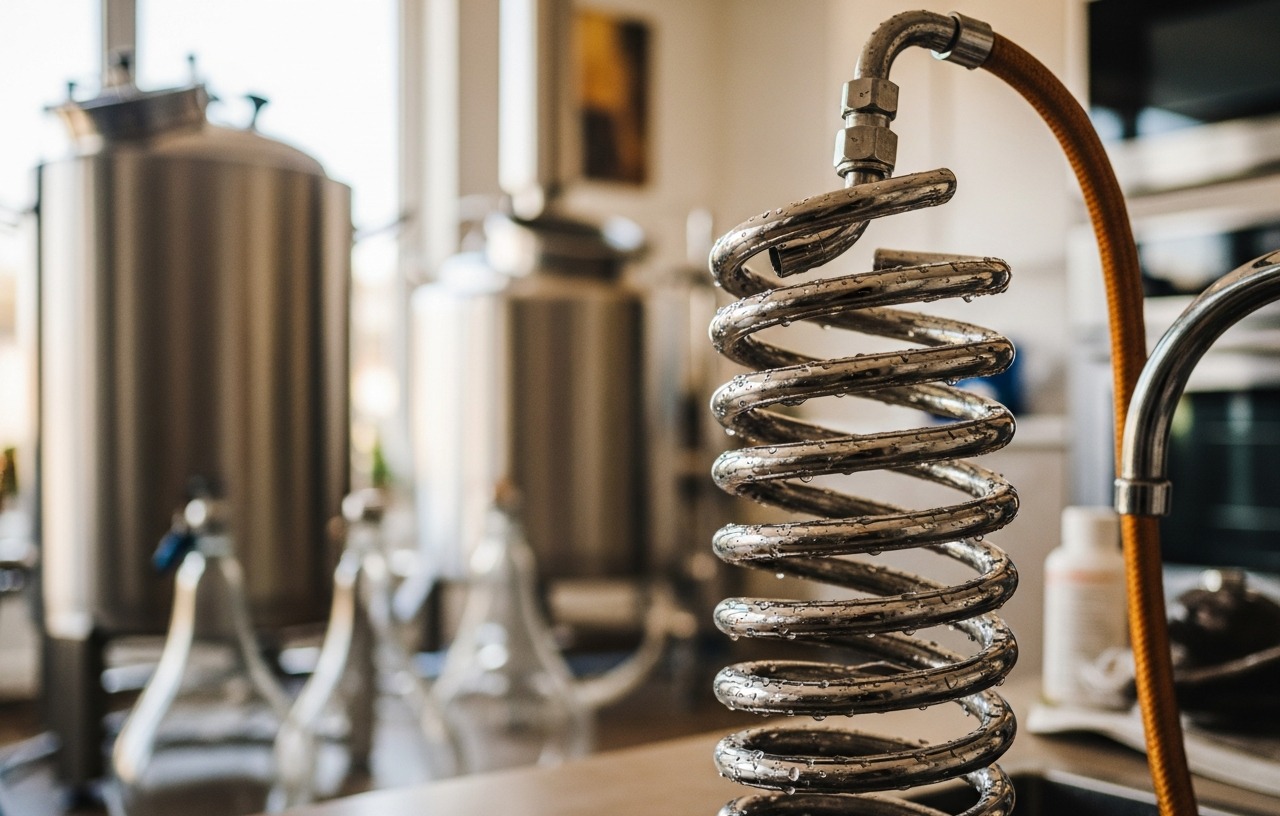
- Wort Chiller: To rapidly cool the wort after boiling. Immersion chillers cost $40 - $80, while plate chillers can be $150 - $300. Read the Inkbird ITC-308 Review.
Integrated all-grain brewing systems, which combine mash tun, boil kettle, and sometimes even heating elements into a single unit, can cost anywhere from $300 to $1,500 or more. These systems streamline the brewing process but represent a substantial upfront investment. For beginners looking to transition to all-grain, simpler systems are available, as discussed in the Best All-Grain Brewing Systems for Beginners.
Ongoing Costs: Ingredients and Utilities
Once the initial equipment is purchased, the primary ongoing cost is for brewing ingredients. This is where the cost of brewing your own beer at home becomes significantly lower than purchasing it.
Ingredient Breakdown Per Batch
The cost of ingredients varies greatly depending on the style of beer you are brewing. A simple pale ale will be less expensive than a complex stout or a fruit-infused sour.
- Malt Extract or Grains: For extract brewing, malt extract typically costs $20 - $35 for enough for a 5-gallon batch. For all-grain brewing, specialty malts and base grains might cost $30 - $60 for the same batch size.
- Hops: Prices range from $3 - $10 per ounce, depending on the variety and whether they are pelletized or whole leaf. A batch might use 1-3 ounces.
- Yeast: Dry yeast packets cost $5 - $10. Liquid yeast cultures can range from $10 - $20.
- Water: If you use tap water, this cost is negligible. If you use filtered or specialized water, it adds a small amount.
- Priming Sugar (for bottling): About $2 - $5 per batch.
Therefore, the total ingredient cost for a 5-gallon batch of beer typically falls between $30 and $70. This translates to roughly $0.60 to $1.40 per 12-ounce bottle, or $0.50 to $1.20 per pint. This is considerably less than the average price of $3 - $6 per bottle or $5 - $10 per pint for comparable craft beers purchased from a store.
Utilities
You'll also incur minor costs for utilities. Heating a large volume of water for an hour or more consumes energy. If you use an electric system, this will be reflected in your electricity bill. For gas burners, the cost of propane or natural gas is a factor. These costs are generally minimal, perhaps adding $1 - $5 per batch.
Comparing Homebrew Costs to Store-Bought Beer
The cost of brewing your own beer at home versus buying it is a key consideration for many hobbyists. Let's look at some realistic comparisons.
The Math: Cost Per Pint
Homebrewing (5-gallon batch):
- Ingredient Cost: $30 - $70
- Bottles/Kegging Supplies (amortized): $5 - $15
- Utilities: $1 - $5
- Total per 5 gallons: $36 - $90
- Cost per 12oz bottle (approx. 53 bottles): $0.68 - $1.70
- Cost per pint (approx. 42 pints): $0.86 - $2.14
Store-Bought Craft Beer (average):
- 6-pack of 12oz bottles: $10 - $16 ($1.67 - $2.67 per bottle)
- Single 12oz bottle: $2.50 - $6.00
- Pint (draft or bottle): $5.00 - $10.00
As these numbers show, even with a moderate upfront equipment cost, the cost of brewing your own beer at home is significantly lower per serving than purchasing commercial craft beer. The savings become more pronounced with higher-end or specialty beers.
The Value Proposition Beyond Cost
While the financial savings are a major draw, the cost of brewing your own beer at home is only part of the equation. Many brewers are also motivated by:
- Control: You decide exactly what goes into your beer, from malt bill to hop profile and yeast strain.
- Quality: With practice and good equipment, you can brew beer that rivals or surpasses many commercial offerings.
- Creativity: The ability to develop unique recipes and experiment with flavors.
- Satisfaction: The pride and accomplishment of creating something delicious from scratch.
- Community: Connecting with other homebrewers and sharing your creations.
For wine and mead enthusiasts, similar cost-benefit analyses apply. A wine making kit can cost $100 - $200, with subsequent batches costing $30 - $60 in ingredients. Mead making kits also offer a similar entry point, with costs for ingredients per gallon often falling below store-bought prices. The best mead making kits provide a good starting point.
When Does DIY Brewing Make Financial Sense?
DIY brewing makes financial sense in several scenarios:
1. Frequent Beer Consumption
If you are a regular consumer of craft beer, the savings accumulate rapidly. Brewing 1-2 batches per month can offset the initial equipment cost within 6-12 months, after which you are essentially paying only for ingredients and utilities.
2. Brewing Specialty or High-Cost Beers
Certain styles of beer, like barrel-aged stouts, complex Belgian ales, or single-hop IPAs featuring expensive hops, can cost $10-$20 or more per bottle when purchased commercially. Brewing these at home can yield substantial savings.
3. As a Hobbyist Pursuing Quality
For those who enjoy the process and the pursuit of brewing the perfect pint, the investment in better equipment (like all-grain systems or advanced temperature control) is justified by the improved results and the enjoyment derived from the hobby itself. The cost of brewing your own beer becomes secondary to the passion for the craft.
When is it NOT Worth the DIY Effort?
There are times when buying beer is the more practical or cost effective choice:
1. Occasional Drinker
If you only drink beer a few times a month, the upfront cost of equipment may not be recouped through savings. Buying beer as needed is likely more economical.
2. Limited Space or Time
Homebrewing, especially all-grain, requires space for equipment and time for brewing, fermentation, and packaging. If these are significant constraints, the hassle might outweigh the savings.
3. Desire for Immediate Gratification
Brewing takes time. From brewing day to fermentation and conditioning, it can be 3-6 weeks before you can enjoy your beer. If you want beer immediately, purchasing is the only option.
4. Brewing Very Basic, Inexpensive Beers
If your primary goal is to drink the cheapest lager possible, the savings over buying macro-brews might be minimal. The cost of brewing your own beer is most significant when comparing it to premium or craft options.
Beyond Beer: Fermentation Hobbies
The equipment and principles of homebrewing extend to other fermentation hobbies. The cost of entry for making wine, mead, or cider is similar to extract brewing. For instance, a basic mead making kit can be around $100-$150, with ingredients costing $40-$80 for a 5-gallon batch. Continuous brew vessels for kombucha, such as those reviewed in Best Kombucha Continuous Brew Vessels, are typically $50-$150.
Kegging vs. Bottling Costs
A significant part of the ongoing cost and effort in homebrewing is packaging the finished beer. Bottling requires caps ($0.10-$0.15 each) and significant labor. Kegging, while requiring a higher upfront investment, can be more cost effective and convenient in the long run.
- Bottling Supplies: Siphon, tubing, bottle filler, bottle capper, caps. Initial setup: $50 - $100. Ongoing: caps, sanitizer.
- Kegging System: Used 5-gallon ball lock kegs can range from $70 - $120 each. A CO2 tank ($70 - $150), regulator ($40 - $100), and lines/couplers ($30 - $60) are also needed. While the initial outlay is higher than bottling, if you brew frequently, the convenience and reduced labor can make it worthwhile. Kegerator conversion kits also offer a path to draft beer, as detailed in Best Kegerator Conversion Kits, with costs typically ranging from $150 - $300 plus the fridge.
Ultimately, the cost of brewing your own beer at home is a dynamic figure. It depends on your chosen method, equipment quality, and how frequently you brew. However, for most enthusiasts who enjoy craft beer, the long term savings and the immense satisfaction of creating your own brews make it a financially sound and rewarding hobby.