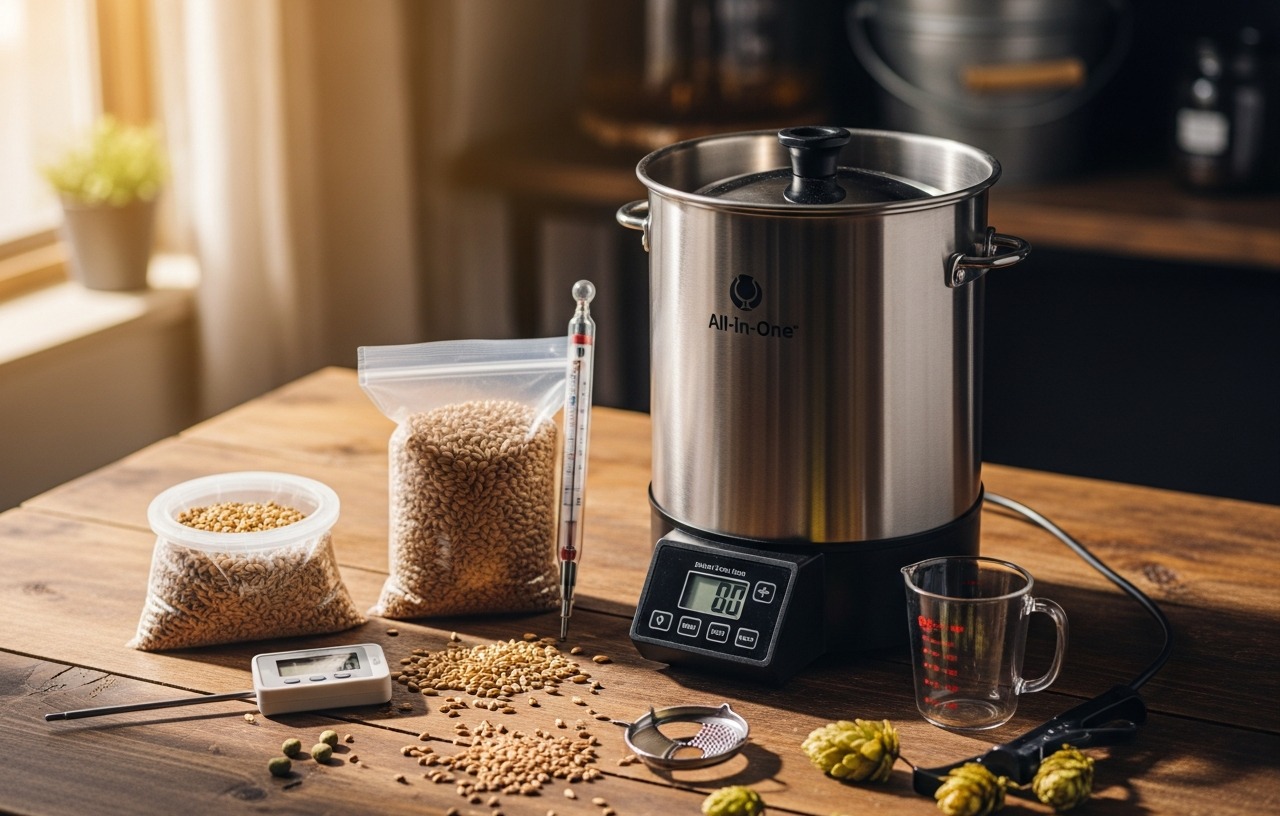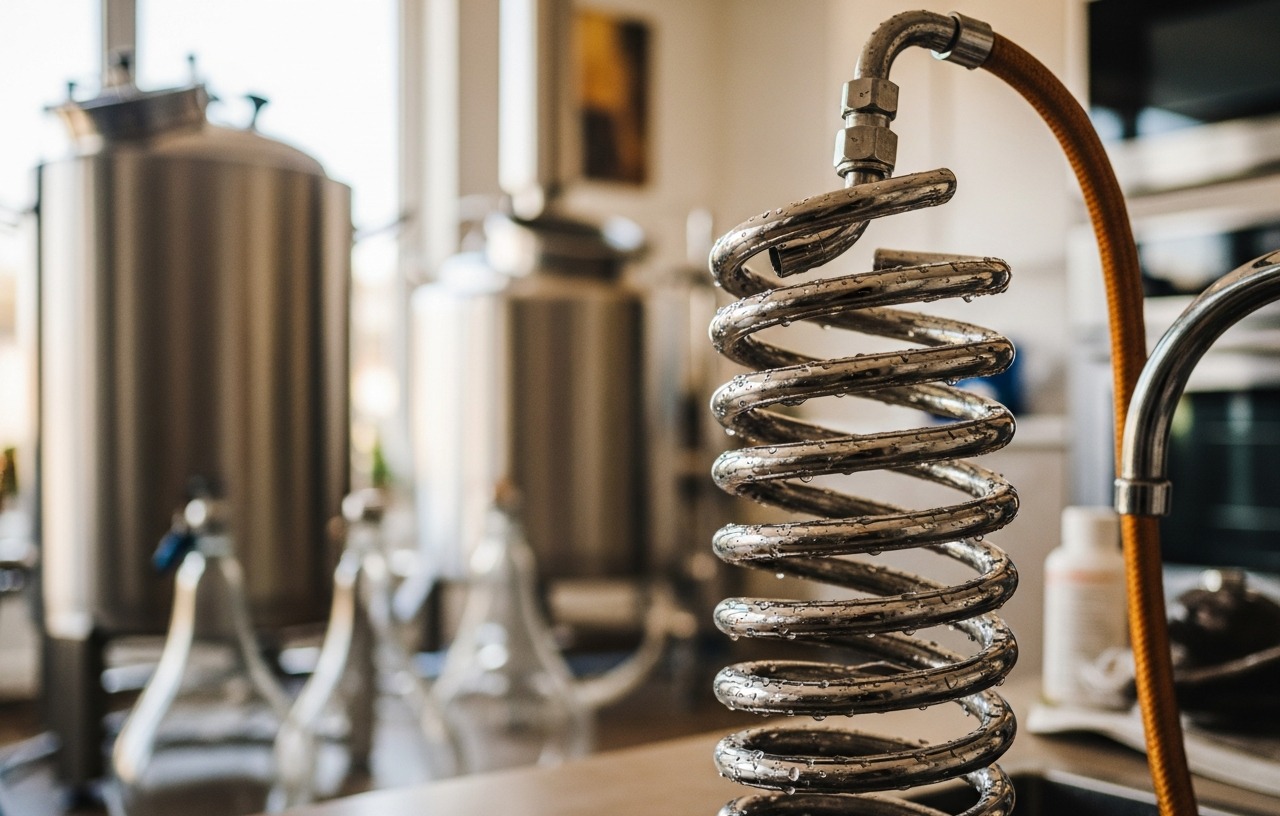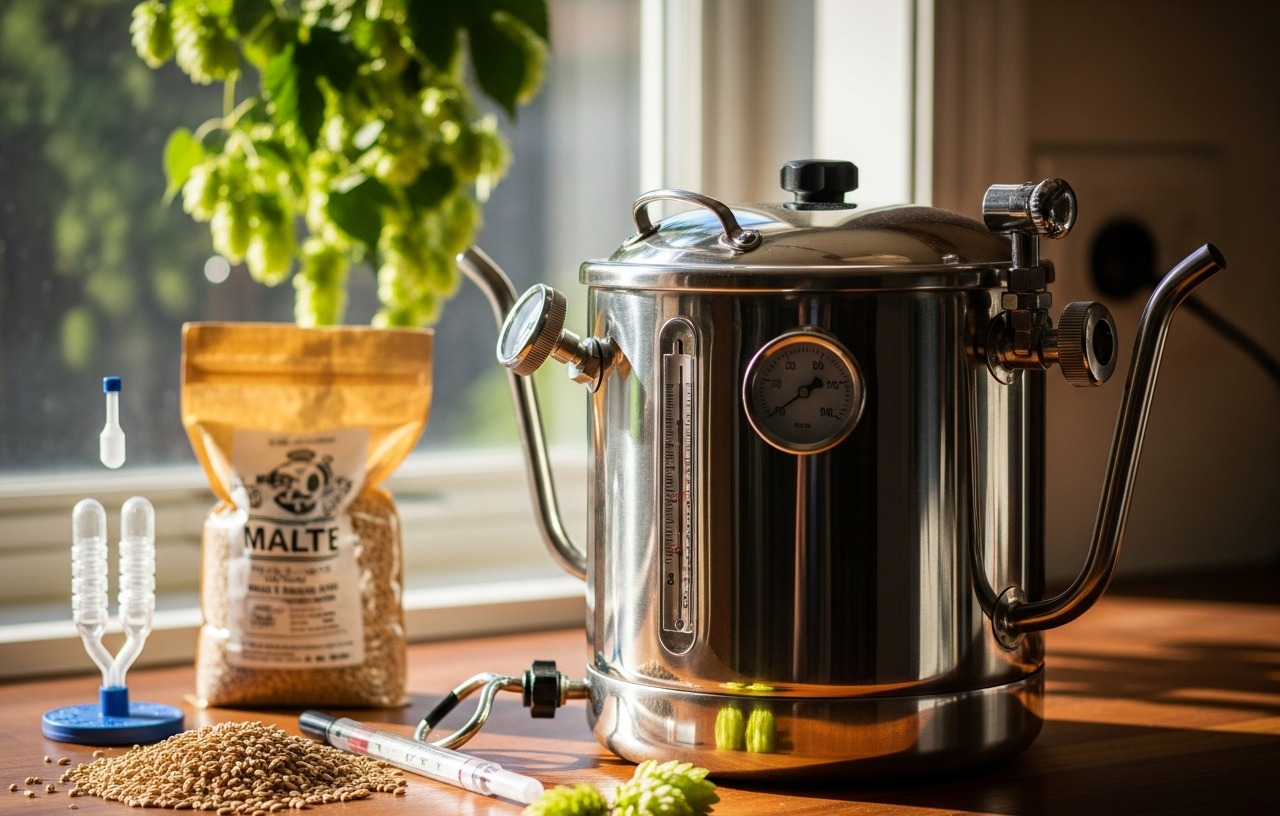

Fermax Yeast Nutrient, 1lb (Package May Vary)
- Use 1 teaspoon per gallon prior to fermentation beginning
- Improves attenuation and speed of fermentation
- Package May Vary from images

KNEADACE Pro Sourdough Bread Starter Kit - 34 oz Large Capacity Sourdough Starter Jar with 5 unique features for the perfect sour
- Discover the Joy of Artisan Sourdough Bread - Exclusive design, molded for optimal sourdough starter.
- Experience The Ultimate In Sourdough Care - Our starter kit comes with a silicon cover for fridge storage.
- Essential Addition To Your Bread Making Tools & Supplies - This sourdough jar kit comes complete with.
- Never Forget The Last Time You Fed Your Starter - Elastic band marked with the days of the week gives you.

Sourdough Starter Kit - 38oz with Cookbook, Measuring Cup, Spatula, Wide Mouth Jar Cover, Thermometer, Date Marked Feeding Band,
- 9-in-1 Complete Sourdough Kit: Includes all sourdough tools for starter maintenance: wide mouth jar for.
- Instructions & Recipe Book: Video and step by step visual instructions help beginners learn to make.
- Simple Tracking & Understanding: Elastic bands marked with days indicate feeding times and level of sour.
- More Suitable Size for Family Use: At 38 oz., this sourdough kit is ideal for making up to 5 loaves of.
A rapidly bubbling airlock, krausen forming and dissipating too quickly, or reaching final gravity days ahead of schedule all point to one thing: your beer is fermenting too fast. This accelerated activity can lead to less-than-ideal flavor profiles, incomplete attenuation, or other issues in your finished beer. The most common culprits include elevated fermentation temperatures, an overabundance of yeast, or a wort rich in simple sugars. Identifying the exact cause allows you to take corrective action for better brewing outcomes.
High Fermentation Temperature
Temperature is perhaps the single most critical factor influencing yeast activity. Most ale yeasts perform best in a range of 62-72°F (17-22°C), while lager yeasts prefer cooler temperatures, typically 48-58°F (9-14°C). When fermentation temperatures rise above the optimal range for your chosen yeast strain, the yeast metabolizes sugars at an increased rate. This rapid metabolism often results in the production of unwanted fusel alcohols and esters, which can manifest as harsh, solvent-like, or overly fruity flavors in your beer.
How to Test for High Temperature
Use a reliable thermometer to measure the temperature of your fermenting wort. Attach an adhesive liquid crystal thermometer strip to the outside of your fermentation vessel, or use a probe thermometer designed for brewing. Measure the ambient air temperature around the fermenter as well. Remember that active fermentation itself generates heat, so the internal temperature of the wort can be several degrees higher than the surrounding air. If your thermometer reads above the recommended range for your yeast, you have found a likely cause.
Solutions for Temperature Control
Effective temperature control is a cornerstone of quality homebrewing. If you are fermenting in a warm environment, consider these solutions:
- Move Your Fermenter: Relocate your fermenter to a cooler basement, closet, or spare room. Even a few degrees can make a difference.
- Swamp Cooler Method: Place your fermenter in a tub of water with a wet towel draped over it. A fan blowing across the wet towel can provide evaporative cooling. Add frozen water bottles to the tub periodically to further drop the temperature. This low-cost solution can reduce temperatures by 5-10°F.
- Fermentation Chamber: The most precise method involves a dedicated fermentation chamber. This can be a modified mini-fridge or chest freezer connected to a temperature controller. A new Inkbird ITC-308 controller typically costs $40-60. You can read more about these devices in our guide to best fermentation temperature controllers.
- Glycol Chiller: For advanced brewers, a glycol chiller offers precise cooling for multiple fermenters. These systems are a significant investment, starting around $600-1000 for smaller units.
Over-Pitched Yeast or Highly Active Yeast
Pitching the correct amount of healthy yeast is vital for a clean fermentation. If you introduce too much yeast for the volume and gravity of your wort, the yeast cells will compete for the available sugars and complete fermentation much faster than intended. This can lead to a beer that ferments out too quickly, potentially stripping it of subtle flavors and aromas.
How to Test for Over-Pitching
- Review Your Recipe and Yeast Calculator: Check the recommended pitching rate for your specific gravity and batch size. Many online yeast calculators help determine the ideal amount of yeast cells.
- Examine Yeast Starters: If you made a yeast starter, consider if it grew more yeast than anticipated. A very active starter, especially one that has been well-fed, can be exceptionally vigorous.
- Consider Yeast Age and Storage: While less common for *fast* fermentation, very fresh, healthy yeast stored correctly will be more active than older, less viable yeast.
Solutions for Yeast Pitching
Adjusting your yeast practices can help regulate fermentation speed.
- Calculate Pitching Rates Accurately: Use a yeast calculator to determine the precise amount of yeast needed for your wort's original gravity and volume. Aim for approximately 0.75 million cells/ml/°Plato for ales and 1.5 million cells/ml/°Plato for lagers.
- Manage Yeast Starters: If using a starter, ensure you are not overbuilding it for your batch size. A smaller, healthier starter is often better than an oversized one.
- Consider Yeast Nutrient: While generally beneficial, excessive use of yeast nutrients can sometimes contribute to rapid fermentation, especially when combined with other factors. Fermax Yeast Nutrient is a popular choice for improving attenuation and speed of fermentation when used correctly. The manufacturer recommends using 1 teaspoon per gallon prior to fermentation beginning. Adjust this amount based on your specific wort and yeast strain.
- Select Appropriate Yeast Strains: Some yeast strains are naturally more aggressive fermenters than others. Research your chosen yeast's characteristics, including its typical attenuation and fermentation speed, before brewing.
High Gravity Wort with Simple Sugars
The composition of your wort, particularly its sugar profile, significantly impacts fermentation speed. Worts with a high proportion of simple sugars (monosaccharides like glucose or disaccharides like sucrose/dextrose) ferment much faster than those primarily composed of complex sugars (polysaccharides from malt). Simple sugars are easy for yeast to consume directly, leading to rapid activity and quick attenuation.
How to Test for Simple Sugars
- Review Your Recipe: Examine your ingredient list. Did you add a significant amount of corn sugar (dextrose), table sugar (sucrose), honey, or other adjuncts that are primarily simple sugars?
- Original Gravity Reading: A very high original gravity (OG) might indicate a large amount of fermentable sugars. If a significant portion of that OG comes from simple sugars, expect a faster fermentation.
Solutions for Wort Composition
To control the speed of fermentation related to wort composition, consider these adjustments:
- Balance Sugar Types: When formulating recipes, balance your use of simple sugars with complex malt sugars. While simple sugars can lighten body and boost alcohol content, relying too heavily on them can lead to rapid fermentation and a thin, dry beer.
- Adjust Adjunct Use: If you use adjuncts like corn sugar, consider reducing the amount in future recipes. For example, a recipe using 2 pounds of corn sugar might ferment much faster than one using only 0.5 pounds.
- Mashing Schedule (All-Grain Brewers): For all-grain brewers, adjusting your mash temperature can influence the fermentability of your wort. A higher mash temperature (e.g., 158-162°F, 70-72°C) produces a less fermentable wort with more complex sugars, which will ferment slower. A lower mash temperature (e.g., 148-152°F, 64-67°C) produces a more fermentable wort, leading to faster fermentation.
Other Considerations for Fast Fermentation
While temperature, yeast pitching, and wort composition are the primary drivers of rapid fermentation, other factors can play a role:
- Yeast Strain Aggressiveness: Some yeast strains are naturally more flocculant and aggressive, meaning they ferment quickly and drop out of suspension rapidly. Research the characteristics of your chosen strain.
- Lack of Proper Sanitation: Though typically associated with stalled or off-flavor fermentations, contamination from wild yeasts or bacteria can sometimes cause unusually vigorous activity. Always make sure your equipment is thoroughly cleaned and sanitized. Learn more about how to sanitize brewing equipment to prevent issues.
- Yeast Nutrient Overuse: As mentioned, while beneficial in moderation, excessive yeast nutrient can supercharge yeast activity. Follow recommended dosing for products like Fermax Yeast Nutrient.
The Impact of Fermenting Too Fast
When beer ferments too quickly, several negative outcomes can occur:
- Off-Flavors: High temperatures especially lead to the production of undesirable esters and fusel alcohols. These can create flavors described as cidery, solvent-like, or overly boozy.
- Incomplete Attenuation: Paradoxically, very fast fermentation can sometimes lead to incomplete attenuation if the yeast finishes too quickly or becomes stressed, leaving unfermented sugars. However, it more commonly leads to over-attenuation, resulting in a thin, dry beer.
- Stripped Flavors: Rapid fermentation can sometimes strip a beer of its delicate malt and hop characteristics, leaving a less complex or bland final product.
- Blow-Off Issues: Extremely vigorous fermentation can lead to excessive krausen production, potentially clogging airlocks or forcing wort out of the fermenter, creating a mess and exposing the beer to oxygen or contaminants. For more on krausen, see our article What is Krausen? Explaining Its Role in Brewing.
Preventative Measures for Controlled Fermentation
Achieving a controlled, steady fermentation is the goal for most home brewers. Here are key preventative steps:
- Control Fermentation Temperature: This is the single most effective measure. Use a fermentation chamber, swamp cooler, or simply find a cool, stable environment. Monitor temperatures with a reliable thermometer.
- Pitch the Right Amount of Healthy Yeast: Use a yeast calculator and consider making a starter if your yeast is older or for higher gravity beers. Avoid over-pitching.
- Balance Your Recipe: Be mindful of the types and amounts of fermentable sugars in your wort. Adjust mash temperatures for all-grain brewers to control wort fermentability.
- Practice Impeccable Sanitation: Always clean and sanitize all brewing equipment that will come into contact with your wort or beer.
- Choose the Right Yeast Strain: Select a yeast strain known for producing desired flavors at your target fermentation temperature. Understand its typical attenuation and flocculation characteristics.
By understanding these common causes and implementing corrective actions, you can gain greater control over your fermentation process. This leads to more consistent, higher-quality homebrewed beer with the flavors you intended.
Fermax Yeast Nutrient, 1lb (Package May Vary)
- Use 1 teaspoon per gallon prior to fermentation beginning
- Improves attenuation and speed of fermentation
- Package May Vary from images
KNEADACE Pro Sourdough Bread Starter Kit - 34 oz Large Capacity Sourdough Starter Jar with 5 unique features for the perfect sour
- Discover the Joy of Artisan Sourdough Bread - Exclusive design, molded for optimal sourdough starter.
- Experience The Ultimate In Sourdough Care - Our starter kit comes with a silicon cover for fridge storage.
- Essential Addition To Your Bread Making Tools & Supplies - This sourdough jar kit comes complete with.
- Never Forget The Last Time You Fed Your Starter - Elastic band marked with the days of the week gives you.
Sourdough Starter Kit - 38oz with Cookbook, Measuring Cup, Spatula, Wide Mouth Jar Cover, Thermometer, Date Marked Feeding Band,
- 9-in-1 Complete Sourdough Kit: Includes all sourdough tools for starter maintenance: wide mouth jar for.
- Instructions & Recipe Book: Video and step by step visual instructions help beginners learn to make.
- Simple Tracking & Understanding: Elastic bands marked with days indicate feeding times and level of sour.
- More Suitable Size for Family Use: At 38 oz., this sourdough kit is ideal for making up to 5 loaves of.