
Kegco 10 lb. Aluminum Tank Co2 Cylinder (empty)
- LIGHTWEIGHT & RUST-FREE. Made from high-strength aluminum alloy 6061-T, the Kegco 10 lb. CO2 Tank is.
- HIGH-PRESSURE CAPABILITY. Designed for performance, this tank supports up to 1800 PSI/124 BAR service.
- EFFICIENCY YOU CAN COUNT ON. A single-filled tank can dispense 10-12 full-size beer kegs, ensuring a.
- CERTIFIED FOR SAFETY. Stamped with U.S. Department of Transportation and Transport Canada markings and.

GANCOWISE New 5lb DOT Approved Aluminum CO2 Tank with CGA320 Valve(Empety)
- Premium Quality: Made from high-strength, corrosion-resistant aluminum, this CO2 tank is lighter and more.
- DOT Approved: Each tank is stamped with the required U.S. Department of Transportation markings, and also.
- Sleek Finish: The tank features a glossy varnish finish that provides additional protection against.
- High Compatibility: Equipped with a pre-installed CGA-320 valve and have a male thread for CO2 regulators.

TMCRAFT 5lb CO2 Tank, DOT Aluminum Alloy, CGA-320 Valve, Black(Empty)
- Reliable and Durable: Made from high-strength, corrosion-resistant Aluminum Alloy 6061, this CO2 tank is.
- Safety Certified: This tank features the necessary exterior markings required by the U.S. Department of.
- High Compatibility: Our CO2 Tank features a pre-installed CGA-320 valve and a male thread for CO2.
- Appearance Details: The black glossy coating is designed to prevent scratches during everyday use. Each.
A steady supply of carbon dioxide is essential for homebrewers who keg their beer, kombucha, wine, or mead. CO2 not only carbonates your beverages to the desired level but also helps dispense them from your kegerator or draft system. Selecting the correct CO2 tank involves considering factors like size, material, safety certifications, and valve compatibility. This decision affects how often you need refills and the overall portability of your setup.
Why a Dedicated CO2 Tank Matters for Homebrewers
Using a dedicated CO2 tank provides precise control over carbonation. Unlike natural carbonation methods, which can be inconsistent, forced carbonation with CO2 allows you to achieve exact volumes of CO2 dissolved in your liquid. This leads to consistent flavor and mouthfeel across batches. A CO2 tank also enables you to serve beverages directly from a keg, offering a professional draft experience at home. For those setting up a full draft system, a reliable CO2 tank is a foundational component, alongside a good CO2 regulator.
Key Features to Consider When Buying a CO2 Tank
Not all CO2 tanks are created equal. Several specifications determine a tank's suitability for homebrewing. Understanding these helps you make an informed purchase.
Tank Material: Aluminum vs. Steel
Most CO2 tanks for homebrewing are made from either aluminum or steel. Aluminum tanks are significantly lighter than steel tanks of the same capacity. This makes them easier to transport for refills, a definite advantage for homebrewers. Aluminum is also corrosion-resistant, which can extend the tank's lifespan, especially in humid brewing environments. Steel tanks, while durable, are heavier and can be prone to rust if their exterior coating is damaged. For most homebrewers, aluminum is the preferred material due to its weight and rust resistance.
Tank Size: 5 lb. vs. 10 lb. (and larger)
CO2 tanks are typically measured by the weight of the CO2 they hold, not their physical volume. Common sizes for homebrewing include 5 lb., 10 lb., and 20 lb. tanks.
- 5 lb. CO2 Tank: This size is popular for beginners or those with limited space. A 5 lb. tank can typically carbonate and dispense 4-6 five-gallon kegs of beer. It is compact and relatively easy to move.
- 10 lb. CO2 Tank: A 10 lb. tank offers a good balance between capacity and portability. It can carbonate and dispense 10-12 five-gallon kegs, reducing the frequency of refills. This size is a common choice for active homebrewers who keep multiple kegs on tap or brew frequently.
- 20 lb. CO2 Tank: For very active brewers, commercial setups, or those who want the longest time between refills, a 20 lb. tank is an option. These are heavier and take up more space, often requiring dedicated placement in a kegerator or brew area.
Consider your brewing volume and how often you want to visit a refill station. Larger tanks offer more convenience but demand more space and can be harder to transport.
Valve Type: CGA-320
The vast majority of CO2 tanks used for beverage dispensing feature a CGA-320 valve. This is the industry standard for CO2 gas. Make sure any tank you purchase comes with a CGA-320 valve pre-installed. This ensures compatibility with standard CO2 regulators designed for homebrewing.
DOT Certification and Hydrostatic Testing
A CO2 tank must be U.S. Department of Transportation (DOT) approved. This certification confirms the tank meets specific safety standards for pressurized gas cylinders. DOT markings are stamped directly onto the tank. Without this certification, many gas suppliers will refuse to refill your tank. Tanks also require periodic hydrostatic testing (hydrotesting) to make sure their structural integrity. This test involves pressurizing the tank with water to check for leaks or weaknesses. The date of the last hydrotest is stamped on the tank, and it typically needs retesting every five years.
Based on product specifications, material quality, and safety certifications, we have identified three top CO2 tanks suitable for homebrewing. All tanks listed are sold empty, meaning you will need to get them filled before use.
Our Top Pick: Kegco 10 lb. Aluminum Tank Co2 Cylinder (empty)
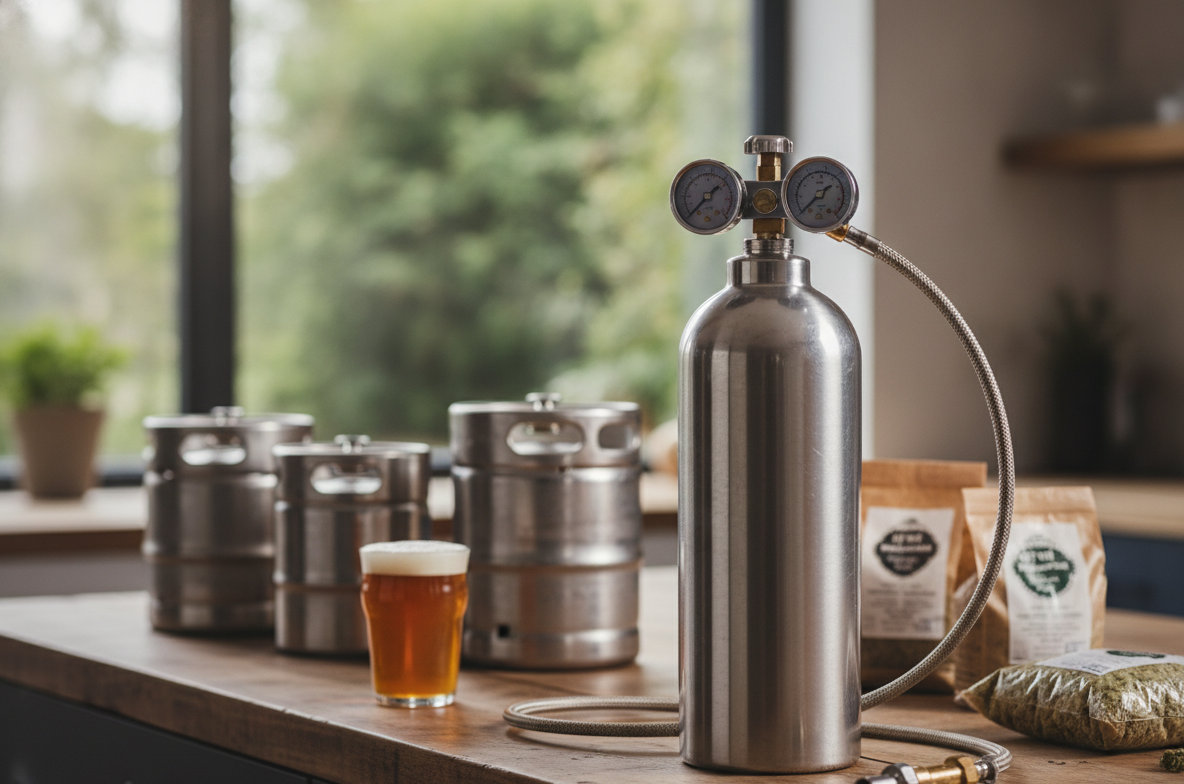
The Kegco 10 lb. Aluminum Tank Co2 Cylinder stands out as the best overall choice for most homebrewers. Its 10-pound capacity strikes an excellent balance between refill frequency and manageable size, making it a favorite for those with multiple 5-gallon ball lock kegs or a dedicated kegerator setup. Based on product specs, this tank is constructed from high-strength aluminum alloy 6061-T, ensuring it is both lightweight and rust-free. This material choice is a significant advantage for portability and longevity. The tank is designed to handle high pressure, supporting up to 1800 PSI/124 BAR service, which is standard for CO2 applications. A single filled tank can dispense 10-12 full-size beer kegs, providing substantial use before needing a refill. It comes with a pre-installed CGA-320 valve, ready for integration into your homebrewing system. Its DOT approval means it is widely accepted at gas supply centers for refills and exchanges.
Option 2: GANCOWISE New 5lb DOT Approved Aluminum CO2 Tank with CGA320 Valve (Empty)
For brewers seeking a more compact and budget-friendly option, the GANCOWISE New 5lb DOT Approved Aluminum CO2 Tank is an excellent choice. This tank is made from high-strength, corrosion-resistant aluminum, making it lighter and more durable than steel alternatives. Its 5-pound capacity is ideal for brewers who serve fewer kegs at a time or have limited space within a small kegerator or portable setup. Each tank is stamped with the required U.S. Department of Transportation markings, assuring its safety and refill compatibility. The sleek glossy varnish finish provides additional protection against wear and tear, contributing to its long term appearance. This tank also features a pre-installed CGA-320 valve, ensuring immediate compatibility with standard regulators.
Option 3: TMCRAFT 5lb CO2 Tank, DOT Aluminum Alloy, CGA-320 Valve, Black (Empty)
Another reliable 5-pound option is the TMCRAFT 5lb CO2 Tank. This tank is also crafted from high-strength, corrosion-resistant Aluminum Alloy 6061, promising reliability and durability. Like the other recommended tanks, it features the necessary exterior markings required by the U.S. Department of Transportation, confirming its safety certification. The pre-installed CGA-320 valve and male thread are compatible with common CO2 regulators, making it easy to integrate into an existing system. Its black finish offers a distinct aesthetic while providing an extra layer of protection. This tank is a solid choice for brewers prioritizing a compact footprint and reliable performance for smaller-scale kegging operations.
Red Flags to Watch For
When shopping for a CO2 tank, avoid certain issues that can lead to problems or safety risks.
- No DOT Stamp: If a tank lacks clear DOT markings, do not buy it. It will likely be refused at every legitimate refill station.
- Rust or Deep Dents: Visible rust, especially on steel tanks, or deep dents on any tank, can indicate structural weakness. These tanks are unsafe and will not pass hydrostatic testing.
- Incorrect Valve: Make sure the valve is CGA-320. Other valve types are not compatible with standard homebrewing regulators.
- Outdated Hydrotest Date: While not a deal-breaker if the tank is new, a very old hydrotest date on a used tank means you will incur the cost of retesting almost immediately. New tanks should have a recent stamp.
- Unbranded or Unknown Origin: Stick with reputable brands known for brewing equipment. Generic tanks from unknown sources might cut corners on safety or materials.
long term Cost of Ownership and Maintenance
The initial purchase price of a CO2 tank is only part of the overall cost. Brewers must also account for refills and periodic maintenance.
CO2 Refill Costs
The cost of refilling a CO2 tank varies by location and supplier. Generally, you can expect to pay around $20-$30 for a 5 lb. tank refill and $30-$50 for a 10 lb. Many homebrew shops, welding supply stores, or fire extinguisher service centers offer CO2 refills or exchanges. An exchange program lets you swap your empty tank for a full one, which can be convenient, but you may not get your original tank back.
Hydrostatic Testing
As mentioned, CO2 tanks require hydrostatic testing every five years. This service typically costs between $30-$60. If your tank fails hydrotesting, it cannot be refilled and must be decommissioned. Buying a new tank is often more cost effective than repeatedly trying to pass an old, questionable tank through testing.
Regulator Maintenance
While not part of the tank itself, your CO2 regulator is a critical component that connects to the tank. Regulators generally require little maintenance but can develop leaks over time. Periodically check all connections for leaks using a spray bottle with soapy water. Bubbles indicate a leak. Replacing a faulty regulator or its gaskets can add to long term costs, so choose a quality regulator from the start.
Making Your Final Decision
Consider your brewing habits and setup when choosing a CO2 tank. If you primarily brew 1-2 kegs at a time and space is a concern, a 5 lb. aluminum tank like the GANCOWISE or TMCRAFT options will serve you well. For more active brewers, those with multiple taps, or anyone wanting fewer trips for refills, the Kegco 10 lb. aluminum tank is the superior choice. Always prioritize DOT certification and a CGA-320 valve. A well-chosen CO2 tank provides years of reliable service, ensuring perfectly carbonated homebrew every time.
Frequently Asked Questions About CO2 Tanks
How often will I need to refill my CO2 tank?
The refill frequency depends on your tank size and usage. A 5 lb. tank typically carbonates and dispenses 4-6 five-gallon kegs, while a 10 lb. tank handles 10-12 kegs. If you force carbonate quickly at higher pressures, you will use more CO2. Leaks in your system also drain CO2 faster.
What is hydrostatic testing and why is it necessary?
Hydrostatic testing is a safety procedure where a CO2 tank is filled with water and pressurized to check for structural integrity, leaks, and weaknesses. It is required by the DOT every five years to make sure the tank can safely hold compressed gas. Refill stations will not fill a tank without a current hydrotest stamp.
Can I use a paint-ball CO2 tank for homebrewing?
While paint-ball tanks contain CO2, they typically use a different valve type (ASA or Pin Valve) and are much smaller. Adapters exist, but they often struggle to provide consistent pressure for beverage dispensing. They are not recommended for sustained homebrew kegging due to their limited capacity and potential pressure inconsistencies with standard regulators.
Kegco 10 lb. Aluminum Tank Co2 Cylinder (empty)
- LIGHTWEIGHT & RUST-FREE. Made from high-strength aluminum alloy 6061-T, the Kegco 10 lb. CO2 Tank is.
- HIGH-PRESSURE CAPABILITY. Designed for performance, this tank supports up to 1800 PSI/124 BAR service.
- EFFICIENCY YOU CAN COUNT ON. A single-filled tank can dispense 10-12 full-size beer kegs, ensuring a.
- CERTIFIED FOR SAFETY. Stamped with U.S. Department of Transportation and Transport Canada markings and.
GANCOWISE New 5lb DOT Approved Aluminum CO2 Tank with CGA320 Valve(Empety)
- Premium Quality: Made from high-strength, corrosion-resistant aluminum, this CO2 tank is lighter and more.
- DOT Approved: Each tank is stamped with the required U.S. Department of Transportation markings, and also.
- Sleek Finish: The tank features a glossy varnish finish that provides additional protection against.
- High Compatibility: Equipped with a pre-installed CGA-320 valve and have a male thread for CO2 regulators.
TMCRAFT 5lb CO2 Tank, DOT Aluminum Alloy, CGA-320 Valve, Black(Empty)
- Reliable and Durable: Made from high-strength, corrosion-resistant Aluminum Alloy 6061, this CO2 tank is.
- Safety Certified: This tank features the necessary exterior markings required by the U.S. Department of.
- High Compatibility: Our CO2 Tank features a pre-installed CGA-320 valve and a male thread for CO2.
- Appearance Details: The black glossy coating is designed to prevent scratches during everyday use. Each.