Understanding Kegerator Components and Their Costs
Building or buying a kegerator involves several core components. Each part carries its own price tag. The total cost largely depends on the quality and capacity of these individual items.
The Refrigerator (or Freezer)
This is often the largest single expense. The choice here impacts both functionality and overall cost. A dedicated kegerator refrigerator is designed specifically for kegs. It has reinforced floors and often internal CO2 tank storage. These units generally cost between $400 and $1,000 for a single or dual-tap model.
Converting an existing appliance is a popular money-saving strategy. A compact refrigerator (often called a mini-fridge or dorm fridge) can work for a single 5-gallon keg. These cost $150 to $350 new. You might find a used one for $50 to $150. A chest freezer offers more space and better temperature control for multiple kegs. New chest freezers suitable for conversion run $200 to $500. Used models are often available for $75 to $250. Converting a chest freezer usually requires building a wooden collar to seal the lid and mount the taps, adding about $50 to $100 for materials.
The Kegerator Conversion Kit
If you are converting a refrigerator or freezer, a conversion kit provides most of the necessary dispensing hardware. These kits vary in price based on the number of taps and component quality. A basic single-tap kit, including a chrome faucet, shank, beer line, CO2 line, and disconnects, typically costs $150 to $300. Dual-tap kits range from $250 to $450. Higher-end kits might include stainless steel faucets, better insulation, or more robust regulators. Many kits offer options for either ball lock or pin lock keg connections. For a detailed comparison of options, refer to our guide on the Best Kegerator Conversion Kits.
CO2 Tank and Regulator
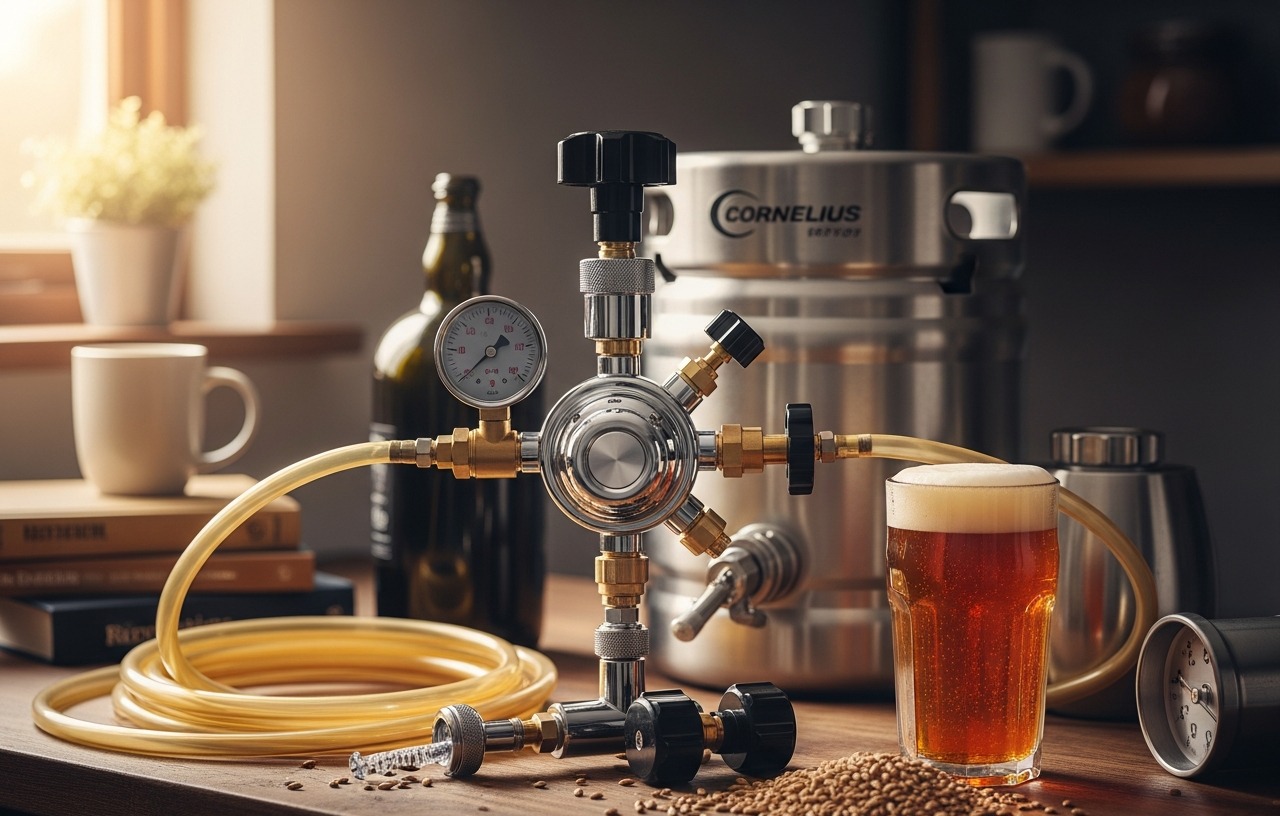
Carbon dioxide (CO2) is essential for dispensing beer and force carbonating your homebrew. A 5 lb CO2 tank is standard for home use. It costs $70 to $100 new, plus an initial fill fee of $20 to $30. Larger 10 lb or 20 lb tanks are available but less common for single keg setups. These cost $100 to $150 for the tank and $30 to $50 for a fill. The regulator attaches to the CO2 tank and controls the pressure. A single-gauge regulator costs $60 to $100. A dual-gauge regulator, which shows both tank pressure and output pressure, is often preferred and costs $80 to $150. high quality regulators offer better precision and durability. Pin Lock)
The kegs hold your beer. Most homebrewers use 5-gallon Cornelius (Corny) kegs. These come in two main types: ball lock and pin lock. Ball lock kegs are more common for homebrewers and typically easier to find. A new 5-gallon ball lock keg costs $75 to $120. Used or reconditioned ball lock kegs can be purchased for $50 to $80. Pin lock kegs are often slightly cheaper, new ones at $60 to $100 and used ones at $40 to $70. The choice depends on personal preference and availability. Most conversion kits are adaptable to either type. A cleaning kit, including a brush, cleaning solution, and a faucet wrench, costs $30 to $60. A drip tray to catch spills is highly recommended and costs $20 to $50. Faucet locks, which prevent accidental dispensing or tampering, are $15 to $30. Temperature control is also vital for consistent beer quality. While many refrigerators have adequate thermostats, an external fermentation temperature controller like an Inkbird ITC-308 can provide more precise control, costing around $40 to $60. You can learn more about these controllers in our Inkbird ITC-308 Review.
Pre-Built Kegerator Systems: Convenience vs. Cost
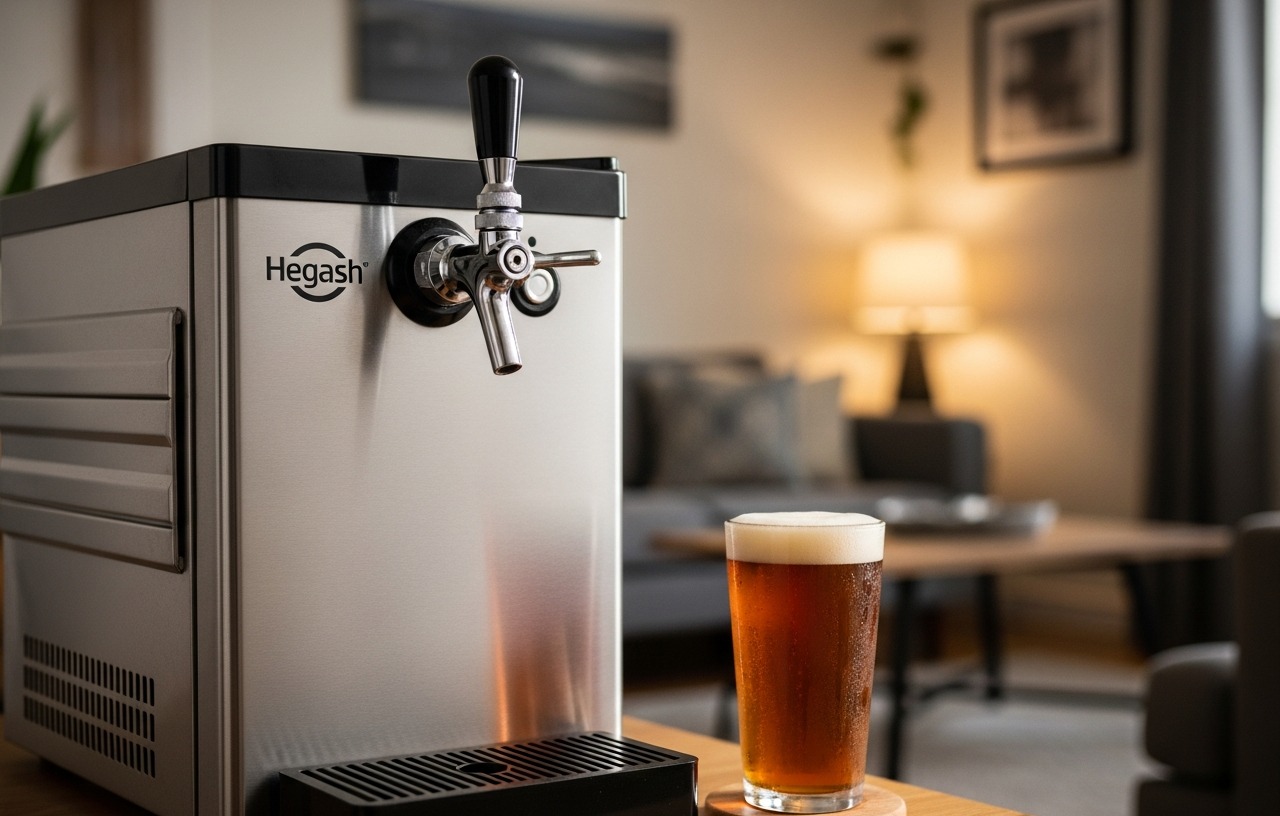
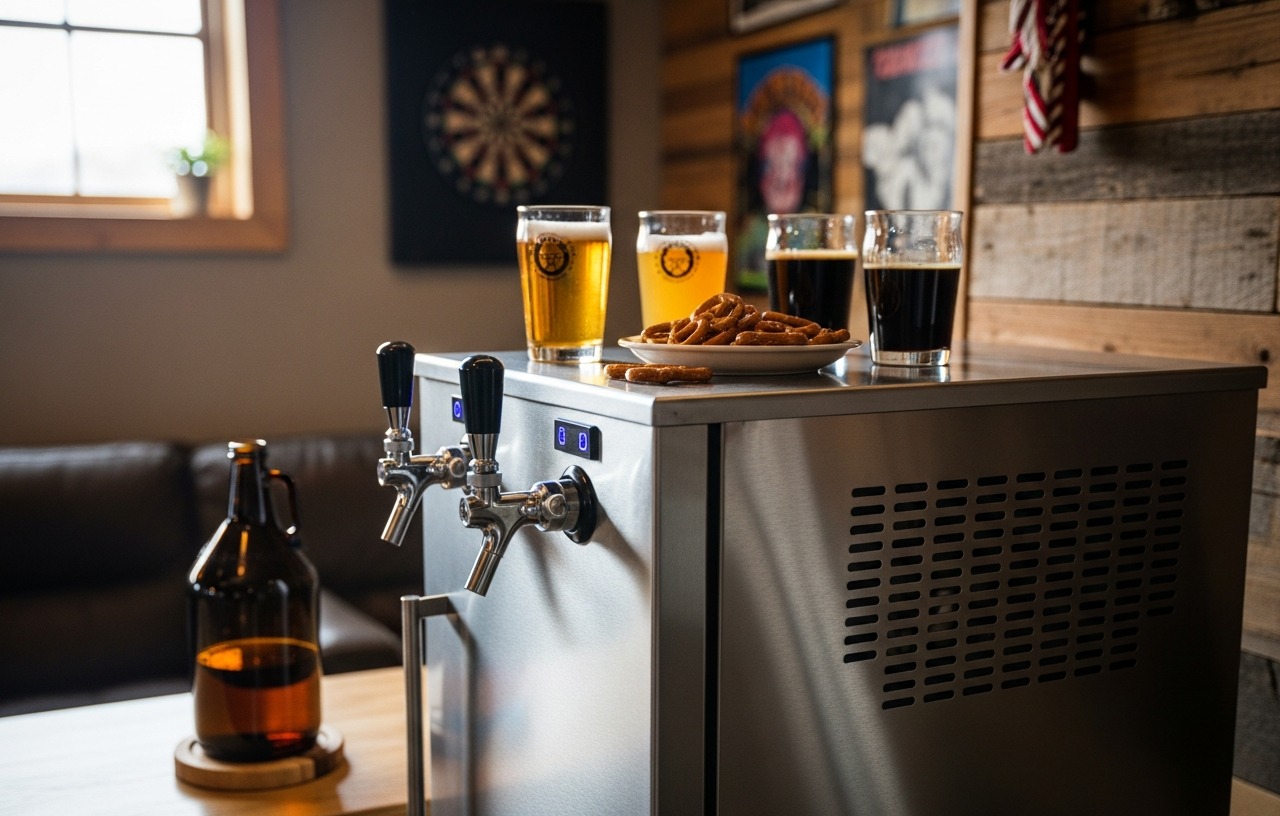
For those who prefer a ready-to-use solution, pre-built kegerators offer convenience. These units arrive with most components pre-assembled. They are often purpose-built refrigerators with dispensing towers, faucets, and sometimes even a CO2 tank and regulator included. Dual-tap models usually run $900 to $1,800. Some high end models, offering features like stainless steel exteriors, multiple taps, or commercial-grade components, can exceed $2,000.
The main advantage of a pre-built system is simplicity. You unbox it, connect the CO2, insert a keg, and are ready to pour. This saves time and effort compared to a DIY conversion. The downside is the higher initial cost. You are paying for the integrated design and the labor involved in assembly. If you lack tools or confidence in DIY projects, a pre-built unit can be a worthwhile investment.
DIY Kegerator Conversion: Savings and Steps
Converting an existing refrigerator or freezer into a kegerator is a popular choice for homebrewers looking to save money. The potential savings can be significant. If you already own a suitable appliance, your costs might drop to $300 to $700 for the conversion kit, CO2 system, and kegs. Even buying a used appliance for the conversion keeps the total cost well below a pre-built unit.
Here is a breakdown of a typical DIY conversion scenario:
- Acquire a Refrigerator/Freezer: If you use an old, spare refrigerator, this cost is $0. If you buy a used compact fridge for $75 or a used chest freezer for $150, that is your initial outlay.
- Purchase a Conversion Kit: A basic single-tap kit costs around $200.
- Buy CO2 Tank and Regulator: A new 5 lb CO2 tank costs $80, plus a $25 fill. A dual-gauge regulator adds $100. Total for CO2 setup: $205.
- Get Kegs: One used 5-gallon ball lock keg costs $60.
- Miscellaneous: Cleaning kit, drip tray, and a few basic tools might add $70.
In this example, using an existing fridge, the total cost could be as low as $535. If you purchase a used fridge or freezer, the total might be $610 to $685. This is considerably less than the $600 to $1,200 for a new pre-built single-tap unit.
The DIY process typically involves drilling holes for tap shanks and the CO2 line, mounting the regulator, and assembling the beer lines. It requires basic tools like a drill, hole saw, and wrenches. For chest freezer conversions, you will also need wood for the collar, sealant, and possibly a temperature controller. While it requires some effort, the financial reward is clear.
Ongoing Costs of Owning a Kegerator
The initial purchase or build cost is not the only expense. Kegerators have ongoing operational costs. These are generally low but worth factoring into your budget.
- CO2 Refills: A 5 lb CO2 tank typically lasts for 4 to 8 five-gallon kegs, depending on carbonation levels and how often you dispense. Refills cost $20 to $30. If you brew and keg frequently, this might be a quarterly expense.
- Cleaning Supplies: Regular cleaning of your beer lines and faucets is essential for good taste and sanitation. Cleaning solutions and brushes might cost $10 to $20 annually. Knowing how to sanitize brewing equipment properly extends to your kegerator components too.
- Replacement Parts: O-rings, beer lines, and CO2 lines eventually wear out. These are inexpensive, usually costing $5 to $10 annually for replacements.
- Electricity: The refrigerator or freezer consumes electricity. A modern, energy-efficient unit might add $5 to $15 per month to your electricity bill, depending on its size and your local utility rates. Older units or those in warmer environments might cost more.
When to Buy vs. When to DIY
Deciding between a pre-built kegerator and a DIY conversion depends on several factors: budget, technical skill, and available time.
Choose a Pre-Built Kegerator if:
- Your budget allows for the higher initial investment ($600-$1800+).
- You prioritize convenience and a ready-to-use system.
- You lack the tools, space, or confidence for a DIY project.
- You want a system with a professional, integrated look from the start.
Opt for a DIY Kegerator Conversion if:
- You want to save money, potentially cutting costs by $200-$500 or more.
- You enjoy building and customizing projects.
- You have an old refrigerator or freezer available for conversion.
- You possess basic tools (drill, hole saw, wrenches) and are comfortable using them.
- You need a specific setup not readily available in commercial units, such as a multi-tap chest freezer collar system.
For many homebrewers, the DIY route offers a rewarding experience and significant cost savings. The risk involved is minimal, mostly limited to drilling holes correctly. If a mistake happens, replacement parts are usually inexpensive. For those new to homebrewing entirely, starting with a simple homebrew starter kit and then moving to kegging might be a good progression.
The cost of a homebrew kegerator varies widely. It depends on whether you buy a pre-built unit or assemble one yourself from components. A basic DIY setup can cost as little as $300 to $700, while a new, multi-tap commercial unit can exceed $2,500.