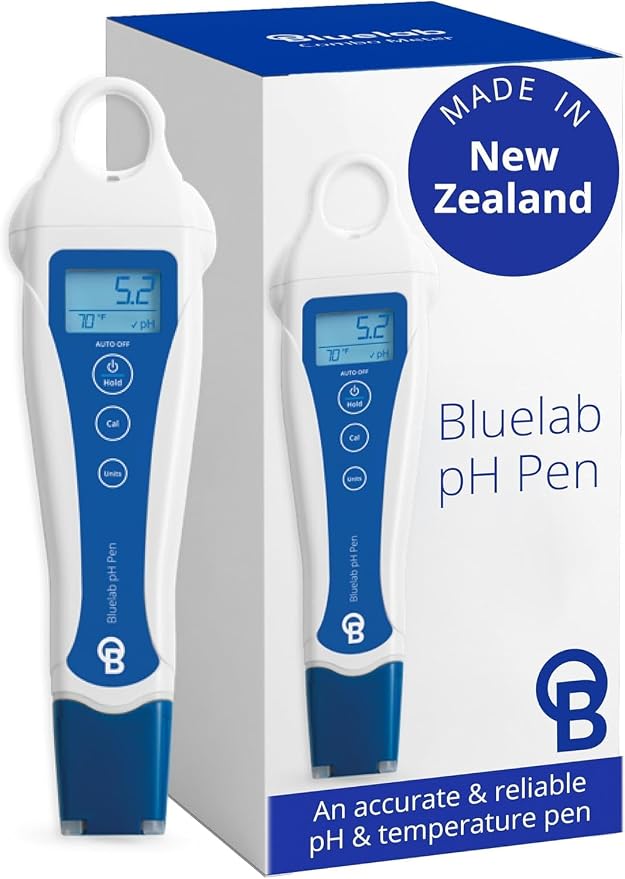
Bluelab pH Pen - ± 0.1 pH Accurate - Durable Double Junction Probe | Waterproof and Floats - Auto Temperature Compensation - Made
- Perfect pH control for various media - ph meter for water hydroponics can be used for growing tents.
- Easy calibration - Set up our digital pH meter with a two-point calibration process. Calibrate the.
- Get accurate readings with a double-junction probe. Unlike glass bulbs, the double-junction probe.

Food pH Meter Digital pH Tester Spear pH Probe pH Reader for Canning | pH Checker for Fermented Fermentation Lab pH Meter for
- PH Meter for Sourdough Making: With proprietary spear pH probe, YINMIK food pH meter is great for managing.
- Food pH tester for Fermenting: If you are committed to making delicious sausages, salami, cheese, sushi.
- Nice pH Meter for Cosmetics: With Spear Probe the pH meter works great for checking the pH of the.
- Stable and Accurate pH Tester Food: More chips for more stable reading, with two times quantity than other.
Home brewers recognize that precise pH control is not just a preference; it is a requirement for healthy SCOBY activity and balanced flavor development. This review examines the top pH meters available, focusing on their features, ease of use, and suitability for different brewing styles.
Why pH Matters for Kombucha Brewing
The pH level of your kombucha directly influences the activity of the yeast and bacteria within your SCOBY (Symbiotic Culture of Bacteria and Yeast). This delicate ecosystem thrives within a specific acidic window. Initiating your brew with the correct pH and maintaining it throughout fermentation protects against unwanted molds and harmful bacteria. It also guides the beneficial microorganisms to produce the characteristic tartness and complex flavors of kombucha.
An incorrect pH can lead to a stalled fermentation, off-flavors, or even a compromised SCOBY. High pH levels, especially at the start, create an environment where mold can easily grow. Conversely, an excessively low pH can stress the SCOBY, slowing its activity and leading to an overly vinegary taste before desired fermentation is complete. Regular pH monitoring helps you keep your brew within the safe and optimal range, leading to successful batches every time.
Top pH Meters for Kombucha Making
Bluelab pH Pen (Top Pick)
The Bluelab pH Pen is a favorite among serious home brewers and professional growers for good reason. Its ± 0.1 pH accuracy ensures reliable readings, which is vital when monitoring the subtle shifts in your kombucha's acidity. This meter provides the confidence that your measurements are precise, allowing for informed adjustments to your brewing process.
The durable double-junction probe resists fouling and extends the life of the meter. This design prevents common points of failure seen in less robust devices. This unit is also waterproof and floats, a practical design choice that prevents accidental damage during busy brewing sessions. If it drops into your fermenter, it will not sink. Automatic Temperature Compensation (ATC) means you get accurate pH values regardless of the liquid's temperature, removing a significant variable from your measurements. Calibrating the Bluelab pH Pen is a two-point process, making it simple to maintain its precision. The meter is made with quality in mind, designed to withstand regular use in various media, not just kombucha. It handles water for hydroponics setups and other fermentation liquids with equal competence.
- Pros:
- High accuracy (± 0.1 pH) with a durable double-junction probe.
- Waterproof and floats, reducing risk of damage.
- Automatic Temperature Compensation (ATC) provides consistent readings.
- Easy two-point calibration.
- Cons:
- Requires consistent calibration solution replacement for optimal performance, adding a recurring cost.
Best For: Brewers who prioritize precision and durability above all else. This meter is ideal for those making large batches, continuous brew systems, or anyone wanting professional-grade control over their kombucha's pH. It suits those who might also use it for other home growing or fermentation projects.
YINMIK Food pH Meter Digital pH Tester Spear pH Probe
The YINMIK Food pH Meter Digital pH Tester offers a specialized approach to pH measurement, particularly useful for thicker or semi-solid samples. Its proprietary spear pH probe is designed for direct insertion into foods like sourdough, cheese, and fermented meats. This makes it uniquely suited for kombucha SCOBY health checks or testing the pH of very thick, viscous ferments. This design sets it apart from standard glass bulb probes, which can struggle with such applications.
While marketed for various food uses like canning and salami making, its robust probe can handle the acidic environment of kombucha. The meter provides accurate readings for managing fermentation processes, making sure your cultures thrive. It is also suitable for checking the pH of cosmetics, highlighting its versatility. Based on user reviews, its ease of use for specific food applications is a strong point.
- Pros:
- Spear pH probe is excellent for direct measurement in semi-solid foods and viscous ferments.
- Versatile for various food applications beyond kombucha.
- Simple interface for quick readings.
- Cons:
- May require more delicate handling than a standard pen-style meter due to the spear probe design.
- Less robust for general liquid applications compared to a double-junction probe.
Best For: Brewers who make kombucha alongside other fermented foods like sourdough, cheese, or even cured meats. This meter is perfect for those who need to measure pH directly within the SCOBY itself or in thick starter liquids. It is a good choice for those with diverse fermentation interests.
Key Considerations When Choosing a pH Meter
A reliable pH meter is as vital to successful kombucha brewing as a healthy SCOBY. Choosing the right one requires understanding a few key features that impact performance and longevity.
Accuracy and Resolution
The accuracy of a pH meter, often expressed as ± pH units, tells you how close its readings are to the true pH. For kombucha, an accuracy of ± 0.1 pH is generally sufficient for home brewing. Resolution refers to the number of decimal places the meter displays. A resolution of 0.01 pH provides more granular data, allowing you to track subtle changes in acidity. While 0.1 pH is acceptable, 0.01 pH offers superior monitoring capabilities for serious brewers who want precise control over their fermentation. Higher resolution helps identify small shifts that might indicate the brew's progress or potential issues.
Calibration Requirements and Solutions
All pH meters drift over time, so regular calibration is essential to maintain accuracy. Most meters use a two-point or three-point calibration process. Two-point calibration, typically using pH 4.0 and pH 7.0 buffer solutions, is common and effective for kombucha. Some advanced meters offer three-point calibration for even greater accuracy across a wider pH range. Always use fresh, high quality buffer solutions and follow the manufacturer's instructions precisely. Old or contaminated buffers lead to inaccurate readings, negating the purpose of calibration. Plan to replace your buffer solutions periodically to make sure they remain effective. A service call for pH meter calibration by a professional can cost $80-$150, making DIY calibration a cost effective choice.
Automatic Temperature Compensation (ATC)
Temperature significantly affects pH readings. A sample at 70°F will have a slightly different pH reading than the same sample at 100°F, even if its true acidity is unchanged. ATC automatically adjusts the pH reading to account for these temperature variations. This feature eliminates the need for manual temperature correction, simplifying your brewing process and making sure your readings are always comparable, regardless of the kombucha's temperature when measured. For home brewers, ATC means less guesswork and more reliable data, especially when measuring kombucha that may still be warm from a recent feed or activity.
Probe Type and Material
The probe is the most critical part of a pH meter, directly interacting with your kombucha. Standard glass bulb probes work well for clear liquids. A double-junction probe, like that found in the Bluelab pH Pen, offers enhanced durability and a longer lifespan, especially in challenging or contaminated samples. These probes are more resistant to clogging and contamination, which is beneficial in fermenting liquids. Spear probes, such as those on the YINMIK meter, are designed for direct insertion into semi-solid materials. They are robust enough to penetrate thicker mashes or SCOBY pellicles. Consider your primary use case when selecting a probe type; a general-purpose liquid probe is fine for most kombucha, but a spear probe helps with denser samples.
Durability, Waterproofing, and Design
Brewing environments can be messy, with splashes and spills a common occurrence. A durable, waterproof meter can survive accidental drops into your brew or splashes on the counter. Features like floating designs add an extra layer of protection, preventing a lost or damaged meter. Robust construction materials contribute to the meter's overall lifespan, making sure your investment lasts for many batches. Consider the physical design as well; some meters are pen-style for portability, while others have larger displays or ergonomic grips. A well designed meter enhances usability during your brewing sessions.
Maintenance, Storage, and Electrode Life
Proper maintenance extends the life of your pH meter's electrode. Always keep the probe hydrated in a specialized storage solution (never distilled water). Distilled water can leach electrolytes from the probe, shortening its lifespan. Clean the probe regularly to prevent buildup from brewing residues. Replace calibration and storage solutions as needed, typically every few months or when they appear cloudy. Following these simple steps will make sure your meter remains accurate and responsive. The electrode itself has a limited lifespan, usually 1-2 years with proper care. Factor in potential replacement costs when choosing a meter, though many higher-end models offer replaceable probes.
Using Your pH Meter for Kombucha
Ideal pH Range for Kombucha
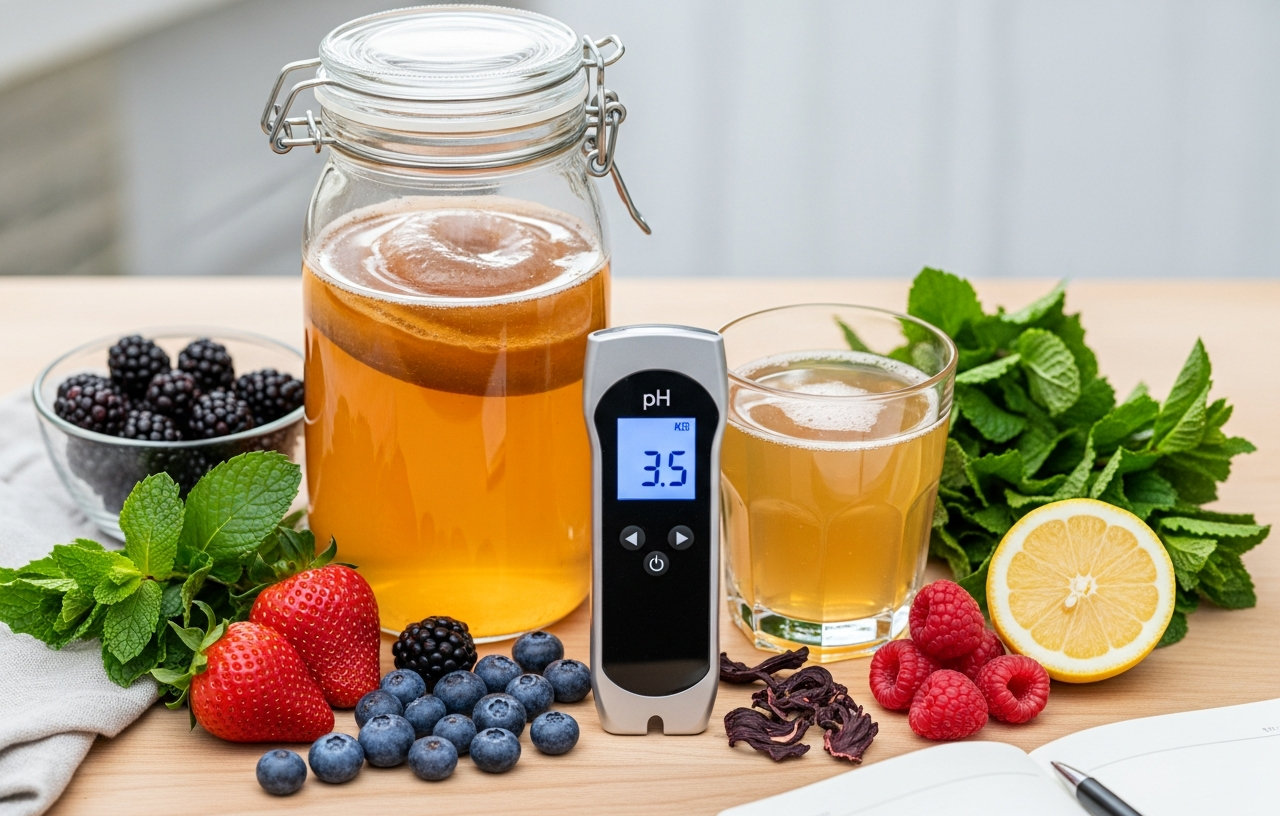
The ideal pH range for kombucha fermentation is typically between 2.5 and 3.5. Starting your brew with a pH around 4.5 and allowing it to drop to this target range during fermentation creates the optimal acidic environment. This acidity protects against unwanted mold and bacteria while promoting the growth of beneficial microorganisms. Monitoring the pH helps you determine when your kombucha is ready for bottling or if it needs more time to ferment. For new brewers, monitoring pH provides confidence that the brew is progressing correctly. For seasoned brewers, it helps with consistency between batches.
How to Take a Reading
To take a reading, first make sure your meter is properly calibrated. Rinse the probe with distilled or deionized water to remove any residue from previous use or storage solution. Dip the probe into the kombucha, making sure the sensor is fully submerged. Gently swirl the meter to help the reading stabilize. Allow the reading to settle, which usually takes a few seconds. Record the pH value. After taking the reading, rinse the probe thoroughly with distilled water again before placing it back into its storage solution. This process helps maintain the probe's accuracy and longevity.
Troubleshooting pH Issues in Kombucha
When your SCOBY is not bubbling or performing as expected, a pH check can often pinpoint the issue. Too high a pH, especially at the start of fermentation, can invite mold growth. This might mean your starter tea was not acidic enough, or your initial sugar concentration was too low. Too low a pH, particularly with an over-fermented batch, might indicate a vinegary taste. This could mean the brew fermented too long or at too warm a temperature. For more troubleshooting tips, refer to our article Kombucha SCOBY Not Bubbling? Troubleshooting Your Fermentation. Adjustments can include adding more acidic starter tea or adjusting fermentation time. Consistent pH tracking helps prevent these common problems.
For those just starting their kombucha journey, understanding pH is a fundamental step. Consider exploring Best Kombucha Starter Kits: SCOBY, Vessels, and More to get all the essential equipment for brewing success. If you are interested in continuous brewing, where pH stability is even more critical, our guide on Best Kombucha Continuous Brew Vessels: Brew Forever provides helpful insights.
Conclusion
Selecting the best pH meter for kombucha making is a direct investment in the quality and safety of your homebrewed beverages. Whether you prioritize precision and robust design with the Bluelab pH Pen, or specialized application with the YINMIK Food pH Meter, having an accurate tool empowers you to control your fermentation process. Consistent pH monitoring helps achieve that perfect balance of tartness and sweetness in every batch, making sure your kombucha is consistently delicious and healthy.
Bluelab pH Pen - ± 0.1 pH Accurate - Durable Double Junction Probe | Waterproof and Floats - Auto Temperature Compensation - Made
- Perfect pH control for various media - ph meter for water hydroponics can be used for growing tents.
- Easy calibration - Set up our digital pH meter with a two-point calibration process. Calibrate the.
- Get accurate readings with a double-junction probe. Unlike glass bulbs, the double-junction probe.
Food pH Meter Digital pH Tester Spear pH Probe pH Reader for Canning | pH Checker for Fermented Fermentation Lab pH Meter for
- PH Meter for Sourdough Making: With proprietary spear pH probe, YINMIK food pH meter is great for managing.
- Food pH tester for Fermenting: If you are committed to making delicious sausages, salami, cheese, sushi.
- Nice pH Meter for Cosmetics: With Spear Probe the pH meter works great for checking the pH of the.
- Stable and Accurate pH Tester Food: More chips for more stable reading, with two times quantity than other.