kitchentoolz 1 Gallon Glass Jar with Lid to Gallon Mason Wide Mouth Large Glass Jar for Fermenting, Pickling, Canning,
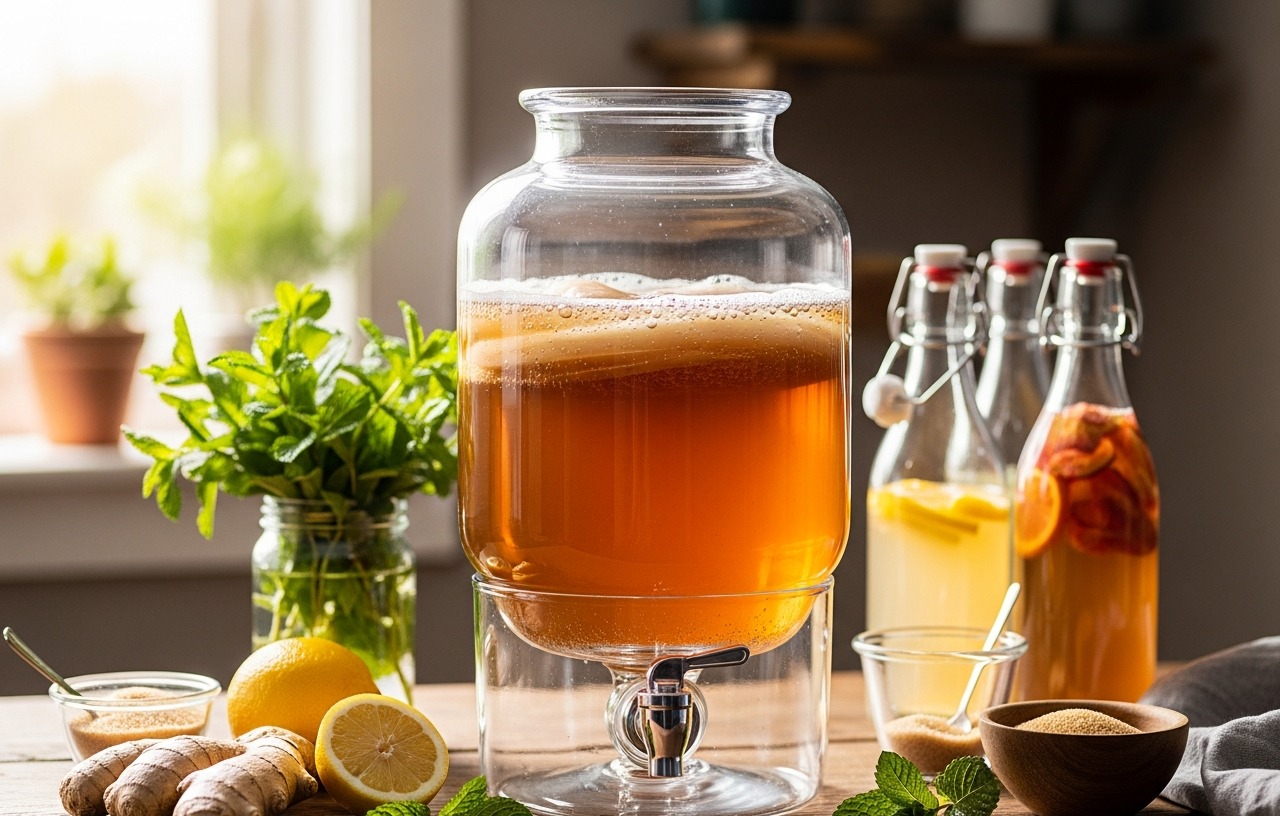
- This big glass jar set is built for homesteading, bulk storage, and brewing , a dependable gallon glass.
- The wide opening makes each one a true gallon jars with lids wide mouth option, easy to fill, clean, and.
- These also serve as a big mason jar, giant mason jar, canning jars, or large mason jar , adaptable for.
- For brewing and beverages, each jar performs as a 1 gallon glass jug or gallon glass jug , perfect glass.

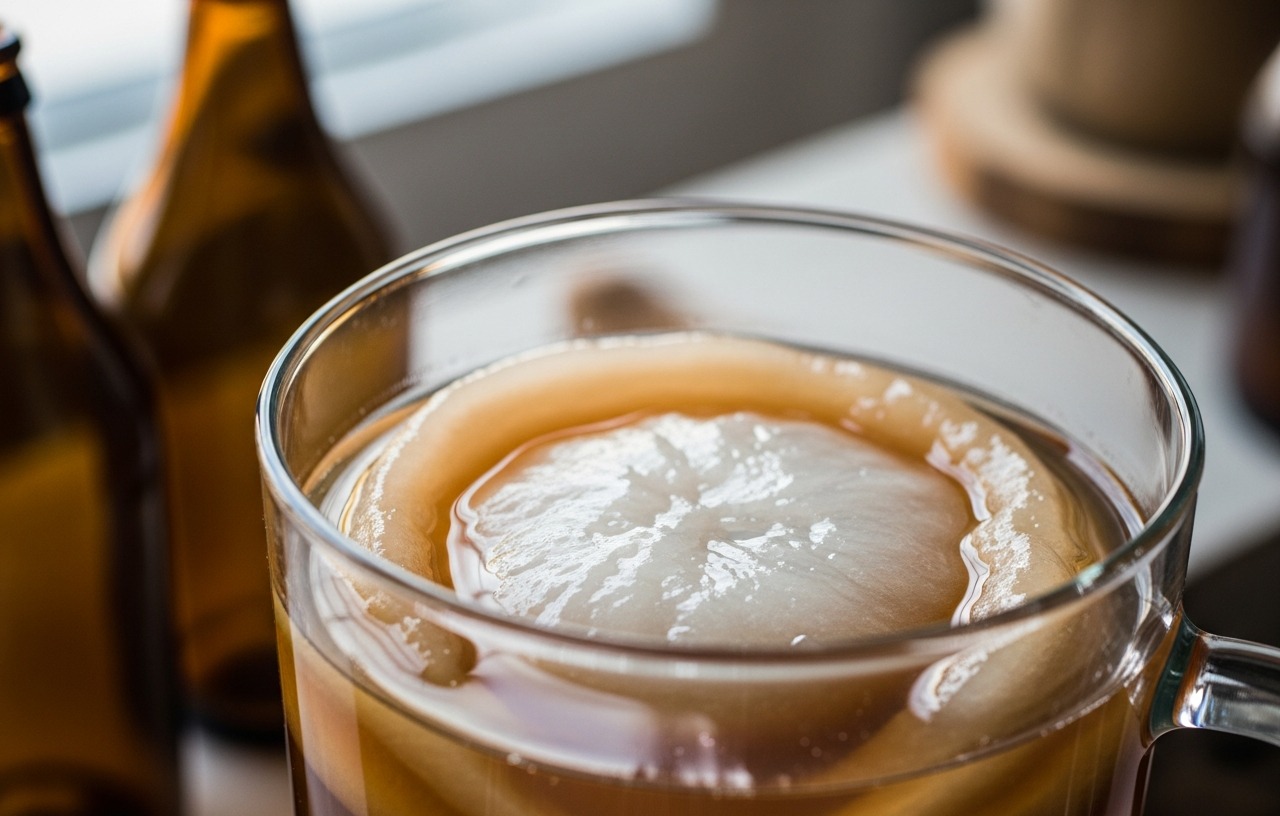
Fermentaholics ORGANIC Kombucha SCOBY With Twelve Ounces of Starter Tea - Live Starter Culture - Makes A One Gallon Batch - 1.5
- ★ USDA CERTIFIED ORGANIC SCOBY ★ Our cultures are Organic & Kosher, grown in our fully licensed lab.
- ★ BREW WITH CONFIDENCE ★ Our easy instructions guide you step by step through your first fermentation. If.
- ★ MAKES ONE GALLON ★ You will receive 1.5 cups of strong, mature liquid starter tea packaged with a.
- ★ CREATE, LEARN, GROW ★ Get creative with new flavoring ideas and brewing techniques. Invite your friends.

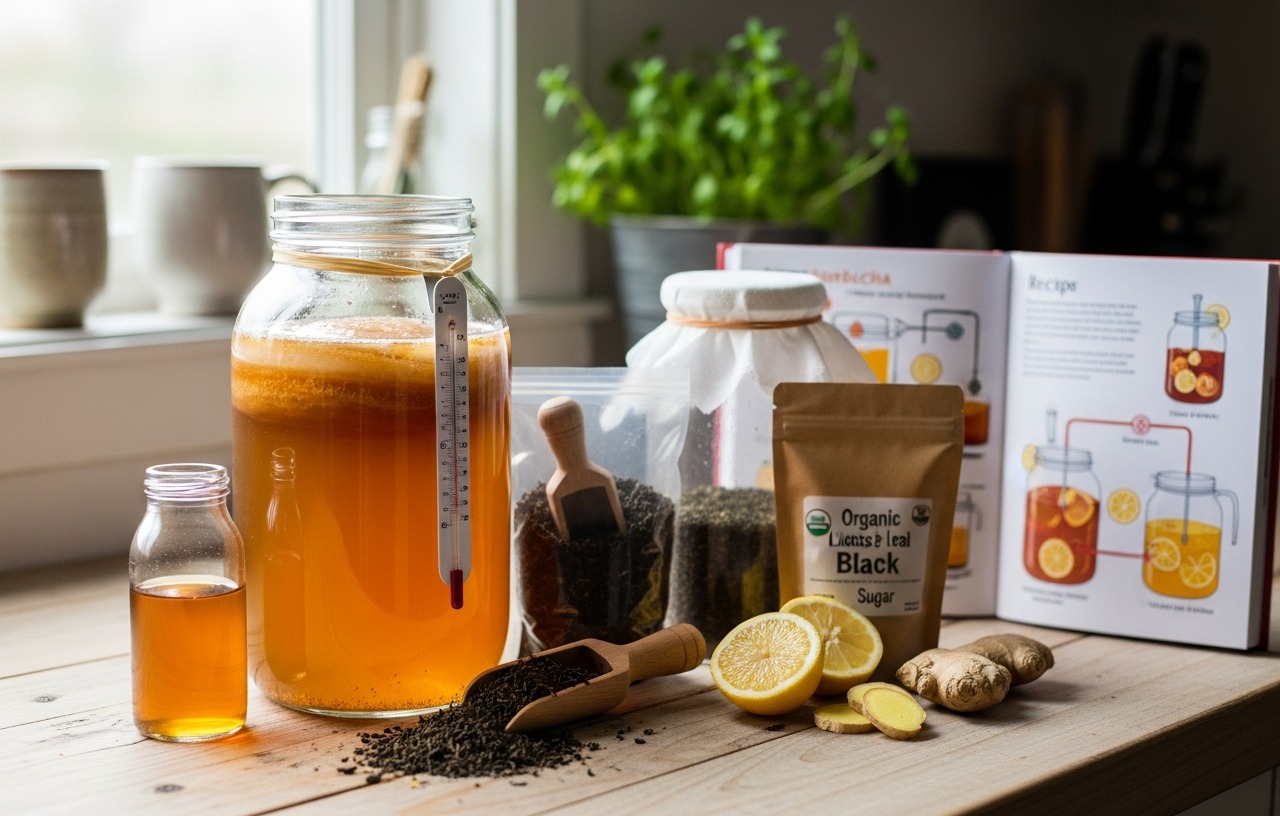
Deluxe Organic Kombucha Starter Kit - Six Swing Top Bottles, Stainless Steel Funnel, Custom Bottle Brush & Our Original Brewing
- Save money and time purchasing all of the equipment to brew and bottle in one custom kit. Our Deluxe.
- Includes a Bendable Bottle Brush. Custom made for our 16 oz. bottles and fits those hard to reach corners
- Includes a well made Stainless Steel Funnel and Strainer Set. Finally bottle and strain your kombucha with.
- Includes our 1 Gallon Kombucha Brewing Kit - All the essential ingredients to get you started and the.
Standing water in the bottom of a dishwasher after a full cycle usually means one of four things, and three of them cost nothing to fix. Similarly, kombucha that emerges from fermentation tasting far too sour, akin to vinegar, points to specific brewing challenges. Understanding these causes allows for quick diagnosis and correction, saving your batch and your taste buds. The most frequent culprits behind overly sour kombucha are an extended fermentation time, an imbalanced starter culture (SCOBY), or an improper tea to sugar ratio.
Common Causes of Overly Sour Kombucha
When your home-brewed kombucha leans too heavily towards a sharp, vinegary flavor, it's not necessarily a lost cause. Often, a slight adjustment to your brewing process can bring it back into balance. Let's examine the primary reasons this happens and how you can test for them.
1. Extended Fermentation Time
Kombucha fermentation is a dynamic process. Yeast and bacteria work together to consume sugar and produce acids and carbon dioxide. The longer the fermentation, the more sugar is consumed, and the more acidic the kombucha becomes. This is the most common reason for sour kombucha, especially for beginners who might misjudge the ideal fermentation endpoint.
The Test: The easiest way to confirm this is by reviewing your brewing log. If your fermentation period consistently exceeds 10-14 days (for a standard 7-14 day fermentation at room temperature), you've likely left it too long. Taste testing is also key. If you've been tasting your brew regularly throughout the fermentation, you'll notice the transition from slightly sweet to pleasantly tart, and then to overly acidic. If you find yourself tasting it only once at the end and it's already too sour, you're probably extending the time too much.
The Fix: Shorten your fermentation time. For most room-temperature brews (around 70-75°F or 21-24°C), aim for 7 to 10 days for the first fermentation. Taste regularly starting around day 5 or 6. The ideal point is when the kombucha is no longer sweet but still has a pleasant tartness without being overwhelmingly acidic. Adjust this based on your specific environment and taste preferences. If you are using a temperature controller like the Inkbird ITC-308, you can maintain a more consistent temperature, which can lead to more predictable fermentation times.
Cost of Repair: $0. This fix involves adjusting your timing and tasting habits. If you have a batch that has gone too sour, you can sometimes dilute it with sweet tea or juice, or use it as a starter tea for your next batch. However, the best approach is prevention by monitoring fermentation.
2. Imbalanced Starter Culture (SCOBY)
The SCOBY (Symbiotic Culture Of Bacteria and Yeast) and its accompanying starter liquid are the heart of your kombucha brew. If the starter liquid is too acidic, or if the SCOBY is unhealthy or too old, it can lead to an overly sour final product. A weak starter may not effectively balance the fermentation, allowing the acid-producing bacteria to dominate too quickly.
The Test: First, examine your SCOBY. Is it a healthy, creamy beige or light brown color? Does it have a robust, slightly yeasty smell? If your SCOBY is black, moldy, or smells foul, it needs to be replaced. Second, consider the age and amount of your starter liquid. Generally, you need about 1-2 cups of strong starter liquid per gallon of sweet tea. If you've been using very little starter, or if the starter liquid has been sitting for a long time without being refreshed, its bacterial balance might be off. A weak starter may not produce the desired effervescence and flavor profile. You can obtain a new, healthy SCOBY from reputable suppliers like Fermentaholics ORGANIC Kombucha SCOBY With Twelve Ounces of Starter Tea. This option provides a live culture and starter tea, ensuring a strong start to your brew.
The Fix: Ensure you are using enough healthy starter liquid. For a 1-gallon batch, use at least 1.5 to 2 cups of starter tea. If you suspect your SCOBY is weak or old, it's time to replace it. Using a fresh, vigorous culture will significantly improve the balance of your fermentation. Always use high quality starter tea that complements your SCOBY. If you're buying a new SCOBY, it often comes with starter liquid, which is ideal.
Cost of Repair: $15 - $30 for a new SCOBY and starter liquid. This investment ensures a healthy fermentation base. For instance, the Fermentaholics organic SCOBY with starter tea costs around $20 and is designed to make a one-gallon batch, providing a reliable foundation for your brewing.
3. Improper Tea to Sugar Ratio
The balance of tea, sugar, and SCOBY is critical for successful kombucha brewing. The sugar is the primary food source for the yeast and bacteria. If there is too much sugar relative to the tea and SCOBY, the fermentation can become overly aggressive, leading to a faster production of acids. Conversely, too little sugar results in a weak fermentation and potentially a bland or sour brew if the fermentation happens too quickly before flavors develop properly.
The Test: Measure the amount of sugar and tea you use for your batch. A common ratio for a 1-gallon batch is about 1 cup of sugar (or slightly less, around 3/4 cup) dissolved in about 1 gallon of sweet tea. If you are using significantly more sugar than this, you might be contributing to an overly sour outcome due to aggressive fermentation. If you are using much less sugar, the fermentation might be weak and unbalanced. Also, consider the type of tea. While black tea and green tea are standard, using only very weak tea can sometimes lead to flavor imbalances.
The Fix: Adhere to a standard sugar ratio for your batch size. For a 1-gallon batch, aim for 3/4 to 1 cup of granulated white sugar. Dissolve it thoroughly in your brewed sweet tea before adding the starter liquid and SCOBY. Using a good quality black or green tea (or a blend) provides essential nutrients for the SCOBY. If you are consistently finding your kombucha too sour, try slightly reducing the sugar to 3/4 cup per gallon and ensure your fermentation time is appropriate.
Cost of Repair: $0 - $5. This is a matter of adjusting your recipe. The cost of sugar and tea is minimal. A large bag of sugar costs about $3-$5, and tea is even less per batch. The key is accurate measurement and following established ratios. Many homebrewers start with kits like the Deluxe Organic Kombucha Starter Kit, which often include recommended recipes and ingredients, helping to avoid initial ratio mistakes.
4. Incorrect Fermentation Temperature
Temperature significantly impacts the rate and balance of kombucha fermentation. The ideal range is typically between 70-80°F (21-27°C). If your brew is too warm, fermentation can accelerate rapidly, producing more acid and potentially leading to a sour taste. If it's too cold, fermentation slows down considerably, which can sometimes lead to mold growth or an unbalanced brew.
The Test: Use a reliable thermometer to check the temperature of your brew during fermentation. Place the thermometer directly in the liquid or against the vessel. If your brewing area is consistently above 80°F (27°C), the fermentation will likely be too fast and too acidic. If it's below 70°F (21°C), the process will be sluggish. Many brewers use temperature controllers to maintain a stable environment, especially in inconsistent climates. The Inkbird ITC-308 is a popular and affordable option for this purpose.
The Fix: Regulate your fermentation temperature. If too warm, move the brewing vessel to a cooler location, perhaps a basement or a room with air conditioning. If too cold, use a seedling heat mat designed for brewing or a fermentation wrap, ensuring it's set to a low, consistent temperature and used with a thermostat to prevent overheating. Maintaining a stable temperature between 70-75°F (21-24°C) is ideal for most kombucha brews.
Cost of Repair: $0 - $70. Moving the brew to a different location costs nothing. A reliable brewing thermometer costs about $10-$20. A dedicated fermentation temperature controller, like the Inkbird ITC-308, costs around $60-$70 but offers precise control and is a worthwhile investment for consistent results across various brewing projects, including beer and wine.
Troubleshooting a Sour Batch
If you find yourself with a batch that's already too sour, don't despair. While it might not be ideal for drinking straight, there are ways to salvage it.
- Use as Starter Tea: The most common and effective use for overly sour kombucha is as starter tea for your next batch. The high acidity helps to quickly lower the pH of the new sweet tea, protecting it from mold and unwanted bacteria. Use about 1-2 cups of this sour kombucha per gallon of new sweet tea.
- Dilute and Flavor: You can dilute the sour kombucha with fresh sweet tea or even fruit juice. Add sweeteners like honey or agave if needed. This can help mask the strong acidity, but it changes the flavor profile significantly.
- Use in Recipes: Sour kombucha can be used in marinades for meats, as a base for salad dressings, or even in baked goods where a tangy flavor is desired.
Prevention is always better than cure. By understanding the factors that contribute to overly sour kombucha, you can consistently brew batches that are perfectly balanced and delicious.
Choosing the Right Equipment
The vessel you use for fermentation plays a role in maintaining a stable environment. Glass jars are excellent for their inert nature and ease of cleaning. For larger batches or continuous brewing, specialized vessels are available, as reviewed in our article on Best Kombucha Continuous Brew Vessels.
When starting out, a complete kit can simplify the process. Many kits include everything you need, from the brewing vessel to starter cultures and bottling supplies. For example, the Best Kombucha Starter Kits article reviews options that provide reliable components for successful brewing.
Sanitation is non-negotiable in any fermentation process. Ensuring all your equipment is properly cleaned and sanitized prevents off-flavors and spoilage. Read our guide on How to Sanitize Brewing Equipment for best practices.
Ultimately, consistent monitoring and understanding the fermentation process will lead to great-tasting kombucha. By paying attention to fermentation time, starter health, ingredient ratios, and temperature, you can avoid the overly sour trap and enjoy your homemade brew.
kitchentoolz 1 Gallon Glass Jar with Lid to Gallon Mason Wide Mouth Large Glass Jar for Fermenting, Pickling, Canning,
- This big glass jar set is built for homesteading, bulk storage, and brewing , a dependable gallon glass.
- The wide opening makes each one a true gallon jars with lids wide mouth option, easy to fill, clean, and.
- These also serve as a big mason jar, giant mason jar, canning jars, or large mason jar , adaptable for.
- For brewing and beverages, each jar performs as a 1 gallon glass jug or gallon glass jug , perfect glass.
Fermentaholics ORGANIC Kombucha SCOBY With Twelve Ounces of Starter Tea - Live Starter Culture - Makes A One Gallon Batch - 1.5
- ★ USDA CERTIFIED ORGANIC SCOBY ★ Our cultures are Organic & Kosher, grown in our fully licensed lab.
- ★ BREW WITH CONFIDENCE ★ Our easy instructions guide you step by step through your first fermentation. If.
- ★ MAKES ONE GALLON ★ You will receive 1.5 cups of strong, mature liquid starter tea packaged with a.
- ★ CREATE, LEARN, GROW ★ Get creative with new flavoring ideas and brewing techniques. Invite your friends.
Deluxe Organic Kombucha Starter Kit - Six Swing Top Bottles, Stainless Steel Funnel, Custom Bottle Brush & Our Original Brewing
- Save money and time purchasing all of the equipment to brew and bottle in one custom kit. Our Deluxe.
- Includes a Bendable Bottle Brush. Custom made for our 16 oz. bottles and fits those hard to reach corners
- Includes a well made Stainless Steel Funnel and Strainer Set. Finally bottle and strain your kombucha with.
- Includes our 1 Gallon Kombucha Brewing Kit - All the essential ingredients to get you started and the.