When brewing beer with all-grain methods, sparging is a critical step that directly impacts the quantity and quality of fermentable sugars collected. It involves rinsing the mashed grain bed with hot water to wash out the remaining sugars, known as wort, into the boil kettle. This process follows the mash, where enzymes convert starches into sugars.
The primary goal of sparging is to maximize the extraction of sugars from the malted barley. Without effective sparging, a significant amount of fermentable sugar would remain trapped within the spent grains, leading to lower brewing efficiency and a weaker beer than intended. Brewers aim for high efficiency to make the most of their ingredients.
The Role of Sparge in All-Grain Brewing
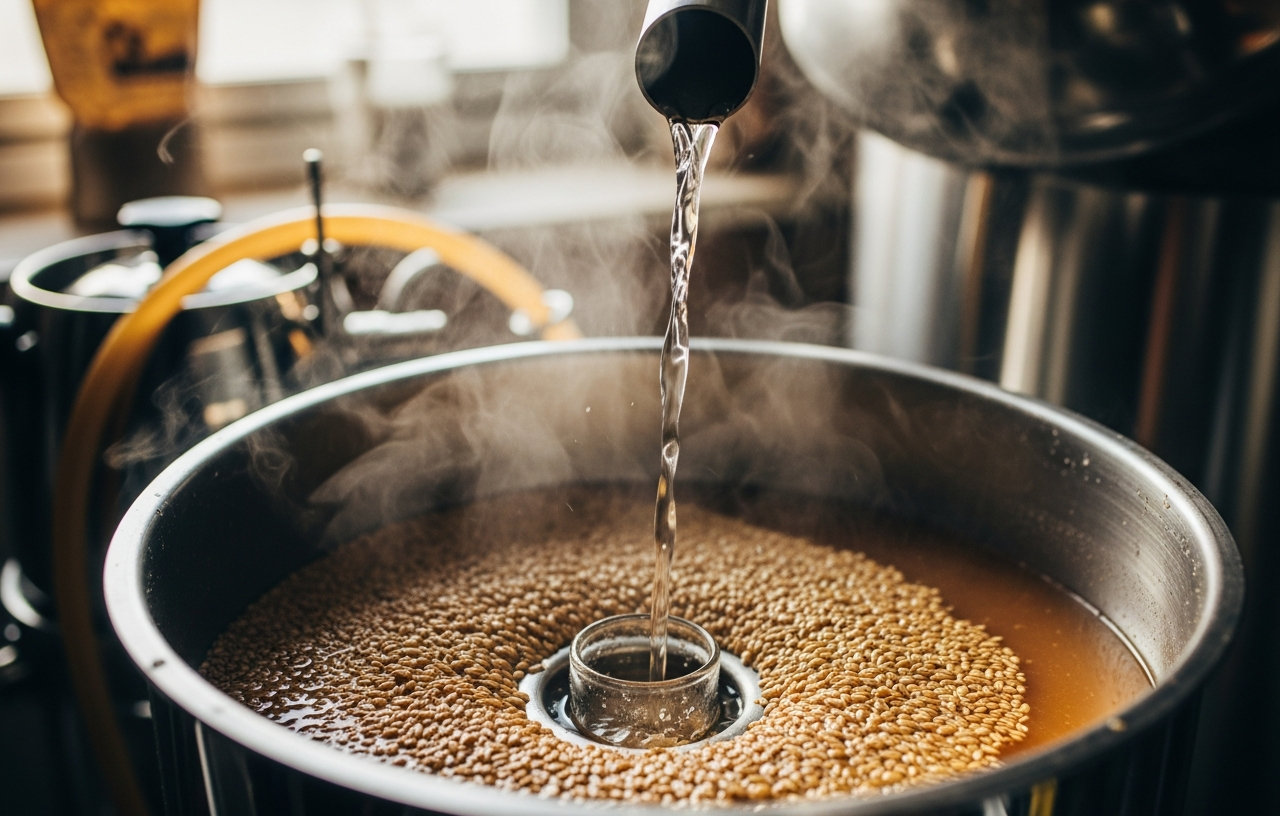
After the mash, the grain bed contains a high concentration of sugars dissolved in water, along with spent grain solids. The first liquid collected from the mash tun, often called the 'first runnings,' is very dense with sugars. Sparging introduces fresh hot water to the grain bed, displacing these concentrated sugars and rinsing any sugars still clinging to the grain particles.
This hot water dissolves additional sugars, carrying them down through the grain bed and out through the mash tun's false bottom or manifold. The resulting liquid, combined with the first runnings, forms the full volume of wort that will be boiled and fermented. Proper sparging helps achieve the target pre-boil gravity and volume.
Mash Out: Preparing for the Sparge
Before sparging begins, many brewers perform a 'mash out.' This involves raising the temperature of the entire mash to approximately 168-170°F (75-77°C). The elevated temperature serves two main purposes. First, it denatures the enzymes responsible for converting starches to sugars, effectively stopping further enzymatic activity. This locks in the sugar profile achieved during the mash.
Second, a mash out reduces the viscosity of the wort, making it thinner and easier to flow through the grain bed during sparging. This improved flow helps prevent a 'stuck sparge,' where the grain bed compacts and liquid cannot pass through. Mash out is typically performed by adding hot water or directly heating the mash tun, if equipped.
Understanding Sparge Water Chemistry and Temperature
The temperature and pH of the sparge water are vital for successful sugar extraction and avoiding off-flavors. Sparge water should generally be between 168°F and 170°F (75-77°C). Water hotter than 170°F can extract undesirable tannins from the grain husks, leading to an astringent, tea-like flavor in the finished beer.
Conversely, water that is too cool will not effectively dissolve and rinse the sugars, resulting in lower efficiency. The pH of the sparge water also plays a significant role. Ideally, the pH of the runoff during sparging should remain below 6.0. If the pH rises too high, typically above 6.0, it can also contribute to tannin extraction. Brewers often adjust their sparge water with acid, such as lactic acid, to maintain an optimal pH range.
Common Sparge Methods for Homebrewers
Homebrewers primarily use two methods for sparging: fly sparging and batch sparging. Each method has its advantages and disadvantages regarding efficiency, complexity, and required equipment. Another less common method is no-sparge brewing.
Fly Sparging (Continuous Sparge)
Fly sparging is a continuous process where hot sparge water is gently sprinkled over the top of the grain bed at the same rate that wort is drained from the bottom of the mash tun. This method aims to maintain a constant liquid level above the grain bed, ensuring a slow, even rinse.
Process Steps:
- After mash out, begin slowly draining wort from the mash tun.
- Simultaneously, add sparge water evenly over the grain bed using a sparge arm or sprinkler.
- Maintain a flow rate that keeps about an inch of water above the grain bed.
- Collect the wort in the boil kettle until the desired pre-boil volume or gravity is reached, or until the runnings drop below 1.010 specific gravity.
Advantages: Fly sparging generally yields the highest brewing efficiency because it provides a thorough, continuous rinse of the grain bed. It extracts more sugars compared to other methods.
Disadvantages: This method requires more attention and precision. A slow, steady flow rate is critical; draining too quickly can compact the grain bed, leading to a stuck sparge. It also typically requires a dedicated lauter tun with a false bottom and a sparge arm for even water distribution. For those just starting with all-grain brewing, systems like those discussed in Best All-Grain Brewing Systems for Beginners can simplify this process.
Batch Sparging (Discontinuous Sparge)
Batch sparging is a simpler, more common method for homebrewers. It involves two or more distinct rinses of the grain bed. This method is less equipment-intensive and generally more forgiving than fly sparging.
Process Steps:
- After mash out, drain the first runnings completely into the boil kettle.
- Add the full volume of the first sparge water batch (typically half of the total sparge water) to the mash tun.
- Stir the grain bed thoroughly to mix the water and remaining sugars.
- Let it rest for 5-10 minutes to allow the sugars to dissolve.
- Recirculate (vorlauf) a few quarts of wort until it runs clear, then drain the second runnings into the boil kettle.
- Repeat steps 2-5 for a second batch of sparge water if using a two-batch method.
Advantages: Batch sparging is simpler and faster to perform. It requires less specialized equipment, often just a mash tun with a false bottom. It is also less prone to stuck sparges.
Disadvantages: This method typically results in slightly lower brewing efficiency compared to fly sparging. Brewers might need to use a bit more grain to achieve the same target gravity.
No-Sparge Brewing
No-sparge brewing is the simplest all-grain method. It involves a single, larger volume mash and a single run-off directly into the boil kettle without any additional rinsing steps.
Process Steps:
- Mash with all the required water volume for the entire brew, including what would typically be sparge water.
- After the mash, recirculate (vorlauf) until clear, then drain all the wort into the boil kettle.
Advantages: Extremely simple and requires minimal equipment and time. It almost eliminates the risk of a stuck sparge.
Disadvantages: This method yields the lowest brewing efficiency among the three. Brewers must account for this by using significantly more grain to hit their target original gravity.
Equipment for Sparge Operations
Effective sparging relies on a few key pieces of equipment. A well-sanitized mash tun is fundamental, typically featuring a false bottom or a manifold. This component separates the grain bed from the outlet valve, allowing wort to drain while retaining the spent grains.
For fly sparging, a sparge arm or a dedicated sparge manifold helps distribute hot water evenly over the grain bed, preventing channeling. A hot liquor tank (HLT) is also essential for heating and holding the sparge water at the correct temperature. Brewers often use temperature controllers, such as those reviewed in Best Fermentation Temperature Controllers, to maintain precise water temperatures in their HLT.
Troubleshooting Common Sparge Issues
Even experienced brewers can encounter problems during sparging. Understanding how to diagnose and fix these issues can save a brew day.
Stuck Sparge
A stuck sparge occurs when the grain bed becomes so compacted that wort stops flowing, or flows extremely slowly, from the mash tun. This is often caused by grinding grains too fine, draining too quickly during fly sparging, or using a grain bill with a high proportion of wheat or oats, which lack husks to aid filtration.
Solutions:
- Recirculate: Stop draining and recirculate wort from the bottom back to the top of the grain bed for a few minutes. This can help re-establish flow.
- Gently Stir: Carefully stir the top few inches of the grain bed with a sanitized paddle to break up compaction. Do not stir too vigorously, as this can worsen the problem.
- Cut the Grain Bed: For severe cases, use a long, sanitized knife or paddle to make several vertical cuts through the grain bed to create channels for liquid flow.
Low Brewing Efficiency
Low efficiency means you are not extracting as much sugar from your grains as expected, resulting in a lower original gravity than your recipe targets. This can stem from several sparging issues.
Causes and Solutions:
- Sparge Water Temperature: Water that is too cool will not dissolve sugars effectively. Make sure your HLT maintains 168-170°F (75-77°C).
- Flow Rate (Fly Sparge): Draining too quickly during fly sparging bypasses proper rinsing. Slow down the flow rate to allow adequate contact time.
- Incomplete Stirring (Batch Sparge): Not thoroughly stirring the grain bed after adding sparge water means sugars remain trapped. Stir well for 1-2 minutes.
- Crush Size: A coarse grain crush might not expose enough starch for full conversion and sugar extraction. Adjust your mill gap if possible.
Astringency
Astringency is a dry, puckering sensation in the mouth, often described as similar to chewing on grape skins or tea leaves. It is a common off-flavor caused by improper sparging.
Causes and Solutions:
- Sparge Water Temperature: Water above 170°F (77°C) extracts tannins from the grain husks. Maintain the correct temperature.
- Sparge Water pH: A runoff pH above 6.0 can also extract tannins. Adjust sparge water pH with lactic acid or phosphoric acid to keep it in the optimal range.
Impact on the Final Beer
The quality of your sparge directly affects the final beer. A well-executed sparge provides the correct amount of fermentable sugars for the yeast, leading to the desired alcohol content and body. It also helps prevent unwanted flavors.
Poor sparging, on the other hand, can result in a beer with a low original gravity, meaning less alcohol and a thinner body than intended. It can also introduce harsh astringency, making the beer unpleasant to drink. Attention to detail during the sparge process contributes significantly to a successful brew and a delicious final product.
Many homebrewers find that mastering sparging improves the consistency and quality of their all-grain batches. It is a fundamental technique that, once understood, becomes a natural part of the brewing rhythm.