
3 Gallon Clear Glass Italian Carboy - 30 mm Cork Neck Finish (CORK NOT INCLUDED)
- [WHAT’S INCLUDED] You’ll receive a 3 gallon glass carboy crafted from authentic Italian glass. This.
- [MULTIPURPOSE USE] This 3 gallon fermenter is ideal for beer brewing, wine fermentation, or kombucha. Use.
- [SUSTAINABLE & REUSABLE] Our 3 gallon carboy glass offers a reusable alternative to plastic fermenters.
- [EASY TO CLEAN & FERMENT SECURELY] The wide mouth makes it easy to clean and transfer ingredients. This.

FastRack 1 Gallon Mason Jar Wide Mouth & Twin Bubble Airlock (Pack of 2) | for Fermentation, Pickling, Brewing & Dry Storage to
- WHAT'S INCLUDED: With this purchase, you'll receive a 2 gallon glass jars with lid perfect for using as.
- Our wide mouth jars are made of heat resistant, USDA certified food grade glass so that besides fermenting.
- The Econolock airlock of our fermenting jars are simple to assemble, use and wash yet extremely effective.
- FastRack large glass jars with lids and airlock are manufactured here in the USA; You can expect.

North Mountain Supply 1 Gallon Glass Fermenting Jug with Handle, 6.5 Rubber Stopper, 2-Piece Airlock, Black Plastic Lid - Set of 1
- North Mountain Supply 1 Gallon Glass Fermenting Jug with Handle, 6. 5 Rubber Stopper, 3-Piece Airlock, and.
- Perfect for fermenting and brewing beer, wine, kombucha and more
- Works great for making a large yeast starter, experimenting with fruit flavors in your wine or beer, or.
- Made in the USA
The quality and consistency of your homebrewed beer, wine, or kombucha depend heavily on the fermentation vessel you choose. A good vessel provides a stable environment for yeast, protects against contamination, and simplifies the brewing process. Understanding the options available, from classic glass carboys to modern stainless steel fermenters, helps you make an informed decision that suits your budget and brewing style.
Understanding Fermentation Vessel Types
Fermentation vessels come in various materials and designs, each with advantages and disadvantages. Your choice impacts cleaning, oxygen exposure, and overall durability. Brewers often start with one type and later expand their collection.
Glass Carboys
Glass carboys are a traditional choice for homebrewers. Their transparency allows you to observe fermentation activity, including krausen formation and yeast flocculation. Glass is non-porous and does not scratch easily, making it resistant to bacteria harboring and relatively easy to sanitize. However, glass is heavy and fragile. A 5-gallon glass carboy full of liquid can weigh over 50 pounds, posing a significant lifting challenge. Dropping one can result in dangerous broken glass and a lost batch. They are also a popular choice for secondary fermentation.
For smaller batches or experimental brews, a compact glass option is ideal. The 3 Gallon Clear Glass Italian Carboy - 30 mm Cork Neck Finish provides a robust, reusable vessel. It is crafted from authentic Italian glass, suitable for beer brewing, wine fermentation, or kombucha production. This size is excellent for splitting a larger batch or fermenting a test recipe. Remember, the cork is sold separately.
Plastic Fermenters (Buckets and Carboys)
Plastic fermenters, often made from food-grade HDPE or PET, are lightweight, inexpensive, and nearly unbreakable. They are a popular choice for beginners due to their affordability, usually costing between $15 and $40 for a 6.5-gallon bucket. Plastic buckets are easy to clean thanks to their wide openings. They are also simple to move around, even when full.
However, plastic is permeable to oxygen over time, which can lead to oxidation in long term ferments. It can also scratch, creating microscopic havens for bacteria and making sanitation more difficult. Brewers should replace plastic fermenters every few years or if significant scratches appear. For those interested in a deeper comparison, explore Glass Carboy vs. Plastic Fermenter: Which is Right for Your Brew?
Stainless Steel Fermenters
Stainless steel fermenters are the most durable and sanitary option available. They are non-porous, easy to clean, and will not break. Stainless steel provides a complete oxygen barrier and blocks all light, protecting your brew from UV damage. Many models feature conical bottoms and dump valves, allowing for easy yeast harvesting and trub removal without transferring the beer. This minimizes oxidation exposure.
The main drawback of stainless steel fermenters is their cost. Entry-level models start around $200, with more advanced pressure-capable units reaching $500 to $1,000 or more. They are a significant investment but can last a lifetime with proper care.
Small Batch Fermenters
Small batch fermenters are perfect for experimenting with new recipes, making yeast starters, or brewing smaller quantities of specialty beverages. They are also useful for kombucha. The FastRack 1 Gallon Mason Jar Wide Mouth & Twin Bubble Airlock (Pack of 2) offers a versatile solution. These jars are made of heat-resistant, USDA certified food-grade glass. The wide mouth makes cleaning and adding ingredients simple. The included Econolock airlocks are effective and easy to use. Similarly, the North Mountain Supply 1 Gallon Glass Fermenting Jug with Handle, 6.5 Rubber Stopper, 2-Piece Airlock, Black Plastic Lid - Set of 1 provides a complete setup for small-scale projects. The handle is a convenient feature for moving the jug, and the included airlock and stopper get you started immediately.
Key Factors to Consider When Choosing a Vessel
Several factors influence the best fermentation vessel for your needs. Evaluate these points carefully before purchasing.
Material
- Glass: Excellent oxygen barrier, easy to observe fermentation, non-porous. Fragile and heavy.
- Plastic: Lightweight, inexpensive, durable against drops. Prone to scratches, oxygen permeable over time.
- Stainless Steel: Extremely durable, easy to clean, complete oxygen barrier, light-proof. High initial cost.
Size
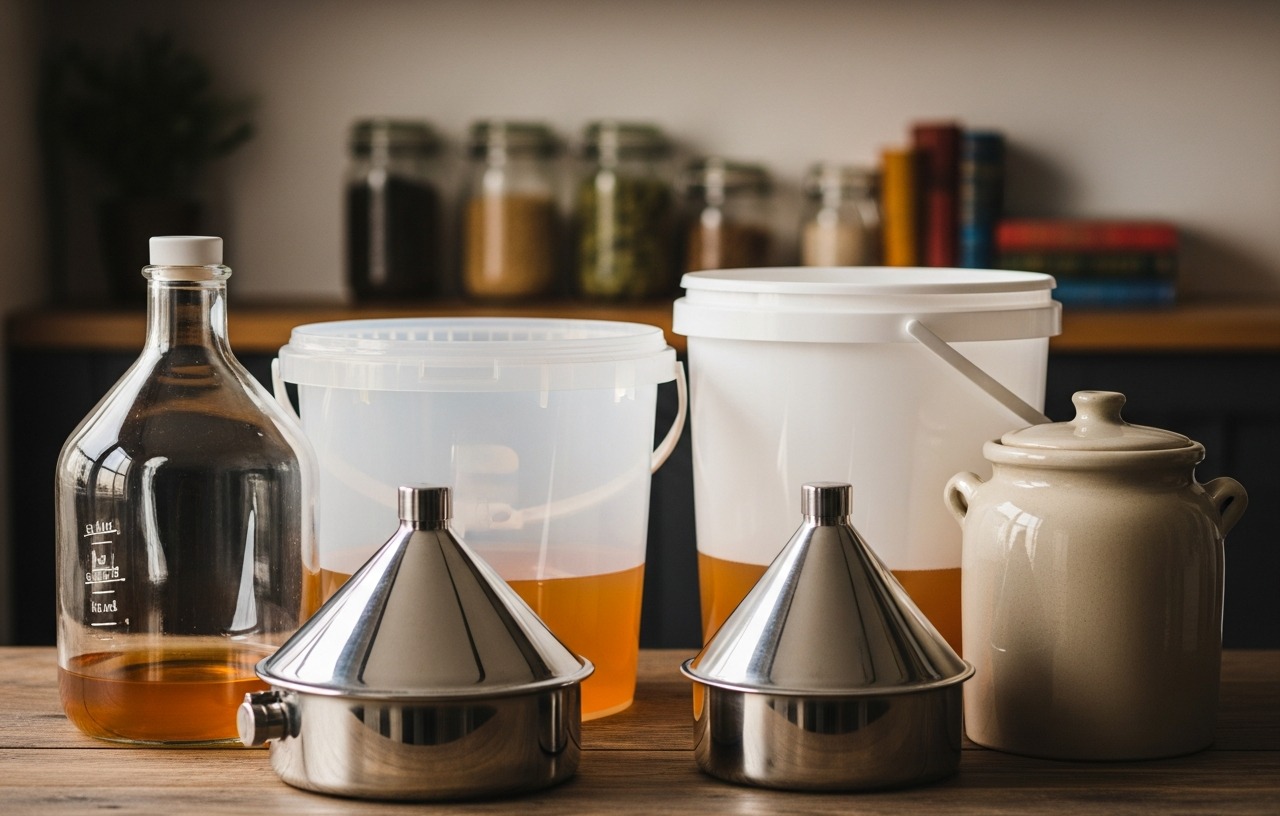
Match the vessel size to your typical batch size. A 5-gallon brew requires at least a 6-gallon fermenter to accommodate krausen. Overfilling can lead to blow-offs and messy fermentation. Standard sizes include 1-gallon for small batches, 3-gallon for splitting or primary fermentation of 2-2.5 gallon batches, and 5-6.5-gallon for standard homebrew batches. Vessels with wide openings, like plastic buckets or stainless steel fermenters, are generally easier to clean manually. Carboys require brushes and specialized cleaning solutions due to their narrow necks. Make sure your chosen vessel allows for thorough cleaning. Learn more about How to Sanitize Brewing Equipment for Beer.
Durability and Longevity
Consider how long you expect your equipment to last. Plastic fermenters are the least durable long term due to scratching and oxygen permeability, often needing replacement every 2-5 years. Glass carboys can last indefinitely if not broken, but their fragility is a constant concern. Stainless steel fermenters offer the best durability, often lasting a lifetime.
Cost
Budget plays a significant role. Plastic buckets are the most affordable, starting around $15. Glass carboys fall in the mid-range, typically $40-$70. Stainless steel fermenters represent the highest initial investment, from $200 up to $1,000 or more for advanced models. Glass and stainless steel provide excellent oxygen barriers. Plastic, particularly HDPE buckets, is slightly permeable, which can be an issue for lagers or long term aging.
Temperature Control Integration
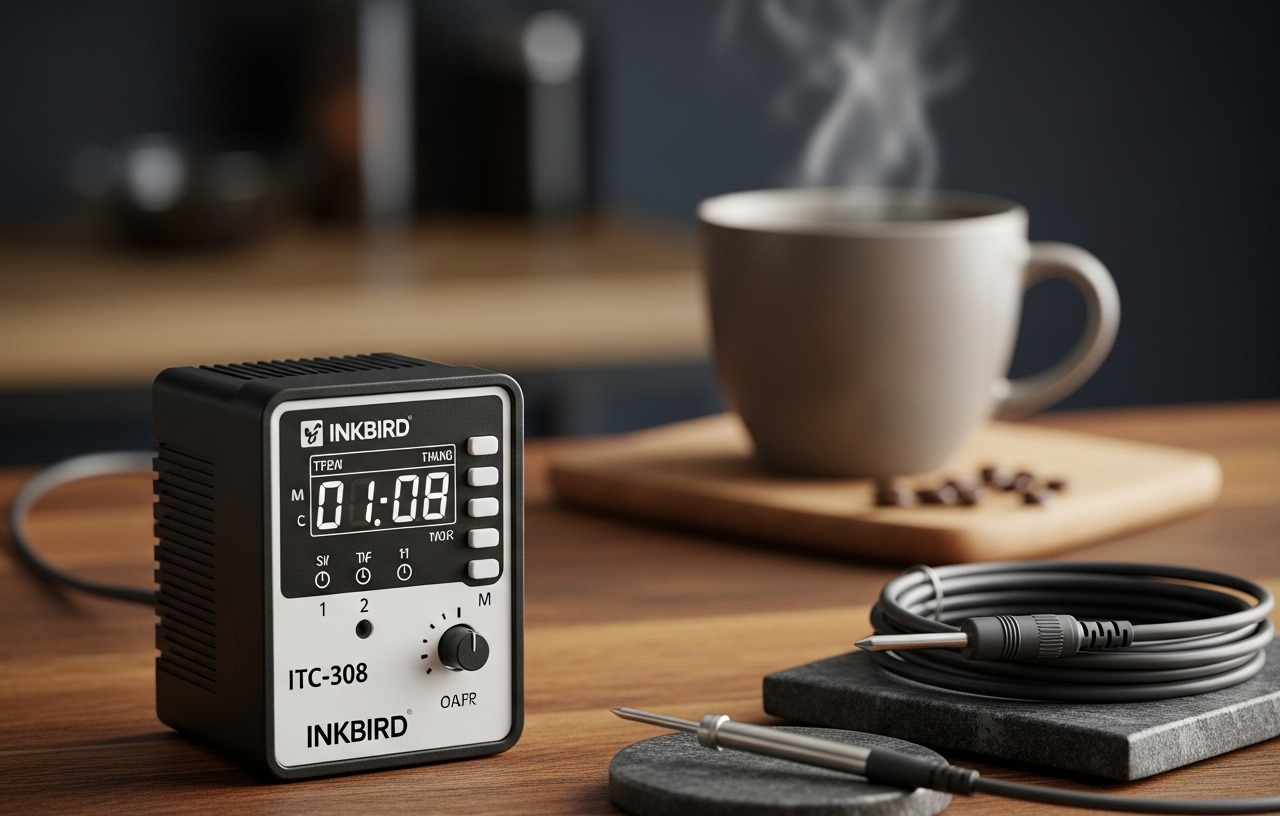
Some fermenters are designed with features for temperature control, such as thermowells or jacketed walls. While basic vessels can be placed in a fermentation chamber or wrapped with a fermentation belt, integrated options offer more precise control. For advanced brewers, this feature helps maintain optimal fermentation temperatures. You can explore options like the Inkbird ITC-308 Review for external temperature management.
long term Cost of Ownership and Maintenance
The purchase price of a fermentation vessel is only part of the total cost. Consider ongoing expenses and maintenance requirements.
Cleaning Supplies
All vessels require cleaning and sanitizing after each use. This involves cleansers like PBW (Powdered Brewery Wash) or OxiClean Free, and sanitizers such as Star San or iodophor. A 1-pound container of PBW costs around $15, and a 16-ounce bottle of Star San costs about $20. Brushes for carboys cost $10-$20.
Replacement Parts
Airlocks and stoppers are consumables that may need replacing due to wear or damage. A pack of three airlocks costs about $8-$12. Rubber stoppers are usually $5-$10 each. Gaskets on stainless steel fermenters might need occasional replacement, costing a few dollars per gasket.
Storage
Consider where you will store your fermenter when not in use. Larger vessels, especially 6.5-gallon carboys or stainless steel conicals, require dedicated space. Smaller vessels like 1-gallon jugs are easy to store. Proper storage prevents dust and contaminants from entering the vessel.
Recommendation: Choosing Your Best Fermentation Vessel
For beginners or those on a tight budget, a food-grade plastic bucket is an excellent starting point. It is forgiving, inexpensive, and easy to handle. Expect to pay around $25 for a 6.5-gallon bucket with a lid and airlock.
Intermediate brewers looking for improved quality and durability might consider glass carboys. They offer better oxygen protection and allow visual monitoring of fermentation. A 5-gallon glass carboy can be purchased for about $50. The 3 Gallon Clear Glass Italian Carboy is a fine choice for those making smaller batches or looking for a secondary fermenter.
Advanced brewers or those committed to long term brewing and investing in top-tier equipment should consider stainless steel fermenters. While the initial cost is higher, their durability, ease of sanitation, and advanced features (like conical bottoms) justify the investment. An entry-level 7-gallon stainless steel conical fermenter might cost around $300-$400.
For small-batch experiments, yeast starters, or kombucha, the FastRack 1 Gallon Mason Jar Wide Mouth & Twin Bubble Airlock (Pack of 2) or the North Mountain Supply 1 Gallon Glass Fermenting Jug with Handle are excellent, affordable options. They provide the flexibility to test recipes without committing to a full-sized batch.
Ultimately, the best fermentation vessel aligns with your brewing volume, budget, and desired level of control. Many brewers eventually own a combination of different vessel types to suit various brewing projects.
3 Gallon Clear Glass Italian Carboy - 30 mm Cork Neck Finish (CORK NOT INCLUDED)
- [WHAT’S INCLUDED] You’ll receive a 3 gallon glass carboy crafted from authentic Italian glass. This.
- [MULTIPURPOSE USE] This 3 gallon fermenter is ideal for beer brewing, wine fermentation, or kombucha. Use.
- [SUSTAINABLE & REUSABLE] Our 3 gallon carboy glass offers a reusable alternative to plastic fermenters.
- [EASY TO CLEAN & FERMENT SECURELY] The wide mouth makes it easy to clean and transfer ingredients. This.
FastRack 1 Gallon Mason Jar Wide Mouth & Twin Bubble Airlock (Pack of 2) | for Fermentation, Pickling, Brewing & Dry Storage to
- WHAT'S INCLUDED: With this purchase, you'll receive a 2 gallon glass jars with lid perfect for using as.
- Our wide mouth jars are made of heat resistant, USDA certified food grade glass so that besides fermenting.
- The Econolock airlock of our fermenting jars are simple to assemble, use and wash yet extremely effective.
- FastRack large glass jars with lids and airlock are manufactured here in the USA; You can expect.
North Mountain Supply 1 Gallon Glass Fermenting Jug with Handle, 6.5 Rubber Stopper, 2-Piece Airlock, Black Plastic Lid - Set of 1
- North Mountain Supply 1 Gallon Glass Fermenting Jug with Handle, 6. 5 Rubber Stopper, 3-Piece Airlock, and.
- Perfect for fermenting and brewing beer, wine, kombucha and more
- Works great for making a large yeast starter, experimenting with fruit flavors in your wine or beer, or.
- Made in the USA