
Fermentaholics Kombucha Brewing Starter Kit to USDA Certified Organic SCOBY & Tea, Complete Home Kombucha Making Kit with Culture,
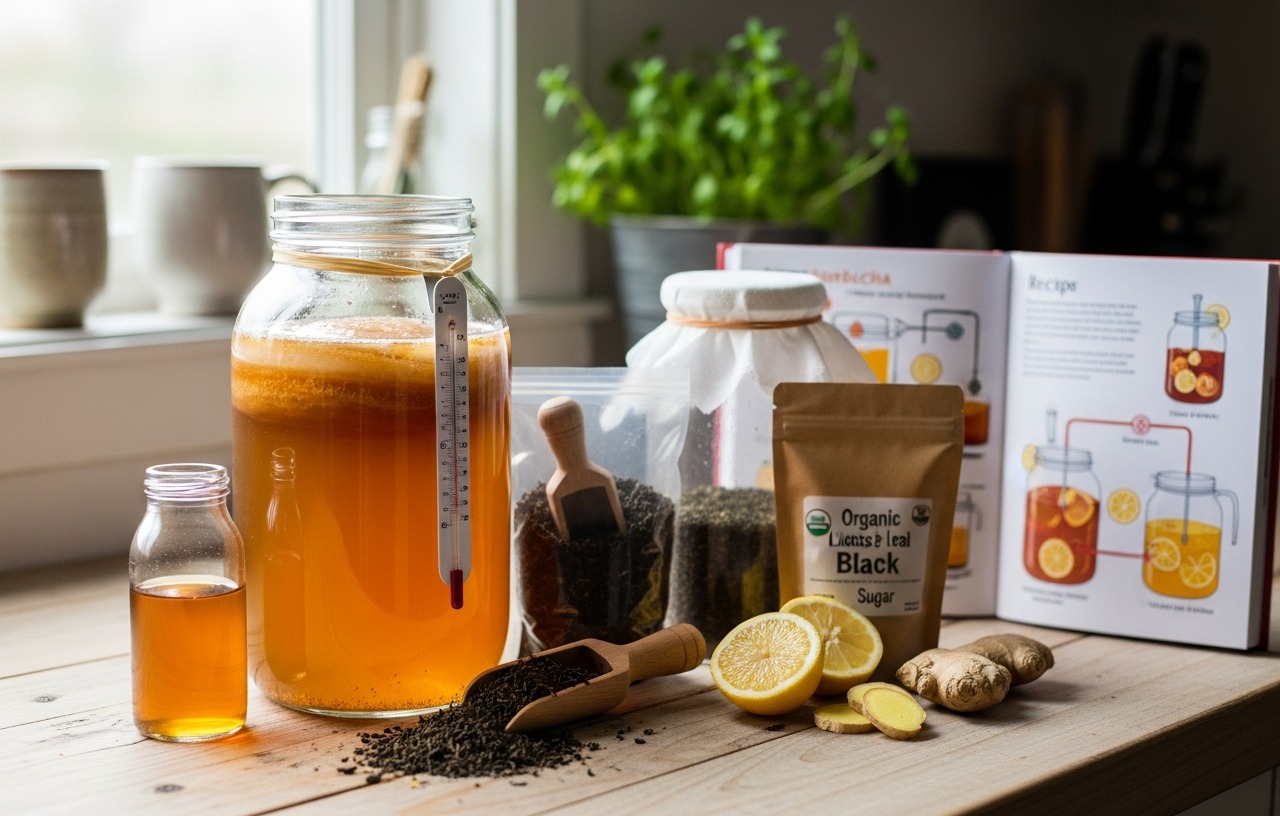
- THE COMPLETE ORGANIC KOMBUCHA KIT INCLUDES to Everything you need to start a 1-gallon batch of kombucha to .
- USDA CERTIFIED ORGANIC & KOSHER to Our kits are certified Organic & OU Kosher including our Classic.
- GLASS JAR & BREATHABLE COVER to Glass jars make a great vessel for brewing kombucha. You can watch the.
- Our detailed, step by step instructions are designed by kombucha brewers to help address any questions you.

Fermentaholics ORGANIC Kombucha SCOBY With Twelve Ounces of Starter Tea - Live Starter Culture - Makes A One Gallon Batch - 1.5
- ★ USDA CERTIFIED ORGANIC SCOBY ★ Our cultures are Organic & Kosher, grown in our fully licensed lab.
- ★ BREW WITH CONFIDENCE ★ Our easy instructions guide you step by step through your first fermentation. If.
- ★ MAKES ONE GALLON ★ You will receive 1.5 cups of strong, mature liquid starter tea packaged with a.
- ★ CREATE, LEARN, GROW ★ Get creative with new flavoring ideas and brewing techniques. Invite your friends.
Observing no pellicle, or a very thin one, on the surface of your kombucha brew typically points to three main issues: incorrect fermentation temperature, an inactive or contaminated SCOBY, or an imbalance in your starter tea to sweet tea ratio. A healthy kombucha fermentation usually produces a new pellicle on top of the liquid within a few days. The pellicle acts as a protective barrier. Its absence can signal a problem with your brew, though it does not always mean complete failure.
This diagnostic guide will help you identify the root cause of a missing or weak pellicle. Each section provides a quick test you can perform and outlines potential solutions. Understanding these common problems will allow you to adjust your brewing process and achieve a successful kombucha batch.
Understanding the Pellicle: More Than Just a Disc
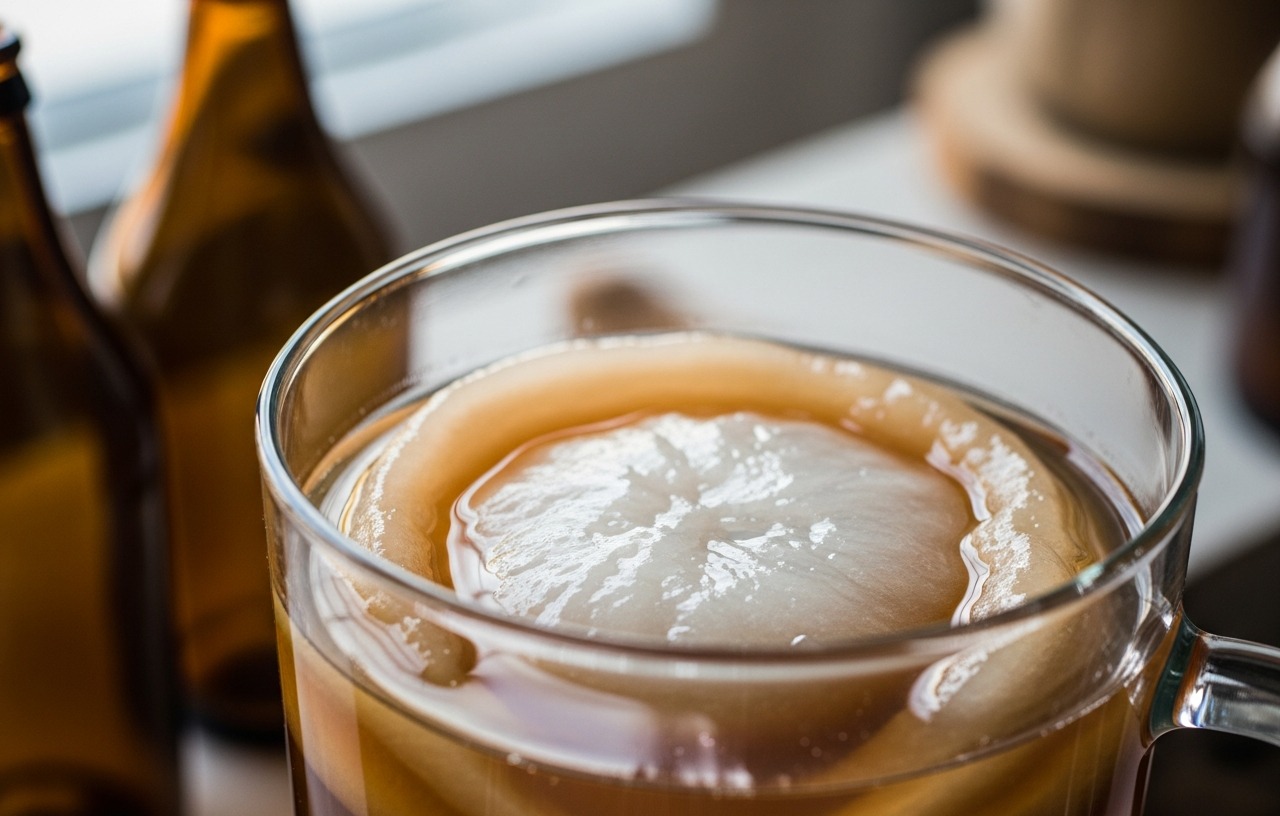
Many new brewers mistakenly believe the pellicle is the SCOBY. The acronym SCOBY stands for Symbiotic Culture Of Bacteria and Yeast. This culture lives primarily within the starter tea. The pellicle, that disc-shaped layer forming on the surface, is a cellulose byproduct. The bacteria in the SCOBY produce it. It provides an anaerobic environment below, which helps the fermentation process. While a healthy pellicle signals a happy fermentation, its absence does not mean your brew is ruined. Some vigorous fermentations produce very thin or uneven pellicles.
Cause 1: Incorrect Fermentation Temperature
Temperature is a critical factor for kombucha fermentation. The yeast and bacteria in your SCOBY thrive within a specific range. Deviations from this range can significantly slow their activity, preventing pellicle formation.
How Temperature Affects Pellicle Growth
- Too Cold (Below 68°F / 20°C): Low temperatures slow down both yeast and bacteria. Slower bacterial activity means less cellulose production, resulting in no pellicle or a very thin one. Fermentation also takes much longer.
- Too Hot (Above 85°F / 29°C): Excessive heat can stress or even kill your SCOBY. While initial activity might seem vigorous, sustained high temperatures can lead to off-flavors or inhibit proper pellicle formation as the culture struggles.
Quick Test: Check Your Brew Temperature
- Use a Reliable Thermometer: Place an adhesive strip thermometer on your brewing vessel or use an immersion thermometer.
- Record the Reading: Note the temperature of your brew.
- Compare to Ideal Range: The ideal temperature range for kombucha fermentation is generally 75-85°F (24-29°C). Consistent temperatures within this range promote healthy pellicle growth.
Solution: Adjusting Your Fermentation Environment
If your temperature is outside the optimal range, you have a few options:
- Move Your Brew: Relocate your brewing vessel to a warmer or cooler spot in your home. Avoid direct sunlight or drafts.
- Use a Heating Mat: For cold environments, a seedling heating mat or a specialized fermentation heating mat can provide consistent warmth. These typically cost $20-$40.
- Employ a Temperature Controller: For precise temperature regulation, consider a fermentation temperature controller. These devices connect to a heating source (like a mat) and a cooling source (like a fan), maintaining your desired temperature automatically. The Inkbird ITC-308 is a popular and affordable option. A good temperature controller costs $30-$60.
Adjusting the temperature can quickly revive a sluggish fermentation. You should see signs of activity, including a forming pellicle, within a few days.
Cause 2: Inactive or Contaminated SCOBY
The health of your SCOBY and starter tea directly impacts pellicle formation. An old, dormant, or contaminated SCOBY will struggle to ferment correctly, leading to a lack of pellicle.
Signs of an Inactive or Contaminated SCOBY
- No Activity After Several Days: Beyond just a lack of pellicle, if you see no bubbles, no change in smell, or no slight acidity developing after 3-5 days, your SCOBY might be inactive.
- Mold Growth: This is the most serious sign of contamination. Mold appears as dry, fuzzy, green, black, or white spots on the surface of the liquid or pellicle. It often looks like bread mold.
- Off-Smell: A healthy kombucha brew smells vinegary and slightly sweet. A putrid, rotten, or intensely cheesy smell indicates contamination.
- Very Old or Poorly Stored SCOBY: A SCOBY stored for too long in the refrigerator without fresh nutrients can become dormant. A dehydrated SCOBY may also struggle.
Quick Test: Inspect Your SCOBY and Starter Tea
- Visual Inspection: Carefully examine the surface of your brew and any existing pellicle for mold. If you see mold, discard the entire batch.
- Smell Test: Gently sniff the brew. Does it smell like vinegar and sweet tea, or something unpleasant?
- Check Starter Tea Clarity: Healthy starter tea is usually cloudy with some yeast strands. If it is unusually clear or has an odd sediment, it might be weak.
Solution: Replace Your SCOBY and Starter Tea
If you suspect an inactive or contaminated SCOBY, the safest and most reliable solution is to start fresh with a new, healthy culture. Trying to salvage a moldy or severely inactive SCOBY often leads to wasted ingredients and frustration.
When sourcing a new SCOBY, look for reputable suppliers. The Best Kombucha Starter Kits often include a vibrant SCOBY and strong starter tea. The Fermentaholics Kombucha Brewing Starter Kit is a top pick. It includes a USDA Certified Organic SCOBY and tea, along with everything needed for a 1-gallon batch. Another excellent choice is the Fermentaholics ORGANIC Kombucha SCOBY With Twelve Ounces of Starter Tea. This option provides a robust culture, making a one-gallon batch. These starter cultures typically cost $15-$30 for a SCOBY with starter tea, or $40-$70 for a complete kit. Using a fresh, active culture significantly increases your chances of a successful fermentation and pellicle formation.
Cause 3: Imbalanced Starter Tea to Sweet Tea Ratio
The ratio of strong starter tea to fresh sweet tea is essential for establishing the correct pH and microbial balance in your brew. An improper ratio can hinder pellicle growth and overall fermentation.
How Ratio Affects Fermentation
- Not Enough Starter Tea: If you do not use enough strong, acidic starter tea, the initial pH of your brew will be too high. This creates an environment where unwanted bacteria and mold can thrive before your SCOBY has a chance to establish dominance. It also slows down the yeast and bacteria responsible for pellicle growth.
- Too Much Sweet Tea (Not Enough Sugar): While less common, if your sweet tea is too weak or lacks sufficient sugar, the yeast will not have enough fuel. This starves the culture, leading to sluggish activity and poor pellicle formation.
Quick Test: Check pH and Taste
- pH Test: Use pH strips or a pH meter to test the acidity of your initial brew. The ideal starting pH for kombucha is typically between 2.5 and 4.5. If your pH is above 4.5, you likely need more starter tea. pH strips cost $10-$20 for a pack.
- Taste Test (Initial Brew): After adding the starter tea, taste a small amount of the cooled mixture. It should have a noticeable tang from the starter tea. If it tastes like plain sweet tea, you probably need more starter.
Solution: Adjusting Your Ratio
For a typical 1-gallon batch, use 1 to 2 cups of strong starter tea. This amount usually ensures a low enough pH to protect your brew and kickstart fermentation effectively. If your current batch seems stalled due to insufficient starter tea, you can try adding an additional 1/2 to 1 cup of strong, unflavored kombucha from a previous batch or a store-bought raw, unflavored bottle. Be gentle when adding it, trying not to disturb any nascent pellicle.
Make sure your sweet tea recipe includes enough sugar. For 1 gallon, 1 cup of sugar is a common and effective amount. This provides ample food for the SCOBY.
Other Less Common Causes for No Pellicle
While temperature, SCOBY health, and ratios are the primary culprits, other factors can also contribute to a lack of pellicle formation.
Tea Type and Quality
Certain teas can inhibit SCOBY activity. Avoid:
- Flavored Teas: Oils and artificial flavors can harm the SCOBY.
- Herbal Teas: Many herbal teas lack the necessary nitrogen compounds for SCOBY health.
- Decaffeinated Tea: Caffeine provides some nutrients for the SCOBY.
Solution: Use plain black tea, green tea, or a blend of both. These provide the ideal environment for your SCOBY. Organic teas minimize exposure to pesticides which can also be detrimental.
Chlorine or Chloramines in Water
Tap water often contains chlorine or chloramines, which are disinfectants. These chemicals can harm the beneficial bacteria and yeast in your SCOBY.
Solution: Always use filtered water for brewing kombucha. A simple charcoal filter pitcher or a whole-house filter can remove these chemicals. Letting tap water sit out for 24 hours can dissipate chlorine, but it will not remove chloramines.
Poor Sanitation Practices
Contamination from wild yeasts or molds can outcompete your SCOBY, leading to a stalled fermentation or mold growth. This prevents proper pellicle development.
Solution: Always clean and sanitize your brewing equipment thoroughly before each batch. This includes your brewing vessel, stirring spoons, and anything else that touches the sweet tea or SCOBY. Food-grade sanitizers, like Star San, are effective and safe. You can learn more about proper cleaning in our article, How to Sanitize Brewing Equipment for Beer. Focus on taste and pH for a true measure of your brew's progress.
- Myth: A thick pellicle means a stronger or better kombucha.
- Fact: Pellicle thickness varies greatly and does not directly correlate with the strength or flavor of your kombucha. Some healthy brews produce thin pellicles, others thick ones.
- Myth: You must have a pellicle to make kombucha.
- Fact: While a pellicle typically forms, the essential ingredient is the strong starter tea containing the active SCOBY culture. You can start a new batch with just starter tea. The new pellicle will form on top.
- Myth: You need to add a new pellicle to each batch.
- Fact: The new pellicle will naturally grow from the active SCOBY in the starter tea. You can keep your old pellicle or discard it, but it is not necessary for subsequent batches.
Prevention Tips for Consistent Pellicle Formation
Following these best practices will help make sure your kombucha produces a healthy pellicle consistently.
- Maintain Stable Temperatures: Use a thermometer and, if necessary, a temperature controller or heating mat to keep your brew within the 75-85°F (24-29°C) range.
- Use Quality Ingredients: Always start with a strong, active SCOBY and ample starter tea. Use good quality black or green tea and filtered water.
- Adhere to Proper Ratios: Make sure you use 1-2 cups of starter tea per gallon of sweet tea. This ensures the correct initial pH.
- Practice Strict Sanitation: Clean and sanitize all brewing equipment before use. This prevents contamination from unwanted microbes.
- Avoid Disturbing the Brew: Once you set up your ferment, avoid moving or shaking the vessel excessively. This can disrupt the delicate pellicle formation process.
A missing pellicle can be concerning for any homebrewer, but it is often a fixable issue. By systematically troubleshooting temperature, SCOBY health, and ingredient ratios, you can usually identify the problem. Most solutions involve minor adjustments or replacing a faulty starter culture. With a little attention to detail, your next batch of kombucha will likely produce a robust and healthy pellicle, signaling a successful fermentation.
Fermentaholics Kombucha Brewing Starter Kit to USDA Certified Organic SCOBY & Tea, Complete Home Kombucha Making Kit with Culture,
- THE COMPLETE ORGANIC KOMBUCHA KIT INCLUDES to Everything you need to start a 1-gallon batch of kombucha to .
- USDA CERTIFIED ORGANIC & KOSHER to Our kits are certified Organic & OU Kosher including our Classic.
- GLASS JAR & BREATHABLE COVER to Glass jars make a great vessel for brewing kombucha. You can watch the.
- Our detailed, step by step instructions are designed by kombucha brewers to help address any questions you.
Fermentaholics ORGANIC Kombucha SCOBY With Twelve Ounces of Starter Tea - Live Starter Culture - Makes A One Gallon Batch - 1.5
- ★ USDA CERTIFIED ORGANIC SCOBY ★ Our cultures are Organic & Kosher, grown in our fully licensed lab.
- ★ BREW WITH CONFIDENCE ★ Our easy instructions guide you step by step through your first fermentation. If.
- ★ MAKES ONE GALLON ★ You will receive 1.5 cups of strong, mature liquid starter tea packaged with a.
- ★ CREATE, LEARN, GROW ★ Get creative with new flavoring ideas and brewing techniques. Invite your friends.