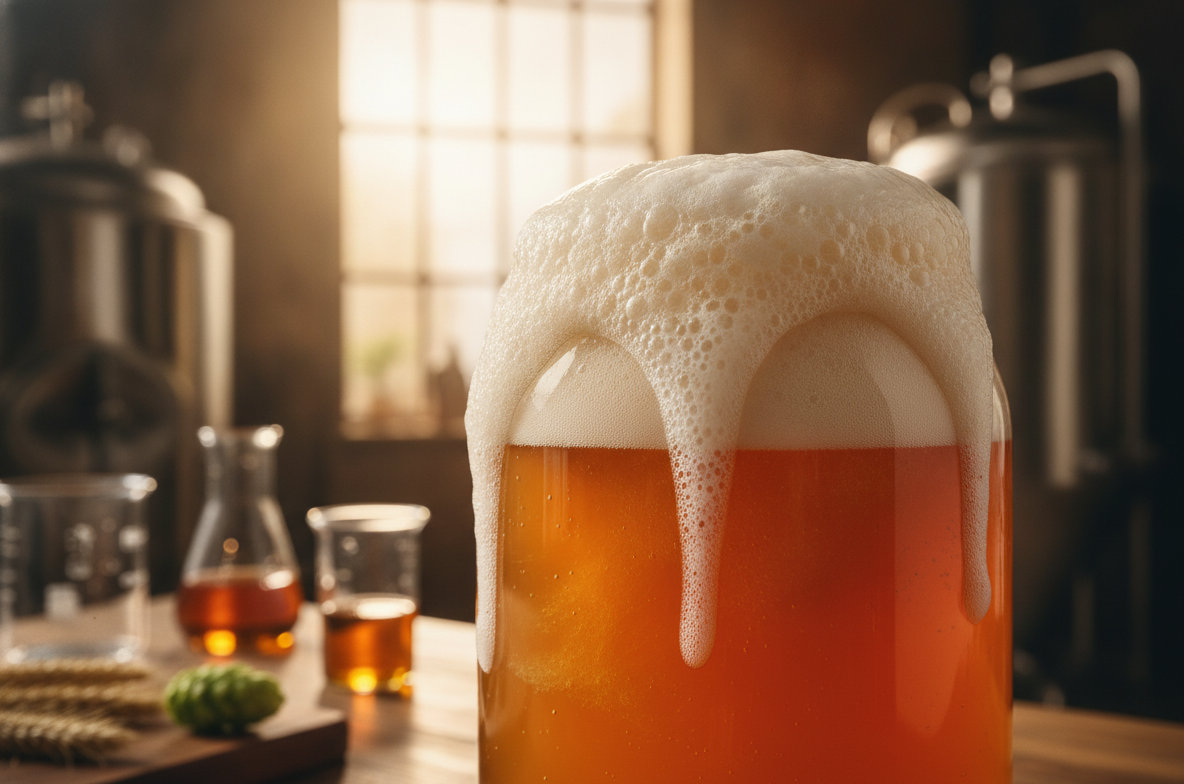
Krausen is the dense, yeasty foam that develops on the surface of fermenting wort, signaling active and healthy yeast at work. It primarily consists of yeast cells, proteins, hop resins, and other insoluble compounds pushed upwards by carbon dioxide gas produced during fermentation. A robust krausen indicates your yeast pitched successfully and is converting sugars into alcohol and CO2.
Defining Krausen: The Fermentation Indicator
The term "krausen" comes from the German word for "curls" or "ruffles," accurately describing its appearance. This foamy layer is not merely a byproduct; it serves several functions. First, it acts as a protective barrier, limiting oxygen exposure to the wort below. This helps prevent oxidation and the growth of unwanted microorganisms. Second, it provides a visible confirmation of yeast activity. Homebrewers monitor krausen formation, height, and duration to gauge fermentation progress and health.
The Chemistry Behind Krausen Formation
When yeast begins to metabolize sugars in the wort, it produces carbon dioxide (CO2) gas. These CO2 bubbles rise through the liquid, carrying with them yeast cells, proteins, and hop compounds. These substances, being less soluble or having hydrophobic properties, accumulate at the liquid's surface, forming a stable foam. The specific composition and stability of krausen can vary depending on the yeast strain, wort gravity, hop schedule, and fermentation temperature.
Stages of Krausen Development
Krausen development follows a predictable pattern, offering a timeline for fermentation activity. These stages are visual cues for homebrewers.
1. Lag Phase (No Krausen)
After pitching yeast, there is typically a 12-24 hour lag phase where little to no visible activity occurs. During this time, yeast cells are rehydrating, adjusting to their new environment, and multiplying. No krausen is present yet, but this is a critical period for yeast health. Maintaining proper pitching rates and a stable temperature (e.g., 65-70°F for ale yeasts) during this phase sets the stage for strong fermentation.
2. Primary Fermentation (Active Krausen)
Once yeast begins active fermentation, CO2 production rapidly increases. This is when krausen starts to form, typically within 24-48 hours of pitching. It begins as small bubbles, then consolidates into a thick, creamy head. This is the most vigorous stage of fermentation. The krausen can reach several inches in height, depending on the yeast strain, wort composition, and fermenter headspace. For a standard 5-gallon batch in a 6.5-gallon carboy, a krausen of 2-4 inches is common.
This phase is where the majority of fermentable sugars are converted to alcohol and CO2. During primary fermentation, it is vital to keep the fermenter sealed to prevent oxygen ingress. A properly installed airlock or blow-off tube allows CO2 to escape while keeping contaminants out. Many homebrewers use glass carboys or plastic buckets, which provide sufficient headspace for krausen. For more on fermenter choices, you can read about Best Fermentation Vessels for Beer: Glass Options Reviewed.
3. Secondary Fermentation (Fallen Krausen)
As fermentable sugars are depleted, yeast activity slows, and CO2 production decreases. The krausen will begin to fall, often leaving a distinct ring of dried yeast and proteins (the "krausen ring") on the fermenter walls. This typically occurs after 3-7 days for most ale yeasts. The beer is still conditioning during this phase, and some residual fermentation may continue, but the visible signs are much less dramatic. A fallen krausen indicates that primary fermentation is largely complete.
What a Healthy Krausen Looks Like
A healthy krausen is generally thick, white or off-white, and uniform. Its texture can range from a fluffy, meringue-like foam to a denser, rocky head. The color might vary slightly with wort composition; for instance, a darker wort could produce a tan or brown krausen. Vigorous bubbling and a consistent cap across the surface are positive signs.
Signs of a Problematic Krausen
- No Krausen: If no krausen forms within 24-48 hours, it suggests a problem with yeast viability or pitching. This could mean the yeast was old, improperly stored, or the pitching temperature was too high or too low, shocking the yeast.
- Thin or Sparse Krausen: A weak krausen might indicate underpitching (not enough yeast), low wort nutrients, or an issue with fermentation temperature control.
- Unusual Colors or Textures: Green, black, or moldy spots, or a slimy texture, are strong indicators of contamination. This usually means unwanted bacteria or wild yeasts have taken hold. Learn more about How to Sanitize Brewing Equipment for Beer: Top No-Rinse Cleansers.
- Krausen Disappearing Too Quickly: If krausen forms and then collapses rapidly, it could mean fermentation has stalled or is proceeding too quickly due to excessively high temperatures.
Managing Krausen and Blow-Off Tubes
During vigorous primary fermentation, krausen can become very tall, especially with high-gravity beers or active yeast strains. If the krausen reaches the airlock, it can clog it, potentially leading to pressure buildup inside the fermenter. This can be dangerous and cause the airlock to blow off forcefully.
To prevent this, many homebrewers use a blow-off tube. This involves replacing the airlock with a length of tubing (typically 1/2 to 1 inch internal diameter) that extends from the fermenter bung into a sanitized container of water or sanitizer solution. This setup allows krausen and excess CO2 to exit freely without clogging, maintaining a sealed environment. For a 5-gallon batch, a 6.5-gallon fermenter often requires a blow-off tube during the most active phase. Larger fermenters, such as 7-gallon vessels for 5-gallon batches, provide more headspace, reducing the need for a blow-off tube for most standard gravity beers.
Krausen as a Fermentation Progress Indicator
The visual changes in krausen are reliable indicators of fermentation progress. Its initial appearance marks the onset of active fermentation, while its subsequent fall signals the nearing completion of primary fermentation. While krausen provides excellent visual clues, specific gravity readings with a hydrometer remain the most accurate method for determining fermentation attenuation and final gravity. Brewers typically take a starting gravity reading before fermentation and subsequent readings after krausen has fallen to confirm completion. An Inkbird ITC-308 or similar fermentation temperature controller can help maintain stable temperatures, which influences krausen formation and overall fermentation health.
The Importance of Krausen in Homebrewing
Krausen is more than just foam; it is a critical diagnostic tool for the homebrewer. Its presence and characteristics provide immediate feedback on yeast health, fermentation activity, and potential problems. A brewer who understands krausen can better predict fermentation timelines, troubleshoot issues, and ultimately produce higher-quality beer. Monitoring krausen allows a brewer to confirm yeast viability, assess fermentation vigor, and anticipate when to transition to secondary fermentation or bottling/kegging. It is a fundamental aspect of successful homebrewing.