A distinct butterscotch or buttery popcorn flavor in beer, known as diacetyl, is a common fermentation flaw. This off-flavor results from yeast activity and can be avoided by properly executing a diacetyl rest. Understanding the chemistry behind diacetyl and the specific steps to mitigate it allows homebrewers to produce a cleaner, more professional-tasting final product.
What is Diacetyl and Why Does it Matter?
Diacetyl (2,3-butanedione) is a diketone compound with a very low flavor threshold, detectable by many people at concentrations as low as 0.1 parts per million (ppm) in pale lagers and slightly higher in darker or more complex beers. Its presence contributes flavors and aromas often described as butter, butterscotch, or even artificial butter flavoring, like that found on movie popcorn. While acceptable in trace amounts in some beer styles (like certain English ales or Czech lagers), it is considered a significant flaw in most clean beer styles, especially American lagers, pilsners, and many IPAs.
Yeast produces diacetyl as a byproduct during the initial stages of fermentation. Specifically, yeast excretes an intermediate compound called alpha-acetolactate into the wort. This alpha-acetolactate then oxidizes non-enzymatically outside the yeast cell to form diacetyl. Later in fermentation, healthy yeast reabsorbs the diacetyl and reduces it to less flavor-active compounds, primarily acetoin and 2,3-butanediol, which have much higher flavor thresholds and do not typically impart off-flavors.
The Role of a Diacetyl Rest
A diacetyl rest is a controlled temperature increase performed near the end of primary fermentation. Its purpose is to encourage the yeast to reabsorb and reduce any diacetyl present in the beer. This process gives the yeast an optimal environment to clean up these precursors, resulting in a significantly cleaner flavor profile. Lagers, which ferment at colder temperatures, often require a diacetyl rest more frequently than ales. The colder temperatures slow down both the initial diacetyl formation and the subsequent reabsorption by the yeast.
When to Perform a Diacetyl Rest
The timing of a diacetyl rest is important. You should initiate it after the bulk of primary fermentation is complete, meaning the yeast has consumed most of the fermentable sugars. For most standard gravity beers (1.040-1.060 original gravity), this usually occurs when the specific gravity is within a few points of the target final gravity. You can monitor fermentation progress with a hydrometer reading. When the gravity stabilizes or shows minimal change over 24-48 hours, it is time for the rest.
For example, if your target final gravity is 1.010, you might start the diacetyl rest when the gravity reaches 1.012-1.014. Starting too early might interrupt primary fermentation, leaving unfermented sugars. Starting too late means the yeast population may have dropped too low, or the yeast might be too dormant to effectively clean up the diacetyl.
How to Perform a Diacetyl Rest
The method for performing a diacetyl rest varies slightly depending on whether you are brewing a lager or an ale.
For Lagers
- Monitor Fermentation: Ferment your lager at its primary fermentation temperature, typically 48-55°F (9-13°C), until it is within 2-5 points of its target final gravity. You can confirm this with consistent hydrometer readings over two days.
- Raise Temperature: Increase the fermentation temperature. For most lagers, a temperature range of 60-68°F (16-20°C) is effective. Raise the temperature gradually, by 3-5°F (1-3°C) per day, to avoid shocking the yeast. A fermentation temperature controller, like those discussed in Best Fermentation Temperature Controllers, is invaluable for this precise control.
- Maintain Temperature: Hold the beer at this elevated temperature for 2-5 days. The exact duration depends on the beer's gravity, yeast strain, and the initial diacetyl levels. Higher gravity beers or those fermented with less attenuative yeast strains may need a longer rest.
- Perform a VDK Test (Optional but Recommended): To confirm diacetyl reduction, take a small sample of beer. Divide it into two equal portions. Heat one portion in a microwave or water bath to 140-150°F (60-65°C) for 10-15 minutes, then cool it back down to fermentation temperature. Compare the aroma and taste of the heated sample to the unheated sample. If diacetyl is present, it will be more pronounced in the heated sample. Continue the diacetyl rest until no difference is detected between the two samples. This is called a VDK (Vicinal Diketone) force test.
- Crash Cool: Once the diacetyl is gone, gradually lower the temperature to cold crash levels, typically 32-38°F (0-3°C), to drop yeast out of suspension and clarify the beer. This prepares the beer for packaging, whether in bottles or 5-gallon ball lock kegs.
For Ales
Ales ferment at warmer temperatures, usually 60-72°F (16-22°C), which naturally helps yeast clean up diacetyl during primary fermentation. However, some ale strains, particularly those that produce esters or are less flocculant, can still benefit from a mild diacetyl rest. If you suspect diacetyl, or if you are using a yeast strain known for diacetyl production (e.g., some English ale strains), you can perform a rest.
- Monitor Fermentation: After primary fermentation is mostly complete (within 2-3 gravity points of target final gravity).
- Raise Temperature (if needed): If your primary fermentation was on the cooler side of the ale spectrum (e.g., 60-62°F), you might raise the temperature by a few degrees, up to 68-72°F (20-22°C). If you fermented at 68°F or higher, simply holding that temperature for an extra few days might be enough.
- Maintain Temperature: Hold for 1-3 days.
- Perform a VDK Test (Optional): Use the same method as for lagers to confirm diacetyl removal.
- Proceed to Packaging: Once clean, you can cold crash or package the beer as usual.
Temperature Control is Key
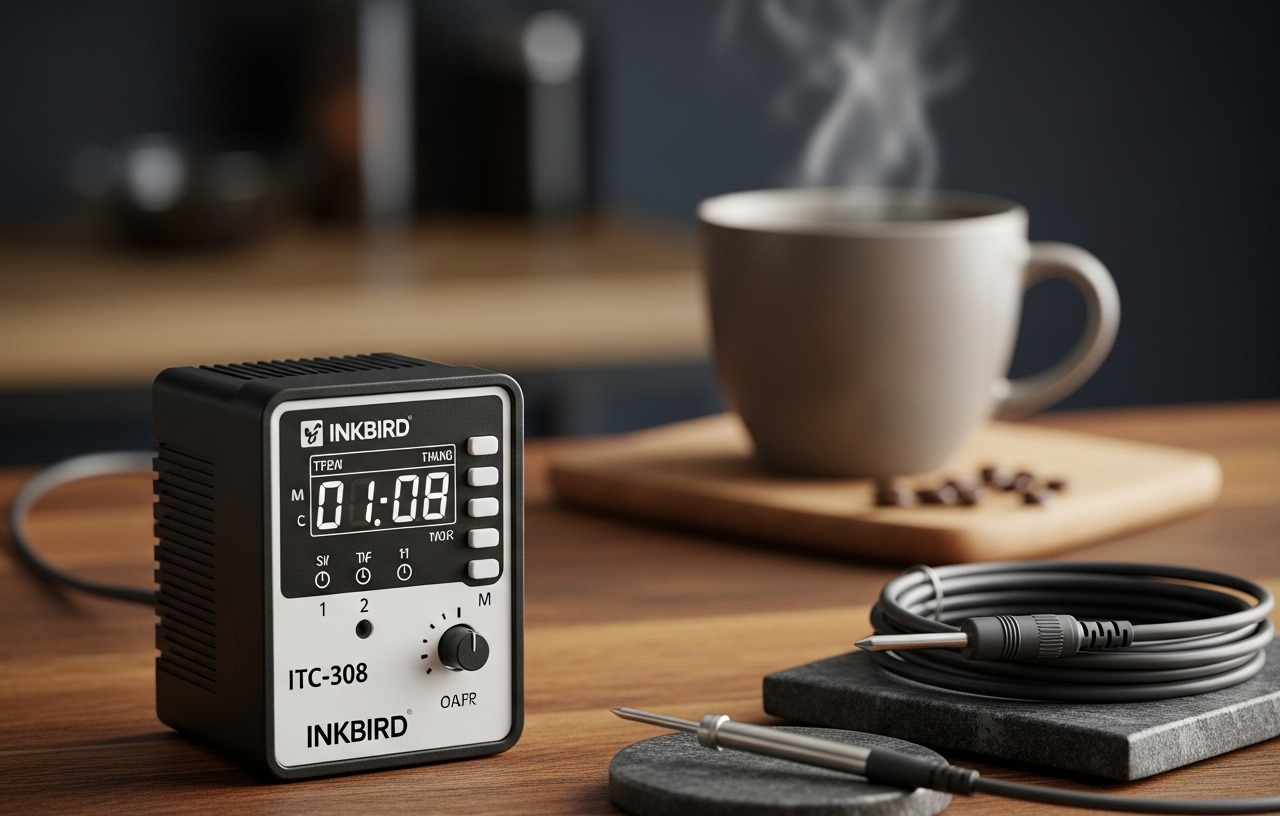
Precise temperature control throughout the brewing process, especially during fermentation and the diacetyl rest, determines the quality of your beer. Without a reliable way to maintain and adjust temperatures, achieving consistent results is challenging. A fermentation chamber coupled with a dedicated controller, such as the Inkbird ITC-308, allows for accurate temperature management.
A fermentation vessel also plays a role. Glass carboys offer excellent visibility and sanitation, while plastic fermenters are lighter and less prone to breaking. Both types work well for diacetyl rests, provided they are in a temperature-controlled environment. You can read more about options in Best Fermentation Vessels for Beer: Glass Options Reviewed or Glass Carboy vs. Plastic Fermenter: Which is Right for Your Brew?
Factors Affecting Diacetyl Production and Cleanup
- Yeast Strain: Some yeast strains are known for higher diacetyl production or slower diacetyl reduction. Always consult the yeast manufacturer's recommendations. For example, some lager strains are notorious for diacetyl if not given proper time.
- Fermentation Temperature: Colder primary fermentation temperatures, typical for lagers, inhibit yeast activity, slowing both diacetyl formation and cleanup. This makes a diacetyl rest more critical for lagers.
- Yeast Health and Pitch Rate: Underpitching yeast (not adding enough healthy yeast cells) can lead to stressed yeast, which may produce more diacetyl or struggle to reabsorb it. An adequate pitch rate of healthy, viable yeast is essential for clean fermentation. Overpitching, while less common, can also lead to issues.
- Oxygenation: Proper wort oxygenation before pitching yeast supports healthy yeast growth and fermentation. Insufficient oxygen can stress yeast and contribute to off-flavors, including diacetyl.
- Nutrients: Yeast needs a balanced nutrient profile. Deficiencies in certain nutrients can lead to stressed yeast and incomplete diacetyl reduction. Most modern yeast strains and wort recipes provide sufficient nutrients, but sometimes yeast nutrient additions are beneficial.
- Original Gravity: Higher gravity beers generally require a longer fermentation and potentially a longer diacetyl rest due to the increased workload on the yeast.
When a Diacetyl Rest Might Not Be Necessary
While generally good practice, a diacetyl rest is not always strictly necessary for every brew. For many ale fermentations conducted at warmer temperatures (68-72°F or 20-22°C) with healthy yeast, the yeast often cleans up diacetyl naturally during the tail end of primary fermentation. Some modern, highly flocculant ale strains are particularly efficient at this. Brewers often find that simply allowing the beer to sit at fermentation temperature for an extra few days after gravity stabilizes is sufficient.
However, if you are unsure, performing a VDK force test provides a definitive answer. This simple test helps you avoid bottling or kegging beer with a noticeable buttery off-flavor. For those just starting out in homebrewing, especially when using a homebrew starter kit, following a recipe's recommendation for a diacetyl rest is a good way to gain experience and build confidence.
Troubleshooting Diacetyl Issues
If you taste diacetyl after what you thought was a complete diacetyl rest, several factors could be at play:
- Insufficient Time: The rest might not have been long enough. Extend the rest period by another 2-3 days at the elevated temperature.
- Temperature Fluctuation: Inconsistent temperatures during the rest can hinder yeast activity. Make sure your fermentation chamber holds a stable temperature.
- Dormant Yeast: If the yeast dropped out of suspension too quickly or became too dormant before the rest, it may not be active enough to clean up diacetyl. Rousing the yeast gently (swirling the fermenter) can sometimes re-suspend enough yeast to finish the job. In extreme cases, pitching a small amount of fresh, healthy, actively fermenting yeast (a 'starter' of the same strain) might be necessary.
- Infection: Certain spoilage bacteria, such as Pediococcus, can produce diacetyl. If the diacetyl presence is accompanied by other off-flavors (sourness, ropiness) or if it increases after packaging, a bacterial infection might be the cause. Proper sanitization of brewing equipment is critical to prevent such issues.
Properly executing a diacetyl rest is a valuable skill for any homebrewer. It provides a reliable method to remove unwanted buttery flavors, leading to a much cleaner, more enjoyable beer.